Thank you for visiting SNEWPapers!
Sign up free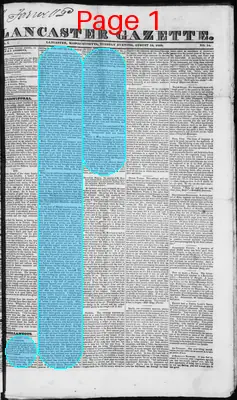
Story
August 12, 1828
Lancaster Gazette
Lancaster, Worcester County, Massachusetts
What is this article about?
Narrative of Simon Stevens, a frugal seed seller, his marriage to ambitious Betty Tower, and their daughter Elizabeth's rise from servant girl to West Indian heiress through maternal enterprise, transforming their humble life.
Clipping
OCR Quality
97%
Excellent
Full Text
MISCELLANEOUS.
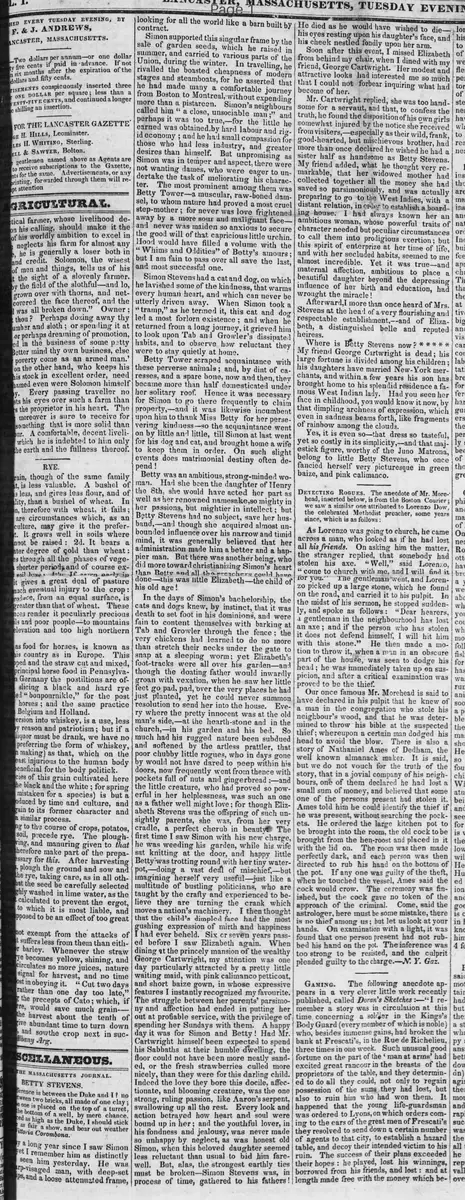
THE MASSACHUSETTS JOURNAL.
BETTY STEVENS.
'What difference is between the Duke and I? No difference—twixt two bricks. All made of one clay; the one is placed on the top of a turret, the other at the bottom of a well, by mere chance. Had I been placed as high as the Duke, I should stick as fair a show, and bear out weather as well.'—Vittoria Corombona.
It is a long year since I saw Simon Stevens, yet I remember him as distinctly as if I had seen him yesterday. He was a sharp-visaged man, with deep-set eyes, lips, and a loose attenuated frame, looking for all the world like a barn built by contract.
Simon supported this singular frame by the sale of garden seeds, which he raised in summer, and carried to various parts of the Union, during the winter. In travelling, he rivalled the boasted cheapness of modern stages and steamboats, for he asserted that he had made many a comfortable journey from Boston to Montreal, without expending more than a pistareen. Simon's neighbours called him 'a close, unsociable man;' and perhaps it was too true,—for the little he earned was obtained by hard labour and rigid economy; and he had small compassion for those who had less industry, and greater desires than himself. But unpromising as Simon was in temper and aspect, there were not wanting dames, who were eager to undertake the task of meliorating his character. The most prominent among them was Betty Tower—a muscular, raw-boned damsel, to whom nature had proved a most cruel step-mother; for never was love frightened away by a more sour and malignant face—and never was maiden so anxious to secure the good will of that capricious little urchin. Hood would have filled a volume with the 'Whims and Oddities' of Betty's amours; but I am fain to pass over all save the last, and most successful one.
Simon Stevens had a cat and dog, on which he lavished some of the kindness, that warms every human heart, and which can never be utterly driven away. When Simon took a 'tramp,' as he termed it, this cat and dog led a most forlorn existence; and when he returned from a long journey, it grieved him to look upon Tab and Growler's dissipated habits, and to observe how reluctant they were to stay quietly at home.
Betty Tower scraped acquaintance with these perverse animals; and, by dint of caresses, and a spare bone, now and then, they became more than half domesticated under her solitary roof. Hence it was necessary for Simon to go there frequently to claim his property,—and it was likewise incumbent upon him to thank Miss Betty for her persevering kindness—so the acquaintance went on by little and little, till Simon at last went for his dog and cat, and brought home a wife to keep them in order. On such slight events does matrimonial destiny often depend!
Betty was an ambitious, strong-minded woman. Had she been the daughter of Henry the 8th, she would have acted her part as well as her renowned namesake, so mighty in her passions, but mightier in intellect; but Betty Stevens had no subject, save her husband,—and though she acquired almost unbounded influence over his narrow and timid mind, it was generally believed that her administration made him a better and a happier man. But there was another being, who did more toward christianizing Simon's heart than Betty and all the preachers could have done—this was little Elizabeth—the child of his old age!
In the days of Simon's bachelorship, the cats and dogs knew, by instinct, that it was death to set foot in his dominions, and were fain to content themselves with barking at Tab and Growler through the fence; the very chickens had learned to do no more than stretch their necks under the gate to snap at a sleeping worm; yet Elizabeth's foot-tracks were all over his garden—and though the doating father would inwardly groan with vexation, when he saw her little feet go pad, pad, over the very places he had just planted, yet he could never summon resolution to send her into the house. Everywhere the pretty innocent was at the old man's side, at the hearth-stone and in the church,—in his garden and his bed. So much had his rugged nature been subdued and softened by the artless prattler, that poor chubby little rogues, who in days gone by would not have dared to peep within his doors, now frequently went from thence with pockets full of nuts and gingerbread;—and the little creature, who had proved so powerful in her helplessness, was such an one as a father well might love: for though Elizabeth Stevens was the offspring of such unsightly parents, she was, from her very cradle, a perfect cherub in beauty. The first time I saw Simon with his new charge, he was weeding his garden, while his wife sat knitting at the door, and happy little Betty was trotting round with her tiny water-pot, —doing a vast deal of mischief,—but imagining herself very useful—just like a multitude of bustling politicians, who are taught by the crafty and experienced to believe they are turning the crank which moves a nation's machinery. I then thought that the child's dimpled face had the most gushing expression of mirth and happiness I had ever beheld. Six or seven years passed before I saw Elizabeth again. When dining at the princely mansion of the wealthy George Cartwright, my attention was one day particularly attracted by a pretty little waiting maid, with pink calimanco petticoat and short baize gown, in whose expressive features I instantly recognized my favourite. The struggle between her parents' parsimony and affection had ended in putting her out at profitable service, with the privilege of spending her Sundays with them. A happy day it was for Simon and Betty! Had Mr. Cartwright himself been expected to spend his Sabbaths at their humble dwelling, the floor could not have been more neatly sanded, or the fresh strawberries culled more nicely, than they were for this darling child. Indeed the love they bore this docile, affectionate, and blooming creature, was the one strong, ruling passion, like Aaron's serpent, swallowing up all the rest. Every look and action betrayed how heart and soul were bound up in her; and the youthful lover, in his fondness and jealousy, was never made so unhappy by neglect, as was honest old Simon, when this beloved daughter seemed less reluctant than usual to bid him farewell. But, alas, the strongest earthly ties must be broken—Simon Stevens was, in process of time, gathered to his fathers!
He died as he would have wished to die—his eyes resting upon his daughter's face, and his cheek nestled fondly upon her arm. Soon after this event, I missed Elizabeth from behind my chair, when I dined with my friend, George Cartwright. Her modest and attractive looks had interested me so much that I could not forbear inquiring what had become of her. Mr. Cartwright replied, she was too handsome for a servant, and that, to confess the truth, he found the disposition of his own girls somewhat injured by the notice she received from visitors,—especially as their wild, frank, good-hearted, but mischievous brother, had more than once declared he wished he had a sister half as handsome as Betty Stevens. My friend added, what he thought very remarkable, that her widowed mother had collected together all the money she had saved so parsimoniously, and was actually preparing to go to the West Indies, with a distant relation, in order to establish a boarding house. I had always known her an ambitious woman, whose powerful traits of character needed but peculiar circumstances to call them into prodigious exertion; but this spirit of enterprize at her time of life, and with her secluded habits, seemed to me almost incredible. Yet it was true—and maternal affection, ambitious to place a beautiful daughter beyond the depressing influence of her birth and education, had wrought the miracle!
Afterward, I more than once heard of Mrs. Stevens at the head of a very flourishing and respectable establishment,—and of Elizabeth, a distinguished belle and reputed heiress.
Where is Betty Stevens now? *****
My friend George Cartwright is dead; his large fortune is divided among his children; his daughters have married New-York merchants, and within a few years his son has brought home to his splendid residence a famous West Indian lady. Had you seen her face in childhood, you would know it now, by that dimpling archness of expression, which even in sadness beams forth, like fragments of rainbow among the clouds.
Yes, it is even so—that dress so tasteful, yet so costly in its simplicity,—and that majestic figure, worthy of the Juno Matrona, belong to little Betty Stevens, who once fancied herself very picturesque in green baize, and pink calimanco.
THE MASSACHUSETTS JOURNAL.
BETTY STEVENS.
'What difference is between the Duke and I? No difference—twixt two bricks. All made of one clay; the one is placed on the top of a turret, the other at the bottom of a well, by mere chance. Had I been placed as high as the Duke, I should stick as fair a show, and bear out weather as well.'—Vittoria Corombona.
It is a long year since I saw Simon Stevens, yet I remember him as distinctly as if I had seen him yesterday. He was a sharp-visaged man, with deep-set eyes, lips, and a loose attenuated frame, looking for all the world like a barn built by contract.
Simon supported this singular frame by the sale of garden seeds, which he raised in summer, and carried to various parts of the Union, during the winter. In travelling, he rivalled the boasted cheapness of modern stages and steamboats, for he asserted that he had made many a comfortable journey from Boston to Montreal, without expending more than a pistareen. Simon's neighbours called him 'a close, unsociable man;' and perhaps it was too true,—for the little he earned was obtained by hard labour and rigid economy; and he had small compassion for those who had less industry, and greater desires than himself. But unpromising as Simon was in temper and aspect, there were not wanting dames, who were eager to undertake the task of meliorating his character. The most prominent among them was Betty Tower—a muscular, raw-boned damsel, to whom nature had proved a most cruel step-mother; for never was love frightened away by a more sour and malignant face—and never was maiden so anxious to secure the good will of that capricious little urchin. Hood would have filled a volume with the 'Whims and Oddities' of Betty's amours; but I am fain to pass over all save the last, and most successful one.
Simon Stevens had a cat and dog, on which he lavished some of the kindness, that warms every human heart, and which can never be utterly driven away. When Simon took a 'tramp,' as he termed it, this cat and dog led a most forlorn existence; and when he returned from a long journey, it grieved him to look upon Tab and Growler's dissipated habits, and to observe how reluctant they were to stay quietly at home.
Betty Tower scraped acquaintance with these perverse animals; and, by dint of caresses, and a spare bone, now and then, they became more than half domesticated under her solitary roof. Hence it was necessary for Simon to go there frequently to claim his property,—and it was likewise incumbent upon him to thank Miss Betty for her persevering kindness—so the acquaintance went on by little and little, till Simon at last went for his dog and cat, and brought home a wife to keep them in order. On such slight events does matrimonial destiny often depend!
Betty was an ambitious, strong-minded woman. Had she been the daughter of Henry the 8th, she would have acted her part as well as her renowned namesake, so mighty in her passions, but mightier in intellect; but Betty Stevens had no subject, save her husband,—and though she acquired almost unbounded influence over his narrow and timid mind, it was generally believed that her administration made him a better and a happier man. But there was another being, who did more toward christianizing Simon's heart than Betty and all the preachers could have done—this was little Elizabeth—the child of his old age!
In the days of Simon's bachelorship, the cats and dogs knew, by instinct, that it was death to set foot in his dominions, and were fain to content themselves with barking at Tab and Growler through the fence; the very chickens had learned to do no more than stretch their necks under the gate to snap at a sleeping worm; yet Elizabeth's foot-tracks were all over his garden—and though the doating father would inwardly groan with vexation, when he saw her little feet go pad, pad, over the very places he had just planted, yet he could never summon resolution to send her into the house. Everywhere the pretty innocent was at the old man's side, at the hearth-stone and in the church,—in his garden and his bed. So much had his rugged nature been subdued and softened by the artless prattler, that poor chubby little rogues, who in days gone by would not have dared to peep within his doors, now frequently went from thence with pockets full of nuts and gingerbread;—and the little creature, who had proved so powerful in her helplessness, was such an one as a father well might love: for though Elizabeth Stevens was the offspring of such unsightly parents, she was, from her very cradle, a perfect cherub in beauty. The first time I saw Simon with his new charge, he was weeding his garden, while his wife sat knitting at the door, and happy little Betty was trotting round with her tiny water-pot, —doing a vast deal of mischief,—but imagining herself very useful—just like a multitude of bustling politicians, who are taught by the crafty and experienced to believe they are turning the crank which moves a nation's machinery. I then thought that the child's dimpled face had the most gushing expression of mirth and happiness I had ever beheld. Six or seven years passed before I saw Elizabeth again. When dining at the princely mansion of the wealthy George Cartwright, my attention was one day particularly attracted by a pretty little waiting maid, with pink calimanco petticoat and short baize gown, in whose expressive features I instantly recognized my favourite. The struggle between her parents' parsimony and affection had ended in putting her out at profitable service, with the privilege of spending her Sundays with them. A happy day it was for Simon and Betty! Had Mr. Cartwright himself been expected to spend his Sabbaths at their humble dwelling, the floor could not have been more neatly sanded, or the fresh strawberries culled more nicely, than they were for this darling child. Indeed the love they bore this docile, affectionate, and blooming creature, was the one strong, ruling passion, like Aaron's serpent, swallowing up all the rest. Every look and action betrayed how heart and soul were bound up in her; and the youthful lover, in his fondness and jealousy, was never made so unhappy by neglect, as was honest old Simon, when this beloved daughter seemed less reluctant than usual to bid him farewell. But, alas, the strongest earthly ties must be broken—Simon Stevens was, in process of time, gathered to his fathers!
He died as he would have wished to die—his eyes resting upon his daughter's face, and his cheek nestled fondly upon her arm. Soon after this event, I missed Elizabeth from behind my chair, when I dined with my friend, George Cartwright. Her modest and attractive looks had interested me so much that I could not forbear inquiring what had become of her. Mr. Cartwright replied, she was too handsome for a servant, and that, to confess the truth, he found the disposition of his own girls somewhat injured by the notice she received from visitors,—especially as their wild, frank, good-hearted, but mischievous brother, had more than once declared he wished he had a sister half as handsome as Betty Stevens. My friend added, what he thought very remarkable, that her widowed mother had collected together all the money she had saved so parsimoniously, and was actually preparing to go to the West Indies, with a distant relation, in order to establish a boarding house. I had always known her an ambitious woman, whose powerful traits of character needed but peculiar circumstances to call them into prodigious exertion; but this spirit of enterprize at her time of life, and with her secluded habits, seemed to me almost incredible. Yet it was true—and maternal affection, ambitious to place a beautiful daughter beyond the depressing influence of her birth and education, had wrought the miracle!
Afterward, I more than once heard of Mrs. Stevens at the head of a very flourishing and respectable establishment,—and of Elizabeth, a distinguished belle and reputed heiress.
Where is Betty Stevens now? *****
My friend George Cartwright is dead; his large fortune is divided among his children; his daughters have married New-York merchants, and within a few years his son has brought home to his splendid residence a famous West Indian lady. Had you seen her face in childhood, you would know it now, by that dimpling archness of expression, which even in sadness beams forth, like fragments of rainbow among the clouds.
Yes, it is even so—that dress so tasteful, yet so costly in its simplicity,—and that majestic figure, worthy of the Juno Matrona, belong to little Betty Stevens, who once fancied herself very picturesque in green baize, and pink calimanco.
What sub-type of article is it?
Biography
Family Drama
Personal Triumph
What themes does it cover?
Family
Fortune Reversal
Triumph
What keywords are associated?
Social Mobility
Maternal Ambition
Family Transformation
Rags To Riches
Personal Redemption
What entities or persons were involved?
Simon Stevens
Betty Tower
Elizabeth Stevens
George Cartwright
Where did it happen?
Boston, Montreal, West Indies
Story Details
Key Persons
Simon Stevens
Betty Tower
Elizabeth Stevens
George Cartwright
Location
Boston, Montreal, West Indies
Story Details
Simon Stevens, a miserly seed peddler, marries ambitious Betty Tower after she cares for his pets. Their beautiful daughter Elizabeth softens Simon's heart. After his death, Betty moves to the West Indies to start a boarding house, elevating Elizabeth from servant to heiress and socialite.