Thank you for visiting SNEWPapers!
Sign up free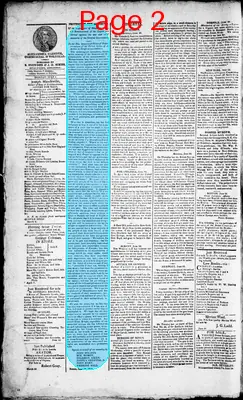
Editorial
July 5, 1813
Alexandria Gazette, Commercial And Political
Alexandria, Virginia
What is this article about?
Protest by the minority of the Massachusetts Legislature against the majority's remonstrance denouncing the U.S. war with Britain as unjust and criticizing the federal government. The minority defends the war as necessary, condemns the remonstrance as treasonous, and affirms support for the Union and prosecution of the war until rights are secured. Dated Boston, June 15, 1813.
Clipping

OCR Quality
95%
Excellent
Full Text
PROTEST OF THE MINORITY
Of the Legislature of Massachusetts to
the Remonstrance of the Legislature
thereof against the war and other
measures of the General Government.
To the Hon. Senate and House of Repre-
sentatives of the United States of A-
merica in Congress assembled—
The undersigned committee, chosen
by the minority of the Senators and Re-
presentatives of the commonwealth of
Massachusetts, beg leave to represent,
that they have perceived with extreme
regret that the Legislature of this state,
at their present session, have presented
a remonstrance to Congress, denouncing
the administration of the general go-
vernment, reprobating the war as im-
proper, impolitic and unjust, impeaching
the motives of the Congress which de-
clared it, excusing and justifying all the
aggressions and outrages of Great Bri-
tain, and charging a majority of the re-
presentatives of the people with wan-
tonness, ambition, oppression and cruel-
ty. While the executive of the United
States is steadily pursuing that course
of policy which alone can secure a safe,
equitable, honorable & permanent peace,
and are actually negotiating to effect it,
it is impossible to conceive what good
motive could induce the Legislature of
this state to vote a remonstrance so trea-
sonable in its language, erroneous in its
facts and principles, and pernicious in
its effects.
Who that is American, can but feel
indignant to hear it stated by the Legis-
latyre of a state that we ought to have
resisted the French decrees, agreeably to
the demand of the British government!
That we have seduced her seamen from
their allegiance, and that we have invad-
ed the territory of a peaceable and unof-
fending neighbor? Where is the man,
who values his reputation, who would
not indignantly frown at the insinuation,
that war was waged from motives of am-
bition or lust of conquest? that we are
leagued with France to oppress the Eu-
ropean nations, and that our government
have established a chain of military posts
"to prostrate the civil to the military
authority?" And what man, not alto-
gether exclusively British, can, without
the deepest mortification, read a remon-
strance which, in time of war and pend-
ing negociation, should take the enemy's
ground, support their claims, and justify
their aggressions? We assure the con-
gress and people of the United States,
that we utterly protest against the state-
ments and principles contained in that
humiliating remonstrance. It appears to
us too much like the attempt of a dis-
appointed and malignant faction, who to
obtain power, would trample on the
rights and liberties of their country.—
We do not, however, apprehend that any
faction in the country have either the
power or the nerve to effect a purpose
of this sort. We trust and sincerely
believe that the people would resist, and
effectually suppress, every attempt to
sever or weaken our bond of Union.—
We are aware that it is in times of ca-
lamity and war that ambitious and design-
ing men will be tempted to stir up the
people to opposition and rebellion. But
we are assured that a large majority of
the people of this state would, at the
hazard of their lives and fortunes, resist
all opposition to the laws and govern-
ment of their country. We believe the
war to be just and necessary: that the
government have invariably maintained
strict justice and impartiality towards
the belligerents of Europe; that they
have submitted to an accumulation of
wrongs which no other nation would
have endured; they have negotiated
until negotiation was vain: that it is
their intention, as it is their duty, to pro-
tect the rights of commerce and of sailors, "peaceably if they can, forcibly if
they must; that since the pretended re-
peal of the orders in council, every pa-
cific advance has been made, both by the
executive and by congress which was
consistent with the rights and honor of
the nation; and that we are willing to
endure all the evils and privations of this
war, and to expend our property and our
blood in its prosecution. We hope the
Legislature of Massachusetts have bet-
ter evidence of their consistency, pru-
dence, patriotism and love of peace, than is contained in their extraordinary re-
monstrance.
We wish for peace, but we fear that
this remonstrance, if it has any effect,
will tend to prevent rather than to
accomplish it. We hope that the very
proper course adopted by the administra-
tration to effect a peace, will meet with
the success to which it is entitled. But
should Great Britain, regardless of the
numerous wrongs she has inflicted on
us, and calculating on her power, or en-
couraged by her friends in America,
persist in her hostile pretensions, we
have no doubt but the people of this
state will cordially, actively and zealously come forward and lend their aid in
the prosecution of the war—until our
rights are established on a permanent
basis.
Signed, on behalf of the minority, by
JOHN HOLMES,
WM. MOODY,
SOLOMON AIKEN,
JOSHUA PRENTISS, Jr.
JOHN HART,
AMBROSE HALL
Boston, June 15, 1813.
Of the Legislature of Massachusetts to
the Remonstrance of the Legislature
thereof against the war and other
measures of the General Government.
To the Hon. Senate and House of Repre-
sentatives of the United States of A-
merica in Congress assembled—
The undersigned committee, chosen
by the minority of the Senators and Re-
presentatives of the commonwealth of
Massachusetts, beg leave to represent,
that they have perceived with extreme
regret that the Legislature of this state,
at their present session, have presented
a remonstrance to Congress, denouncing
the administration of the general go-
vernment, reprobating the war as im-
proper, impolitic and unjust, impeaching
the motives of the Congress which de-
clared it, excusing and justifying all the
aggressions and outrages of Great Bri-
tain, and charging a majority of the re-
presentatives of the people with wan-
tonness, ambition, oppression and cruel-
ty. While the executive of the United
States is steadily pursuing that course
of policy which alone can secure a safe,
equitable, honorable & permanent peace,
and are actually negotiating to effect it,
it is impossible to conceive what good
motive could induce the Legislature of
this state to vote a remonstrance so trea-
sonable in its language, erroneous in its
facts and principles, and pernicious in
its effects.
Who that is American, can but feel
indignant to hear it stated by the Legis-
latyre of a state that we ought to have
resisted the French decrees, agreeably to
the demand of the British government!
That we have seduced her seamen from
their allegiance, and that we have invad-
ed the territory of a peaceable and unof-
fending neighbor? Where is the man,
who values his reputation, who would
not indignantly frown at the insinuation,
that war was waged from motives of am-
bition or lust of conquest? that we are
leagued with France to oppress the Eu-
ropean nations, and that our government
have established a chain of military posts
"to prostrate the civil to the military
authority?" And what man, not alto-
gether exclusively British, can, without
the deepest mortification, read a remon-
strance which, in time of war and pend-
ing negociation, should take the enemy's
ground, support their claims, and justify
their aggressions? We assure the con-
gress and people of the United States,
that we utterly protest against the state-
ments and principles contained in that
humiliating remonstrance. It appears to
us too much like the attempt of a dis-
appointed and malignant faction, who to
obtain power, would trample on the
rights and liberties of their country.—
We do not, however, apprehend that any
faction in the country have either the
power or the nerve to effect a purpose
of this sort. We trust and sincerely
believe that the people would resist, and
effectually suppress, every attempt to
sever or weaken our bond of Union.—
We are aware that it is in times of ca-
lamity and war that ambitious and design-
ing men will be tempted to stir up the
people to opposition and rebellion. But
we are assured that a large majority of
the people of this state would, at the
hazard of their lives and fortunes, resist
all opposition to the laws and govern-
ment of their country. We believe the
war to be just and necessary: that the
government have invariably maintained
strict justice and impartiality towards
the belligerents of Europe; that they
have submitted to an accumulation of
wrongs which no other nation would
have endured; they have negotiated
until negotiation was vain: that it is
their intention, as it is their duty, to pro-
tect the rights of commerce and of sailors, "peaceably if they can, forcibly if
they must; that since the pretended re-
peal of the orders in council, every pa-
cific advance has been made, both by the
executive and by congress which was
consistent with the rights and honor of
the nation; and that we are willing to
endure all the evils and privations of this
war, and to expend our property and our
blood in its prosecution. We hope the
Legislature of Massachusetts have bet-
ter evidence of their consistency, pru-
dence, patriotism and love of peace, than is contained in their extraordinary re-
monstrance.
We wish for peace, but we fear that
this remonstrance, if it has any effect,
will tend to prevent rather than to
accomplish it. We hope that the very
proper course adopted by the administra-
tration to effect a peace, will meet with
the success to which it is entitled. But
should Great Britain, regardless of the
numerous wrongs she has inflicted on
us, and calculating on her power, or en-
couraged by her friends in America,
persist in her hostile pretensions, we
have no doubt but the people of this
state will cordially, actively and zealously come forward and lend their aid in
the prosecution of the war—until our
rights are established on a permanent
basis.
Signed, on behalf of the minority, by
JOHN HOLMES,
WM. MOODY,
SOLOMON AIKEN,
JOSHUA PRENTISS, Jr.
JOHN HART,
AMBROSE HALL
Boston, June 15, 1813.
What sub-type of article is it?
War Or Peace
Partisan Politics
Foreign Affairs
What keywords are associated?
War Of 1812
Massachusetts Protest
Federal Defense
British Aggressions
Union Support
Treasonous Remonstrance
Peace Negotiations
What entities or persons were involved?
Massachusetts Legislature Minority
John Holmes
Wm. Moody
Solomon Aiken
Joshua Prentiss Jr.
John Hart
Ambrose Hall
U.S. Congress
Great Britain
France
U.S. Executive
Editorial Details
Primary Topic
Protest Against Massachusetts Remonstrance Opposing The War Of 1812
Stance / Tone
Strong Defense Of The War And Federal Government, Condemnation Of State Remonstrance As Treasonous
Key Figures
Massachusetts Legislature Minority
John Holmes
Wm. Moody
Solomon Aiken
Joshua Prentiss Jr.
John Hart
Ambrose Hall
U.S. Congress
Great Britain
France
U.S. Executive
Key Arguments
Remonstrance Denounces Federal Administration And War As Improper, Impolitic, And Unjust
Remonstrance Excuses British Aggressions And Impeaches Congress Motives
War Is Just And Necessary To Protect Commerce And Sailors' Rights
Government Has Endured Wrongs Patiently And Negotiated In Vain
Protest Against Remonstrance As Treasonable, Erroneous, And Pernicious
People Will Resist Attempts To Weaken Union
Willing To Endure War's Evils And Support Prosecution Until Rights Secured