Thank you for visiting SNEWPapers!
Sign up free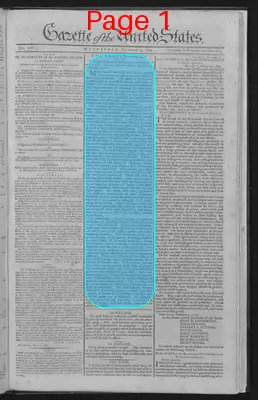
Literary
November 25, 1789
Gazette Of The United States
New York, New York County, New York
What is this article about?
An essay regretting how scholarly pursuits often lead to gloominess, pedantry, and social isolation in learned men, attributing this to poor educational practices that foster affectation. It argues for balancing knowledge with cheerful manners and common sense for greater happiness and usefulness.
Clipping
OCR Quality
98%
Excellent
Full Text
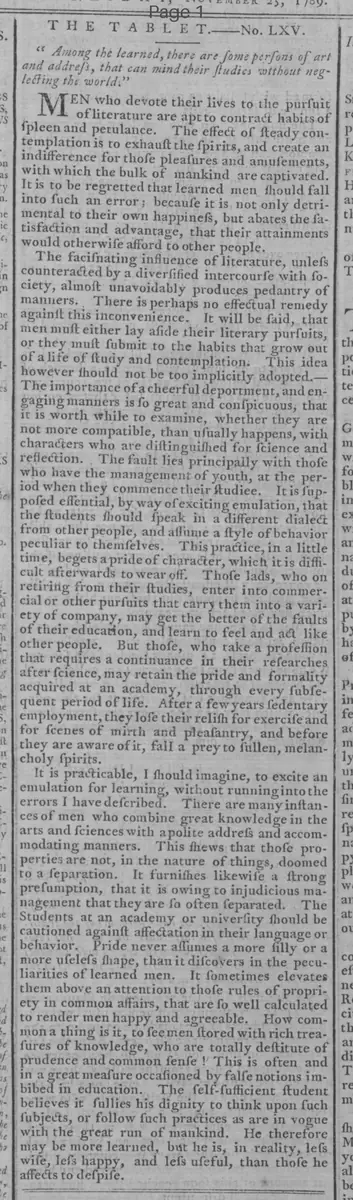
THE TABLET. NO. LXV.
"Among the learned, there are some persons of art and address, that can mind their studies without neglecting the world."
MEN who devote their lives to the pursuit of knowledge, are apt to contract a certain gloominess of temper, spleen and petulance. The effect of steady contemplation is to exhaust the spirits, and create an indifference for those pleasures and amusements, with which the bulk of mankind are captivated.
It is to be regretted that learned men should fall into such an error; because it is not only detrimental to their own happiness, but abates the satisfaction and advantage, that their attainments would otherwise afford to other people.
The fascinating influence of literature, unless counteracted by a diversified intercourse with society, almost unavoidably produces pedantry of manners. There is perhaps no effectual remedy against this inconvenience. It will be said, that men must either lay aside their literary pursuits, or they must submit to the habits that grow out of a life of study and contemplation. This idea however should not be too implicitly adopted.—
The importance of a cheerful deportment, and engaging manners is so great and conspicuous, that it is worth while to examine, whether they are not more compatible, than usually happens, with characters who are distinguished for science and reflection. The fault lies principally with those who have the management of youth, at the period when they commence their studies. It is supposed essential, by way of exciting emulation, that the students should speak in a different dialect from other people, and assume a style of behavior peculiar to themselves. This practice, in a little time, begets a pride of character, which it is difficult afterwards to wear off. Those lads, who on retiring from their studies, enter into commercial or other pursuits that carry them into a variety of company, may get the better of the faults of their education, and learn to feel and act like other people. But those, who take a profession that requires a continuance in their researches after science, may retain the pride and formality acquired at an academy, through every subsequent period of life. After a few years sedentary employment, they lose their relish for exercise and for scenes of mirth and pleasantry, and before they are aware of it, fall a prey to sullen, melancholy spirits.
It is practicable, I should imagine, to excite an emulation for learning, without running into the errors I have described. There are many instances of men who combine great knowledge in the arts and sciences with a polite address and accommodating manners. This shews that those properties are not, in the nature of things, doomed to a separation. It furnishes likewise a strong presumption, that it is owing to injudicious management that they are so often separated. The Students at an academy or university should be cautioned against affectation in their language or behavior. Pride never assumes a more silly or a more useless shape, than it discovers in the peculiarities of learned men. It sometimes elevates them above an attention to those rules of propriety in common affairs, that are so well calculated to render men happy and agreeable. How common a thing is it, to see men stored with rich treasures of knowledge, who are totally destitute of prudence and common sense ! This is often and in a great measure occasioned by false notions imbibed in education. The self-sufficient student believes it sullies his dignity to think upon such subjects, or follow such practices as are in vogue with the great run of mankind. He therefore may be more learned, but he is, in reality, less wise, less happy, and less useful, than those he affects to despise.
"Among the learned, there are some persons of art and address, that can mind their studies without neglecting the world."
MEN who devote their lives to the pursuit of knowledge, are apt to contract a certain gloominess of temper, spleen and petulance. The effect of steady contemplation is to exhaust the spirits, and create an indifference for those pleasures and amusements, with which the bulk of mankind are captivated.
It is to be regretted that learned men should fall into such an error; because it is not only detrimental to their own happiness, but abates the satisfaction and advantage, that their attainments would otherwise afford to other people.
The fascinating influence of literature, unless counteracted by a diversified intercourse with society, almost unavoidably produces pedantry of manners. There is perhaps no effectual remedy against this inconvenience. It will be said, that men must either lay aside their literary pursuits, or they must submit to the habits that grow out of a life of study and contemplation. This idea however should not be too implicitly adopted.—
The importance of a cheerful deportment, and engaging manners is so great and conspicuous, that it is worth while to examine, whether they are not more compatible, than usually happens, with characters who are distinguished for science and reflection. The fault lies principally with those who have the management of youth, at the period when they commence their studies. It is supposed essential, by way of exciting emulation, that the students should speak in a different dialect from other people, and assume a style of behavior peculiar to themselves. This practice, in a little time, begets a pride of character, which it is difficult afterwards to wear off. Those lads, who on retiring from their studies, enter into commercial or other pursuits that carry them into a variety of company, may get the better of the faults of their education, and learn to feel and act like other people. But those, who take a profession that requires a continuance in their researches after science, may retain the pride and formality acquired at an academy, through every subsequent period of life. After a few years sedentary employment, they lose their relish for exercise and for scenes of mirth and pleasantry, and before they are aware of it, fall a prey to sullen, melancholy spirits.
It is practicable, I should imagine, to excite an emulation for learning, without running into the errors I have described. There are many instances of men who combine great knowledge in the arts and sciences with a polite address and accommodating manners. This shews that those properties are not, in the nature of things, doomed to a separation. It furnishes likewise a strong presumption, that it is owing to injudicious management that they are so often separated. The Students at an academy or university should be cautioned against affectation in their language or behavior. Pride never assumes a more silly or a more useless shape, than it discovers in the peculiarities of learned men. It sometimes elevates them above an attention to those rules of propriety in common affairs, that are so well calculated to render men happy and agreeable. How common a thing is it, to see men stored with rich treasures of knowledge, who are totally destitute of prudence and common sense ! This is often and in a great measure occasioned by false notions imbibed in education. The self-sufficient student believes it sullies his dignity to think upon such subjects, or follow such practices as are in vogue with the great run of mankind. He therefore may be more learned, but he is, in reality, less wise, less happy, and less useful, than those he affects to despise.
What sub-type of article is it?
Essay
What themes does it cover?
Moral Virtue
Social Manners
What keywords are associated?
Learned Men
Pedantry
Education
Manners
Knowledge
Pride
Happiness
Society
Literary Details
Title
The Tablet. No. Lxv.
Subject
On The Manners And Happiness Of Learned Men
Key Lines
"Among The Learned, There Are Some Persons Of Art And Address, That Can Mind Their Studies Without Neglecting The World."
The Fault Lies Principally With Those Who Have The Management Of Youth, At The Period When They Commence Their Studies.
There Are Many Instances Of Men Who Combine Great Knowledge In The Arts And Sciences With A Polite Address And Accommodating Manners.
Pride Never Assumes A More Silly Or A More Useless Shape, Than It Discovers In The Peculiarities Of Learned Men.
He Therefore May Be More Learned, But He Is, In Reality, Less Wise, Less Happy, And Less Useful, Than Those He Affects To Despise.