Thank you for visiting SNEWPapers!
Sign up free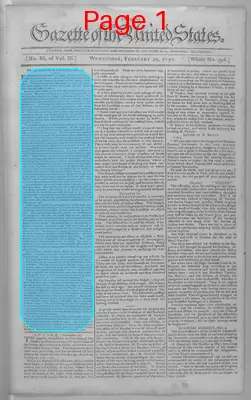
Editorial
February 29, 1792
Gazette Of The United States
New York, New York County, New York
What is this article about?
This editorial praises the informed American public's role in establishing a strong constitution and defends the national government against virulent, false press attacks, arguing they undermine public morals and virtue while free inquiry should remain moderate and truthful.
Clipping
OCR Quality
95%
Excellent
Full Text
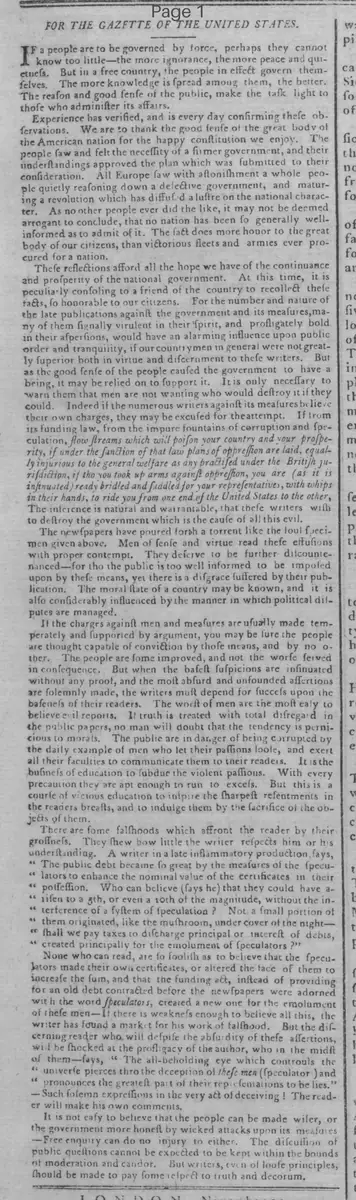
FOR THE GAZETTE OF THE UNITED STATES.
IF a people are to be governed by force, perhaps they cannot know too little—the more ignorance, the more peace and quietude. But in a free country, the people in effect govern themselves. The more knowledge is spread among them, the better. The reason and good sense of the public, make the task light to those who administer its affairs.
Experience has verified, and is every day confirming these observations. We are to thank the good sense of the great body of the American nation for the happy constitution we enjoy. The people saw and felt the necessity of a firmer government, and their understandings approved the plan which was submitted to their consideration. All Europe saw with astonishment a whole people quietly reasoning down a defective government, and maturing a revolution which has diffused a lustre on the national character. As no other people ever did the like, it may not be deemed arrogant to conclude, that no nation has been so generally well-informed as to admit of it. The act does more honor to the great body of our citizens, than victorious fleets and armies ever procured for a nation.
These reflections afford all the hope we have of the continuance and prosperity of the national government. At this time, it is peculiarly consoling to a friend of the country to recollect these facts, so honorable to our citizens. For the number and nature of the late publications against the government and its measures, many of them signally virulent in their spirit, and profligately bold in their assertions, would have an alarming influence upon public order and tranquillity, if our countrymen in general were not greatly superior both in virtue and discernment to these writers. But as the good sense of the people caused the government to have a being, it may be relied on to support it. It is only necessary to warn them that men are not wanting who would destroy it if they could. Indeed if the numerous writers against its measures believe their own charges, they may be excused for the attempt. If from its funding law, from the impure fountains of corruption and speculation, flow streams which will poison your country and your property, if under the sanction of that law plans of oppression are laid, equally injurious to the general welfare as any practised under the British jurisdiction, if those you took up arms against oppression, you are (as it is insinuated) ready bridled and saddled for your representatives, with whips in their hands, to ride you from one end of the United States to the other, The inference is natural and warrantable, that these writers wish to destroy the government which is the cause of all this evil.
The newspapers have poured forth a torrent like the foul specimen given above. Men of sense and virtue read these effusions with proper contempt. They deserve to be further discountenanced—for though the public is too well informed to be imposed upon by these means, yet there is a disgrace suffered by their publication. The moral state of a country may be known, and it is also considerably influenced by the manner in which political disputes are managed.
If the charges against men and measures are usually made temperately and supported by argument, you may be sure the people are thought capable of conviction by those means, and by no other. The people are some improved, and not the worse served in consequence. But when the basest suspicions are insinuated without any proof, and the most absurd and unfounded assertions are solemnly made, the writers must depend for success upon the baseness of their readers. The worst of men are the most easy to believe evil reports. If truth is treated with total disregard in the public papers, no man will doubt that the tendency is pernicious to morals. The public are in danger of being corrupted by the daily example of men who let their passions loose, and exert all their faculties to communicate them to their readers. It is the business of education to subdue the violent passions. With every precaution they are apt enough to run to excess. But this is a course of vicious education to inspire the harshest resentments in the readers' breasts, and to indulge them by the sacrifice of the objects of them.
There are some falsehoods which affront the reader by their grossness. They show how little the writer respects him or his understanding. A writer in a late inflammatory production, says, "The public debt became so great by the measures of the speculators to enhance the nominal value of the certificates in their possession. Who can believe (says he) that they could have arisen to a 5th, or even a 10th of the magnitude, without the interference of a system of peculation? Not a small portion of them originated, like the mushroom, under cover of the night—shall we pay taxes to discharge principal or interest of debts, created principally for the emolument of speculators?"
None who can read, are so foolish as to believe that the speculators made their own certificates, or altered the face of them to increase the sum, and that the funding act, instead of providing for an old debt contracted before the newspapers were adorned with the word speculators, created a new one for the emolument of these men—If there is weakness enough to believe all this, the writer has found a mark for his work of falsehood. But the discerning reader who will despise the absurdity of these assertions, will be shocked at the profligacy of the author, who in the midst of them—says, "The all-beholding eye which controls the universe pierces thro the deception of these men (speculators) and pronounces the greatest part of their representations to be lies."—Such solemn expressions in the very act of deceiving! The reader will make his own comments.
It is not easy to believe that the people can be made wiser, or the government more honest by wicked attacks upon its measures—Free enquiry can do no injury to either. The discussion of public questions cannot be expected to be kept within the bounds of moderation and candor. But writers, even of loose principles, should be made to pay some respect to truth and decorum.
IF a people are to be governed by force, perhaps they cannot know too little—the more ignorance, the more peace and quietude. But in a free country, the people in effect govern themselves. The more knowledge is spread among them, the better. The reason and good sense of the public, make the task light to those who administer its affairs.
Experience has verified, and is every day confirming these observations. We are to thank the good sense of the great body of the American nation for the happy constitution we enjoy. The people saw and felt the necessity of a firmer government, and their understandings approved the plan which was submitted to their consideration. All Europe saw with astonishment a whole people quietly reasoning down a defective government, and maturing a revolution which has diffused a lustre on the national character. As no other people ever did the like, it may not be deemed arrogant to conclude, that no nation has been so generally well-informed as to admit of it. The act does more honor to the great body of our citizens, than victorious fleets and armies ever procured for a nation.
These reflections afford all the hope we have of the continuance and prosperity of the national government. At this time, it is peculiarly consoling to a friend of the country to recollect these facts, so honorable to our citizens. For the number and nature of the late publications against the government and its measures, many of them signally virulent in their spirit, and profligately bold in their assertions, would have an alarming influence upon public order and tranquillity, if our countrymen in general were not greatly superior both in virtue and discernment to these writers. But as the good sense of the people caused the government to have a being, it may be relied on to support it. It is only necessary to warn them that men are not wanting who would destroy it if they could. Indeed if the numerous writers against its measures believe their own charges, they may be excused for the attempt. If from its funding law, from the impure fountains of corruption and speculation, flow streams which will poison your country and your property, if under the sanction of that law plans of oppression are laid, equally injurious to the general welfare as any practised under the British jurisdiction, if those you took up arms against oppression, you are (as it is insinuated) ready bridled and saddled for your representatives, with whips in their hands, to ride you from one end of the United States to the other, The inference is natural and warrantable, that these writers wish to destroy the government which is the cause of all this evil.
The newspapers have poured forth a torrent like the foul specimen given above. Men of sense and virtue read these effusions with proper contempt. They deserve to be further discountenanced—for though the public is too well informed to be imposed upon by these means, yet there is a disgrace suffered by their publication. The moral state of a country may be known, and it is also considerably influenced by the manner in which political disputes are managed.
If the charges against men and measures are usually made temperately and supported by argument, you may be sure the people are thought capable of conviction by those means, and by no other. The people are some improved, and not the worse served in consequence. But when the basest suspicions are insinuated without any proof, and the most absurd and unfounded assertions are solemnly made, the writers must depend for success upon the baseness of their readers. The worst of men are the most easy to believe evil reports. If truth is treated with total disregard in the public papers, no man will doubt that the tendency is pernicious to morals. The public are in danger of being corrupted by the daily example of men who let their passions loose, and exert all their faculties to communicate them to their readers. It is the business of education to subdue the violent passions. With every precaution they are apt enough to run to excess. But this is a course of vicious education to inspire the harshest resentments in the readers' breasts, and to indulge them by the sacrifice of the objects of them.
There are some falsehoods which affront the reader by their grossness. They show how little the writer respects him or his understanding. A writer in a late inflammatory production, says, "The public debt became so great by the measures of the speculators to enhance the nominal value of the certificates in their possession. Who can believe (says he) that they could have arisen to a 5th, or even a 10th of the magnitude, without the interference of a system of peculation? Not a small portion of them originated, like the mushroom, under cover of the night—shall we pay taxes to discharge principal or interest of debts, created principally for the emolument of speculators?"
None who can read, are so foolish as to believe that the speculators made their own certificates, or altered the face of them to increase the sum, and that the funding act, instead of providing for an old debt contracted before the newspapers were adorned with the word speculators, created a new one for the emolument of these men—If there is weakness enough to believe all this, the writer has found a mark for his work of falsehood. But the discerning reader who will despise the absurdity of these assertions, will be shocked at the profligacy of the author, who in the midst of them—says, "The all-beholding eye which controls the universe pierces thro the deception of these men (speculators) and pronounces the greatest part of their representations to be lies."—Such solemn expressions in the very act of deceiving! The reader will make his own comments.
It is not easy to believe that the people can be made wiser, or the government more honest by wicked attacks upon its measures—Free enquiry can do no injury to either. The discussion of public questions cannot be expected to be kept within the bounds of moderation and candor. But writers, even of loose principles, should be made to pay some respect to truth and decorum.
What sub-type of article is it?
Partisan Politics
Moral Or Religious
What keywords are associated?
National Government
Public Virtue
Inflammatory Press
Funding Law
Speculation
Moral Corruption
Free Inquiry
What entities or persons were involved?
American Nation
National Government
Speculators
Oppositional Writers
Editorial Details
Primary Topic
Defense Of The National Government Against Inflammatory Press Attacks
Stance / Tone
Supportive Of Government And Public Virtue, Critical Of Oppositional Writers
Key Figures
American Nation
National Government
Speculators
Oppositional Writers
Key Arguments
Informed Public Essential For Self Governance In Free Country
American People's Good Sense Created Successful Constitution
Virulent Press Attacks On Government Are False And Harmful To Morals
Public Superior In Virtue To Inflammatory Writers
Free Inquiry Should Be Moderate And Truthful, Not Based On Lies
Critics' Claims About Funding Law And Speculation Are Absurd