Thank you for visiting SNEWPapers!
Sign up free
Literary
December 28, 1836
Morning Star
Limerick, York County, Maine
What is this article about?
Extract from Sir Matthew Hale's writings discussing the state of the soul after death until resurrection, emphasizing its immediate translation to rest and blessedness in Christ's presence, free from sin and bodily temptations, with fuller glory reserved for the resurrection.
Clipping
OCR Quality
95%
Excellent
Full Text
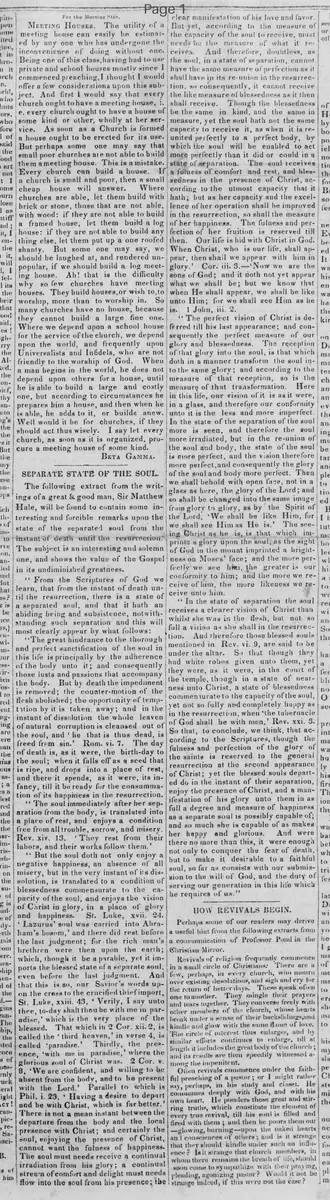
SEPARATE STATE OF THE SOUL.
The following extract from the writings of a great & good man, Sir Matthew Hale, will be found to contain some interesting and forcible remarks upon the state of the separated soul from the instant of death until the resurrection. The subject is an interesting and solemn one, and shows the value of the Gospel in its undiminished greatness.
"From the Scriptures of God we learn, that from the instant of death until the resurrection, there is a state of a separated soul, and that it hath an abiding being and subsistence, notwithstanding such separation and this will most clearly appear by what follows:
"The great hindrance to the thorough and perfect sanctification of the soul in this life is principally by the adherence of the body unto it; and consequently those lusts and passions that accompany the body. But by death the impediment is removed: the counter-motion of the flesh abolished; the opportunity of temptation by it is taken away; and in the instant of dissolution the whole leaven of natural corruption is cleansed out of the soul. and 'he that is thus dead, is freed from sin.' Rom. vi. 7. The day of death is, as it were, the birth-day to the soul: when it falls off as a seed that is ripe. and drops into a place of rest, and there it spends, as it were, its infancy, till it be ready for the consummation of its happiness in the resurrection.
"The soul immediately after her separation from the body. is translated into a place of rest, and enjoys a condition free from all trouble, sorrow, and misery. Rev. xiv. 13. They rest from their labors, and their works follow them.'
"But the soul doth not only enjoy a negative happiness, an absence of all misery, but in the very instant of its dissolution, is translated to a condition of blessedness commensurate to the capacity of the soul, and enjoys the vision of Christ in glory, in a place of glory and happiness. St. Luke, xvii. 24. 'Lazarus' soul was carried into Abraham's bosom,' and there did rest before the last judgment; for the rich man's brethren were then upon the earth; which, though it be a parable, yet it imports the blessed state of a separate soul, even before the last judgment. And that this is so, our Savior's words upon the cross to the crucified thief import, St. Luke, xxiii. 43, 'Verily, I say unto thee, to-day shalt thou be with me in paradise,' which is the very place of the blessed. That which in 2 Cor. xii. 2, is called the 'third heaven,' in verse 4, is called 'paradise.' Thirdly, the presence, 'with me in paradise,' where the glorious soul of Christ was. 2 Cor. v. 8, 'We are confident, and willing to be absent from the body, and to be present with the Lord.' Parallel to which is Phil, i. 23. Having a desire to depart and be with Christ. which is far better.' There is not a mean instant between the departure from the body and the local presence with Christ; and certainly the soul, enjoying the presence of Christ, cannot want the fulness of happiness. The soul must needs receive a continual irradiation from his glory; a continual stream of comfort and delight must needs flow into the soul from his presence; the clear manifestation of his love and favor. But yet. according to the measure of the capacity of the soul to receive, must needs be the measure of what it receives. And therefore, doubtless, as the soul. in a state of separation, cannot have the same measure of perfection as it shall have in its re-union in the resurrection, so consequently, it cannot receive the like measure of blessedness as it then shall receive. Though the blessedness be the same in kind. and the same in measure, yet the soul hath not the same capacity to receive it, as when it is re-united perfectly to a perfect body, by which the soul will be enabled to act more perfectly than it did or could in a state of separation. The soul receives a fulness of comfort and rest, and blessedness in the presence of Christ, according to the utmost capacity that it hath: but as her capacity and the excellence of her operation shall be improved in the resurrection, so shall the measure of her happiness. The fulness and perfection of her fruition is reserved til then. Our life is hid with Christ in God. When Christ, who is our life, shall appear, then shall we appear with him in glory.' Col. iii. 3.—'Now we are the sons of God: and it doth not yet appear what we shall be; but we know that when He shall appear, we shall be like unto Him; for we shall see Him as he is. 1 John, iii. 2.
"The perfect vision of Christ is deferred till his last appearance; and consequently the perfect measure of our glory and blessedness. The reception of that glory into the soul, is that which doth in a manner transform the soul into the same glory; and according to the measure of that reception, so is the measure of that transformation. Here in this life, our vision of it is as it were, in a glass, and therefore our conformity unto it is the less and more imperfect. In the state of the separation of the soul more is seen, and therefore the soul more irradiated, but in the re-union of the soul and body, the state of the soul is more perfect, and the vision therefore more perfect, and consequently the glory of the soul and body more perfect. Then we shall behold with open face, not in a glass as here, the glory of the Lord; and so shall be changed into the same image from glory to glory, as by 'the Spirit of the Lord,' We shall be like Him, for we shall see Him as He is.' The seeing Christ as he is. is that which imprints a glory upon the soul, as the sight of God in the mount imprinted a brightness on Moses' face; and the more perfectly we see him, the greater is our conformity to him; and the more we receive of him. the more likeness we receive unto him.
"In the state of separation the soul receives a clearer vision of Christ than whilst she was in the flesh, but not so full a vision as she shall in the resurrection. And therefore those blessed souls mentioned in Rev. vi. 9, are said to be under the altar. So that though they had white robes given unto them, yet they were, as it were, in the court of the temple, though in a state of nearness unto Christ, a state of blessedness commensurate to the capacity of the soul, yet not so fully and completely happy as in the resurrection, when 'the tabernacle of God shall be with men,' Rev. xxi. 3. So that, to conclude, we think, that according to the Scriptures, though the fulness and perfection of the glory of the saints is reserved to the general resurrection at the second appearance of Christ; yet the blessed souls departed do in the instant of their separation, enjoy the presence of Christ, and a manifestation of his glory unto them in as full a degree and measure of happiness as a separate soul is possibly capable of; and so much she is capable of as makes her happy and glorious. And were there no more than this, it were enough not only to conquer the fear of death, but to make it desirable to a faithful soul, so far as consists with our submission to the will of God, and the duty of serving our generation in this life which he requires of us."
The following extract from the writings of a great & good man, Sir Matthew Hale, will be found to contain some interesting and forcible remarks upon the state of the separated soul from the instant of death until the resurrection. The subject is an interesting and solemn one, and shows the value of the Gospel in its undiminished greatness.
"From the Scriptures of God we learn, that from the instant of death until the resurrection, there is a state of a separated soul, and that it hath an abiding being and subsistence, notwithstanding such separation and this will most clearly appear by what follows:
"The great hindrance to the thorough and perfect sanctification of the soul in this life is principally by the adherence of the body unto it; and consequently those lusts and passions that accompany the body. But by death the impediment is removed: the counter-motion of the flesh abolished; the opportunity of temptation by it is taken away; and in the instant of dissolution the whole leaven of natural corruption is cleansed out of the soul. and 'he that is thus dead, is freed from sin.' Rom. vi. 7. The day of death is, as it were, the birth-day to the soul: when it falls off as a seed that is ripe. and drops into a place of rest, and there it spends, as it were, its infancy, till it be ready for the consummation of its happiness in the resurrection.
"The soul immediately after her separation from the body. is translated into a place of rest, and enjoys a condition free from all trouble, sorrow, and misery. Rev. xiv. 13. They rest from their labors, and their works follow them.'
"But the soul doth not only enjoy a negative happiness, an absence of all misery, but in the very instant of its dissolution, is translated to a condition of blessedness commensurate to the capacity of the soul, and enjoys the vision of Christ in glory, in a place of glory and happiness. St. Luke, xvii. 24. 'Lazarus' soul was carried into Abraham's bosom,' and there did rest before the last judgment; for the rich man's brethren were then upon the earth; which, though it be a parable, yet it imports the blessed state of a separate soul, even before the last judgment. And that this is so, our Savior's words upon the cross to the crucified thief import, St. Luke, xxiii. 43, 'Verily, I say unto thee, to-day shalt thou be with me in paradise,' which is the very place of the blessed. That which in 2 Cor. xii. 2, is called the 'third heaven,' in verse 4, is called 'paradise.' Thirdly, the presence, 'with me in paradise,' where the glorious soul of Christ was. 2 Cor. v. 8, 'We are confident, and willing to be absent from the body, and to be present with the Lord.' Parallel to which is Phil, i. 23. Having a desire to depart and be with Christ. which is far better.' There is not a mean instant between the departure from the body and the local presence with Christ; and certainly the soul, enjoying the presence of Christ, cannot want the fulness of happiness. The soul must needs receive a continual irradiation from his glory; a continual stream of comfort and delight must needs flow into the soul from his presence; the clear manifestation of his love and favor. But yet. according to the measure of the capacity of the soul to receive, must needs be the measure of what it receives. And therefore, doubtless, as the soul. in a state of separation, cannot have the same measure of perfection as it shall have in its re-union in the resurrection, so consequently, it cannot receive the like measure of blessedness as it then shall receive. Though the blessedness be the same in kind. and the same in measure, yet the soul hath not the same capacity to receive it, as when it is re-united perfectly to a perfect body, by which the soul will be enabled to act more perfectly than it did or could in a state of separation. The soul receives a fulness of comfort and rest, and blessedness in the presence of Christ, according to the utmost capacity that it hath: but as her capacity and the excellence of her operation shall be improved in the resurrection, so shall the measure of her happiness. The fulness and perfection of her fruition is reserved til then. Our life is hid with Christ in God. When Christ, who is our life, shall appear, then shall we appear with him in glory.' Col. iii. 3.—'Now we are the sons of God: and it doth not yet appear what we shall be; but we know that when He shall appear, we shall be like unto Him; for we shall see Him as he is. 1 John, iii. 2.
"The perfect vision of Christ is deferred till his last appearance; and consequently the perfect measure of our glory and blessedness. The reception of that glory into the soul, is that which doth in a manner transform the soul into the same glory; and according to the measure of that reception, so is the measure of that transformation. Here in this life, our vision of it is as it were, in a glass, and therefore our conformity unto it is the less and more imperfect. In the state of the separation of the soul more is seen, and therefore the soul more irradiated, but in the re-union of the soul and body, the state of the soul is more perfect, and the vision therefore more perfect, and consequently the glory of the soul and body more perfect. Then we shall behold with open face, not in a glass as here, the glory of the Lord; and so shall be changed into the same image from glory to glory, as by 'the Spirit of the Lord,' We shall be like Him, for we shall see Him as He is.' The seeing Christ as he is. is that which imprints a glory upon the soul, as the sight of God in the mount imprinted a brightness on Moses' face; and the more perfectly we see him, the greater is our conformity to him; and the more we receive of him. the more likeness we receive unto him.
"In the state of separation the soul receives a clearer vision of Christ than whilst she was in the flesh, but not so full a vision as she shall in the resurrection. And therefore those blessed souls mentioned in Rev. vi. 9, are said to be under the altar. So that though they had white robes given unto them, yet they were, as it were, in the court of the temple, though in a state of nearness unto Christ, a state of blessedness commensurate to the capacity of the soul, yet not so fully and completely happy as in the resurrection, when 'the tabernacle of God shall be with men,' Rev. xxi. 3. So that, to conclude, we think, that according to the Scriptures, though the fulness and perfection of the glory of the saints is reserved to the general resurrection at the second appearance of Christ; yet the blessed souls departed do in the instant of their separation, enjoy the presence of Christ, and a manifestation of his glory unto them in as full a degree and measure of happiness as a separate soul is possibly capable of; and so much she is capable of as makes her happy and glorious. And were there no more than this, it were enough not only to conquer the fear of death, but to make it desirable to a faithful soul, so far as consists with our submission to the will of God, and the duty of serving our generation in this life which he requires of us."
What sub-type of article is it?
Essay
What themes does it cover?
Religious
Death Mortality
What keywords are associated?
Separated Soul
Afterlife
Resurrection
Christian Theology
Blessedness
Scriptural Interpretation
Death And Glory
What entities or persons were involved?
Sir Matthew Hale
Literary Details
Title
Separate State Of The Soul.
Author
Sir Matthew Hale
Subject
The State Of The Separated Soul From The Instant Of Death Until The Resurrection
Key Lines
The Day Of Death Is, As It Were, The Birth Day To The Soul: When It Falls Off As A Seed That Is Ripe. And Drops Into A Place Of Rest, And There It Spends, As It Were, Its Infancy, Till It Be Ready For The Consummation Of Its Happiness In The Resurrection.
Verily, I Say Unto Thee, To Day Shalt Thou Be With Me In Paradise,' Which Is The Very Place Of The Blessed.
We Are Confident, And Willing To Be Absent From The Body, And To Be Present With The Lord.'
The Fulness And Perfection Of Her Fruition Is Reserved Til Then.
And Were There No More Than This, It Were Enough Not Only To Conquer The Fear Of Death, But To Make It Desirable To A Faithful Soul