Thank you for visiting SNEWPapers!
Sign up free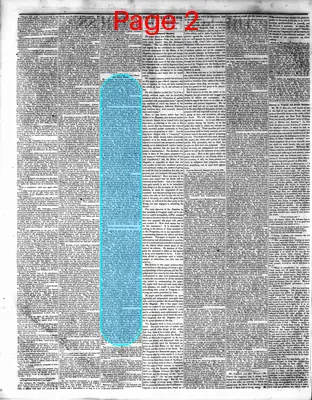
Story
June 21, 1850
The Southern Press
Washington, District Of Columbia
What is this article about?
Columbus (Ga.) Times editorial critiques three plans for slavery in new U.S. territories: Wilmot Proviso, President's non-action, and Clay's compromise. All exclude Southern interests, but Clay's additionally carves Texas and ends DC slave trade, harming South most.
Clipping

OCR Quality
95%
Excellent
Full Text
From the Columbus (Ga.) Times
The Three Plans.
We engaged, last week, to contrast the three leading measures, each having their advocates, for the settlement of the slavery question, in connection with the conquered territories. They are the "Wilmot Proviso," the "non-action" plan of the administration; and the "adjustment" of the committee of thirteen. We shall show wherein they agree, and wherein they differ, and then attempt to strike a fair balance of their relative benefits and disadvantages to the South.
1st. They all agree in substance, if not in form, in practically excluding the South from the newly acquired Territories of New Mexico, Utah and California. The Wilmot-Proviso does this by its express terms; and, so far, is the most honest of the trio.
2d. The President's plan does this in effect; by its let-alone policy and by the mere lapse of time. It proposes to admit California as she is, with a Southern boundary south of 36° 30', and to leave New Mexico and Deseret without civil territorial governments, but under their present military organization; and to the mercy of the same causes and events, which, in California, have worked to the practical and perpetual exclusion of Southern property. It comes to the same conclusion, with the Wilmot Proviso, but by an indirect and less manly course. Its sole advantage, (if it be an advantage,) over the "Wilmot," is, that it will save Gen. Taylor from the alternative of having to sign or veto the Wilmot Proviso.
3d. The Clay compromise, or the plan of the Committee of thirteen, marches up to the same point of practical exclusion of the South; but it does not stop there. It admits California as she is, in violation of the Missouri line, just as the President's plan does; and while it says nothing about prohibiting slavery in New Mexico and Deseret; that silence in the bills, is accompanied by the declaration of Mr. Clay that this boon to the South, amounts to nothing—a mere rattle to pacify grown up children—for slavery is effectually prohibited by the Mexican law of the territories. So that, the Clay plan equally with the President's, and the "Wilmot" shuts out all slavery from the territories, which the lives and the money of those same sinners were freely paid to purchase. So far, they all stand on a dead equality of wrong, neither doing more nor less than the other, but all meeting on the common ground of Southern exclusion. So far then there is no choice between them. But the Clay plan goes further, and does not stop, like the others, at exclusion.
1st. It cuts off of Texas, 140,000 square miles of territory; that is, four and a half degrees south of the Missouri line. This vast slice of territory is equal in extent to two States of the size of Virginia. So that this famous compromise not only deprives the South of all her share in the new territory in dispute between the North and the South, but it actually invades a slave State, partitions off from it an immense domain, now belonging to the South, and makes a free gift of it to free soil. Not a "free gift" either, for Mr. Clay proposes to put his hands into the Federal Treasury, chiefly filled by the South, and take from it, $10,000,000 as a douceur to Texas, for consenting to this mighty treason to the cause of her Southern sisters. Can a more monstrous proposition be made to a people with brains in their heads? And how, we ask, can the Washington "Union," professing to be Southern and denouncing the administration plan as monstrous—and how can the Columbus Enquirer, which almost went into spasms, because Mr. Polk signed the Oregon bill, in which the Wilmot principle was applied to a region, whose Southern boundary was 400 miles north of the Missouri line, hold up their heads and pronounce this a compromise just to the South?
This, then, is one monstrosity of which the Wilmot Proviso and the President's plan are guiltless.
But the Clay compromise goes farther yet. It proposes
2d. To abolish the slave trade in the District of Columbia. We have heretofore shown the danger of consenting to this arrangement, in the present state of the abolition question. The South is acting under duress. She is not at liberty to exercise a liberality in the amelioration of the African condition, which she might, in a state of peace, be disposed to do. Twenty years ago, public opinion in Virginia was forming rapidly on emancipation views. The abolition crusade stopped the process short. Assailed as the South is, she is forced, in self-defence, to tighten the cords, which her natural impulses, left to themselves, would incline her to loosen. All such experiments have become dangerous, and the duty and policy of self-defence compel her to view with alarm, and meet with resistance, the first step of Congressional interference with the subject. It is no answer to say, that the people of the District of Columbia desire this thing. They are few, the Southern people are millions; the wishes of the handful must yield to the imperative demands for safety of the greatest number. We may commiserate the anomalous position in which the District of Columbia stands, by her peculiar relations to the Federal Government and the States; but we cannot surrender a vital principle to change her position.
3. The Clay plan has one other feature, right in itself, but by no means entitled to the dignified appellation of a compromise. It is to pass more stringent acts of Congress to compel the delivery of fugitives into the free States. Congress ought to pass such laws, if they are worth passing in the face of the "higher law" and "conscience" law party, headed by Seward in the Northern States. But as the Constitution expressly guarantees this right of reclamation and delivery, Mr. Clay cannot humbug the South with the notion that these proposed acts have any of the features of a new concession or compromise. In that, "we thank you for nothing"—we have already got what you offer to give us, and we are asked to be very grateful to the North for condescending to respect one clause of the Constitution.
Now, if there is anything unfair in this running analysis of the three plans, on our conscience, we cannot detect it. Clay's plan does the South all the harm that the other two do, and a great deal more. And, in just so far as it differs from the other two, it differs disadvantageously and injuriously to the South. It settles nothing, but what it settles against us. It is a compromise, all on one side, and one, which if accepted by the South, will have been extorted from her cowardice and weakness; and will make the names of Southern honor, spirit, independence and chivalry by-words of reproach and opprobrium throughout the world.
These are our views of the three measures; and we challenge Mr. Ritchie of the "Union," or Mr. Flournoy, of the "Columbus Enquirer," (from whom he quotes,) or Mr. Any-body-else, to combat the proposition, that the Clay compromise plan is, for the South, the worst measure of the three.
The Three Plans.
We engaged, last week, to contrast the three leading measures, each having their advocates, for the settlement of the slavery question, in connection with the conquered territories. They are the "Wilmot Proviso," the "non-action" plan of the administration; and the "adjustment" of the committee of thirteen. We shall show wherein they agree, and wherein they differ, and then attempt to strike a fair balance of their relative benefits and disadvantages to the South.
1st. They all agree in substance, if not in form, in practically excluding the South from the newly acquired Territories of New Mexico, Utah and California. The Wilmot-Proviso does this by its express terms; and, so far, is the most honest of the trio.
2d. The President's plan does this in effect; by its let-alone policy and by the mere lapse of time. It proposes to admit California as she is, with a Southern boundary south of 36° 30', and to leave New Mexico and Deseret without civil territorial governments, but under their present military organization; and to the mercy of the same causes and events, which, in California, have worked to the practical and perpetual exclusion of Southern property. It comes to the same conclusion, with the Wilmot Proviso, but by an indirect and less manly course. Its sole advantage, (if it be an advantage,) over the "Wilmot," is, that it will save Gen. Taylor from the alternative of having to sign or veto the Wilmot Proviso.
3d. The Clay compromise, or the plan of the Committee of thirteen, marches up to the same point of practical exclusion of the South; but it does not stop there. It admits California as she is, in violation of the Missouri line, just as the President's plan does; and while it says nothing about prohibiting slavery in New Mexico and Deseret; that silence in the bills, is accompanied by the declaration of Mr. Clay that this boon to the South, amounts to nothing—a mere rattle to pacify grown up children—for slavery is effectually prohibited by the Mexican law of the territories. So that, the Clay plan equally with the President's, and the "Wilmot" shuts out all slavery from the territories, which the lives and the money of those same sinners were freely paid to purchase. So far, they all stand on a dead equality of wrong, neither doing more nor less than the other, but all meeting on the common ground of Southern exclusion. So far then there is no choice between them. But the Clay plan goes further, and does not stop, like the others, at exclusion.
1st. It cuts off of Texas, 140,000 square miles of territory; that is, four and a half degrees south of the Missouri line. This vast slice of territory is equal in extent to two States of the size of Virginia. So that this famous compromise not only deprives the South of all her share in the new territory in dispute between the North and the South, but it actually invades a slave State, partitions off from it an immense domain, now belonging to the South, and makes a free gift of it to free soil. Not a "free gift" either, for Mr. Clay proposes to put his hands into the Federal Treasury, chiefly filled by the South, and take from it, $10,000,000 as a douceur to Texas, for consenting to this mighty treason to the cause of her Southern sisters. Can a more monstrous proposition be made to a people with brains in their heads? And how, we ask, can the Washington "Union," professing to be Southern and denouncing the administration plan as monstrous—and how can the Columbus Enquirer, which almost went into spasms, because Mr. Polk signed the Oregon bill, in which the Wilmot principle was applied to a region, whose Southern boundary was 400 miles north of the Missouri line, hold up their heads and pronounce this a compromise just to the South?
This, then, is one monstrosity of which the Wilmot Proviso and the President's plan are guiltless.
But the Clay compromise goes farther yet. It proposes
2d. To abolish the slave trade in the District of Columbia. We have heretofore shown the danger of consenting to this arrangement, in the present state of the abolition question. The South is acting under duress. She is not at liberty to exercise a liberality in the amelioration of the African condition, which she might, in a state of peace, be disposed to do. Twenty years ago, public opinion in Virginia was forming rapidly on emancipation views. The abolition crusade stopped the process short. Assailed as the South is, she is forced, in self-defence, to tighten the cords, which her natural impulses, left to themselves, would incline her to loosen. All such experiments have become dangerous, and the duty and policy of self-defence compel her to view with alarm, and meet with resistance, the first step of Congressional interference with the subject. It is no answer to say, that the people of the District of Columbia desire this thing. They are few, the Southern people are millions; the wishes of the handful must yield to the imperative demands for safety of the greatest number. We may commiserate the anomalous position in which the District of Columbia stands, by her peculiar relations to the Federal Government and the States; but we cannot surrender a vital principle to change her position.
3. The Clay plan has one other feature, right in itself, but by no means entitled to the dignified appellation of a compromise. It is to pass more stringent acts of Congress to compel the delivery of fugitives into the free States. Congress ought to pass such laws, if they are worth passing in the face of the "higher law" and "conscience" law party, headed by Seward in the Northern States. But as the Constitution expressly guarantees this right of reclamation and delivery, Mr. Clay cannot humbug the South with the notion that these proposed acts have any of the features of a new concession or compromise. In that, "we thank you for nothing"—we have already got what you offer to give us, and we are asked to be very grateful to the North for condescending to respect one clause of the Constitution.
Now, if there is anything unfair in this running analysis of the three plans, on our conscience, we cannot detect it. Clay's plan does the South all the harm that the other two do, and a great deal more. And, in just so far as it differs from the other two, it differs disadvantageously and injuriously to the South. It settles nothing, but what it settles against us. It is a compromise, all on one side, and one, which if accepted by the South, will have been extorted from her cowardice and weakness; and will make the names of Southern honor, spirit, independence and chivalry by-words of reproach and opprobrium throughout the world.
These are our views of the three measures; and we challenge Mr. Ritchie of the "Union," or Mr. Flournoy, of the "Columbus Enquirer," (from whom he quotes,) or Mr. Any-body-else, to combat the proposition, that the Clay compromise plan is, for the South, the worst measure of the three.
What sub-type of article is it?
Historical Event
What themes does it cover?
Justice
Misfortune
Deception
What keywords are associated?
Slavery Question
Wilmot Proviso
Clay Compromise
Southern Exclusion
Territories
Fugitive Slaves
What entities or persons were involved?
Gen. Taylor
Mr. Clay
Mr. Ritchie
Mr. Flournoy
Mr. Polk
Seward
Where did it happen?
New Mexico, Utah, California, Texas, District Of Columbia
Story Details
Key Persons
Gen. Taylor
Mr. Clay
Mr. Ritchie
Mr. Flournoy
Mr. Polk
Seward
Location
New Mexico, Utah, California, Texas, District Of Columbia
Story Details
Editorial contrasts three plans for slavery in conquered territories: Wilmot Proviso explicitly excludes South; President's non-action leads to same by default; Clay compromise excludes South, cuts Texas territory, abolishes slave trade in DC, and strengthens fugitive slave laws, deemed worst for South.