Thank you for visiting SNEWPapers!
Sign up free
The Emporia News
Emporia, Lyon County, Kansas
What is this article about?
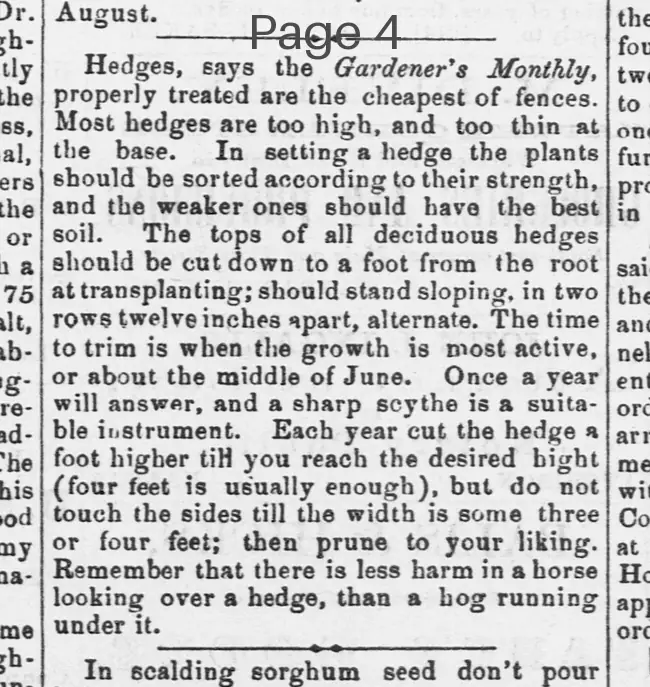
Advice from Gardener's Monthly on planting and maintaining hedges as cost-effective fences: sort plants by strength, cut tops low at transplanting, plant in sloping double rows, trim annually in mid-June with a scythe, gradually increase height to four feet, and prune sides later to prevent animals from passing under.
Clipping
OCR Quality
Full Text
What sub-type of article is it?
What keywords are associated?
Domestic News Details
Event Details
Hedges, properly treated, are the cheapest fences. Most are too high and thin at base. Sort plants by strength, give weaker best soil. Cut deciduous hedge tops to one foot from root at transplanting; plant sloping in two alternate rows 12 inches apart. Trim when growth active, mid-June, once yearly with sharp scythe. Cut one foot higher each year to desired height (four feet usually enough); avoid sides until three or four feet wide, then prune. Better horse looks over than hog runs under.