Thank you for visiting SNEWPapers!
Sign up free
Literary
April 27, 1791
Gazette Of The United States
New York, New York County, New York
What is this article about?
In this installment of Discourses on Davila, the author critiques historical arguments against monarchy and nobility, referencing Stephen Boetius's 16th-century essay. He defends hereditary succession as a practical solution to governmental instability, contrasting it with the risks of majority rule, and regrets the lack of constructive alternatives in such critiques.
Clipping
OCR Quality
98%
Excellent
Full Text
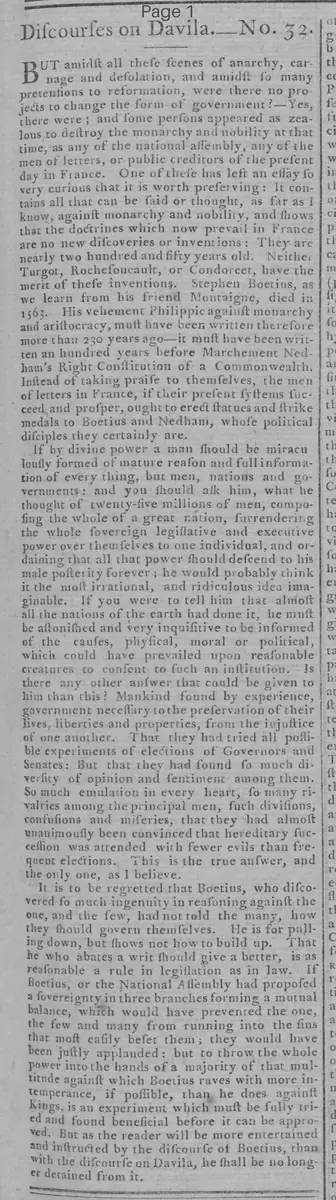
Discourses on Davila. No. 32.
But amidst all these scenes of anarchy, carnage and desolation, and amidst so many pretensions to reformation, were there no projects to change the form of government?--Yes, there were; and some persons appeared as zealous to destroy the monarchy and nobility at that time, as any of the national assembly, any of the men of letters, or public creditors of the present day in France. One of these has left an essay so very curious that it is worth preserving: It contains all that can be said or thought, as far as I know, against monarchy and nobility, and shows that the doctrines which now prevail in France are no new discoveries or inventions: They are nearly two hundred and fifty years old. Neither Turgot, Rochefoucault, or Condorcet, have the merit of these inventions. Stephen Boetius, as we learn from his friend Montaigne, died in 1563. His vehement Philippic against monarchy and aristocracy, must have been written therefore more than 230 years ago--it must have been written one hundred years before Marchamont Nedham's Right Constitution of a Commonwealth.
Instead of taking praise to themselves, the men of letters in France, if their present systems succeed and prosper, ought to erect statues and strike medals to Boetius and Nedham, whose political disciples they certainly are.
If by divine power a man should be miraculously formed of mature reason and full information of every thing, but men, nations and governments: and you should ask him, what he thought of twenty-five millions of men, composing the whole of a great nation, surrendering the whole sovereign legislative and executive power over themselves to one individual, and ordaining that all that power should descend to his male posterity forever; he would probably think it the most irrational, and ridiculous idea imaginable. If you were to tell him that almost all the nations of the earth had done it, he must be astonished and very inquisitive to be informed of the causes, physical, moral or political, which could have prevailed upon reasonable creatures to consent to such an institution. Is there any other answer that could be given to him than this? Mankind found by experience, government necessary to the preservation of their lives, liberties and properties, from the injustice of one another. That they had tried all possible experiments of elections of Governors and Senates: But that they had found so much diversity of opinion and sentiment among them. So much emulation in every heart, so many rivalries among the principal men, such divisions, confusions and miseries, that they had almost unanimously been convinced that hereditary succession was attended with fewer evils than frequent elections. This is the true answer, and the only one, as I believe.
It is to be regretted that Boetius, who discovered so much ingenuity in reasoning against the one, and the few, had not told the many, how they should govern themselves. He is for pulling down, but shows not how to build up. That he who abates a writ should give a better, is as reasonable a rule in legislation as in law. If Boetius, or the National Assembly had proposed a sovereignty in three branches forming a mutual balance, which would have prevented the one, the few and many from running into the sins that most easily beset them; they would have been justly applauded: but to throw the whole power into the hands of a majority of that multitude against which Boetius raves with more intemperance, if possible, than he does against Kings, is an experiment which must be fully tried and found beneficial before it can be approved. But as the reader will be more entertained and instructed by the discourse of Boetius, than with the discourse on Davila, he shall be no longer detained from it.
But amidst all these scenes of anarchy, carnage and desolation, and amidst so many pretensions to reformation, were there no projects to change the form of government?--Yes, there were; and some persons appeared as zealous to destroy the monarchy and nobility at that time, as any of the national assembly, any of the men of letters, or public creditors of the present day in France. One of these has left an essay so very curious that it is worth preserving: It contains all that can be said or thought, as far as I know, against monarchy and nobility, and shows that the doctrines which now prevail in France are no new discoveries or inventions: They are nearly two hundred and fifty years old. Neither Turgot, Rochefoucault, or Condorcet, have the merit of these inventions. Stephen Boetius, as we learn from his friend Montaigne, died in 1563. His vehement Philippic against monarchy and aristocracy, must have been written therefore more than 230 years ago--it must have been written one hundred years before Marchamont Nedham's Right Constitution of a Commonwealth.
Instead of taking praise to themselves, the men of letters in France, if their present systems succeed and prosper, ought to erect statues and strike medals to Boetius and Nedham, whose political disciples they certainly are.
If by divine power a man should be miraculously formed of mature reason and full information of every thing, but men, nations and governments: and you should ask him, what he thought of twenty-five millions of men, composing the whole of a great nation, surrendering the whole sovereign legislative and executive power over themselves to one individual, and ordaining that all that power should descend to his male posterity forever; he would probably think it the most irrational, and ridiculous idea imaginable. If you were to tell him that almost all the nations of the earth had done it, he must be astonished and very inquisitive to be informed of the causes, physical, moral or political, which could have prevailed upon reasonable creatures to consent to such an institution. Is there any other answer that could be given to him than this? Mankind found by experience, government necessary to the preservation of their lives, liberties and properties, from the injustice of one another. That they had tried all possible experiments of elections of Governors and Senates: But that they had found so much diversity of opinion and sentiment among them. So much emulation in every heart, so many rivalries among the principal men, such divisions, confusions and miseries, that they had almost unanimously been convinced that hereditary succession was attended with fewer evils than frequent elections. This is the true answer, and the only one, as I believe.
It is to be regretted that Boetius, who discovered so much ingenuity in reasoning against the one, and the few, had not told the many, how they should govern themselves. He is for pulling down, but shows not how to build up. That he who abates a writ should give a better, is as reasonable a rule in legislation as in law. If Boetius, or the National Assembly had proposed a sovereignty in three branches forming a mutual balance, which would have prevented the one, the few and many from running into the sins that most easily beset them; they would have been justly applauded: but to throw the whole power into the hands of a majority of that multitude against which Boetius raves with more intemperance, if possible, than he does against Kings, is an experiment which must be fully tried and found beneficial before it can be approved. But as the reader will be more entertained and instructed by the discourse of Boetius, than with the discourse on Davila, he shall be no longer detained from it.
What sub-type of article is it?
Essay
What themes does it cover?
Political
Liberty Freedom
What keywords are associated?
Monarchy
Nobility
Government
Hereditary Succession
Boetius
Political Theory
Elections
Sovereignty
Literary Details
Title
Discourses On Davila. No. 32.
Key Lines
If By Divine Power A Man Should Be Miraculously Formed Of Mature Reason And Full Information Of Every Thing, But Men, Nations And Governments: And You Should Ask Him, What He Thought Of Twenty Five Millions Of Men, Composing The Whole Of A Great Nation, Surrendering The Whole Sovereign Legislative And Executive Power Over Themselves To One Individual, And Ordaining That All That Power Should Descend To His Male Posterity Forever; He Would Probably Think It The Most Irrational, And Ridiculous Idea Imaginable.
Mankind Found By Experience, Government Necessary To The Preservation Of Their Lives, Liberties And Properties, From The Injustice Of One Another.
That They Had Tried All Possible Experiments Of Elections Of Governors And Senates: But That They Had Found So Much Diversity Of Opinion And Sentiment Among Them.
Hereditary Succession Was Attended With Fewer Evils Than Frequent Elections.
To Throw The Whole Power Into The Hands Of A Majority Of That Multitude Against Which Boetius Raves With More Intemperance, If Possible, Than He Does Against Kings, Is An Experiment Which Must Be Fully Tried And Found Beneficial Before It Can Be Approved.