Thank you for visiting SNEWPapers!
Sign up free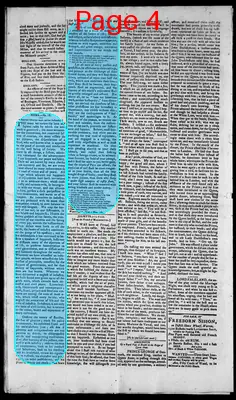
Literary
July 27, 1805
Herald Of The United States
Warren, Bristol County, Rhode Island
What is this article about?
An essay praising laborious work and husbandry as essential for health, happiness, societal order, and moral virtue. It contrasts industry with indolence, which leads to vice and ruin, and includes poetic excerpts extolling the benefits of toil.
Clipping
OCR Quality
98%
Excellent
Full Text
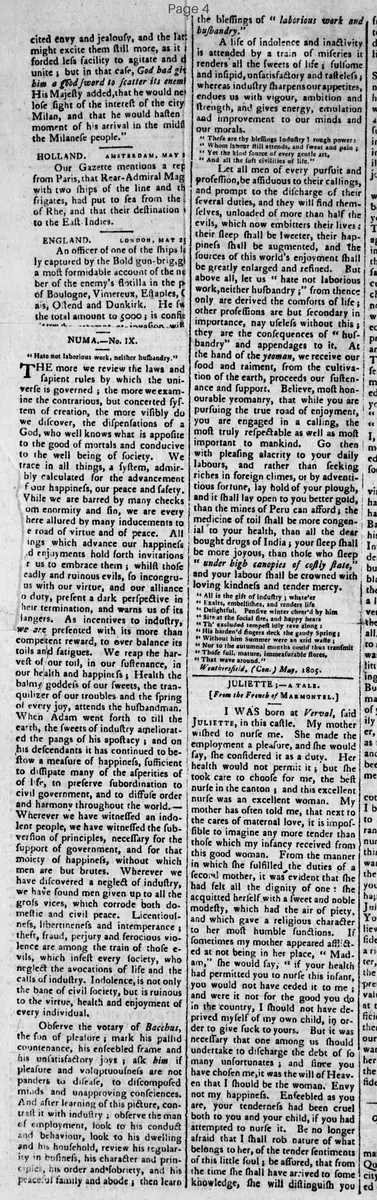
NUMA.-No. IX.
"Hate not laborious work, neither husbandry."
THE more we review the laws and sapient rules by which the universe is governed; the more we examine the contrarious, but concerted system of creation, the more visibly do we discover, the dispensations of a God, who well knows what is apposite to the good of mortals and conducive to the well being of society. We trace in all things, a system, admirably calculated for the advancement of our happiness, our peace and safety. While we are barred by many checks from enormity and sin, we are everywhere allured by many inducements to the road of virtue and of peace. All things which advance our happiness and enjoyments hold forth invitations for us to embrace them; whilst those deadly and ruinous evils, so incongruous with our virtue, and our alliance to duty, present a dark perspective in their termination, and warns us of its dangers. As incentives to industry, we are presented with its more than competent reward, to over balance its toils and fatigues. We reap the harvest of our toil, in our sustenance, in our health and happiness; Health the balmy goddess of our sweets, the tranquilizer of our troubles and the spring of every joy, attends the husbandman. When Adam went forth to till the earth, the sweets of industry ameliorated the pangs of his apostasy; and on his descendants it has continued to bestow a measure of happiness, sufficient to dissipate many of the asperities of life, to preserve subordination to civil government, and to diffuse order and harmony throughout the world.
Wherever we have witnessed an indolent people, we have witnessed the subversion of principles, necessary for the support of government, and for that moiety of happiness, without which men are but brutes. Wherever we have discovered a neglect of industry, we have found men given up to all the gross vices, which corrode both domestic and civil peace. Licentiousness, libertineness and intemperance; theft, fraud, perjury and ferocious violence are among the train of those evils, which infest every society, who neglect the avocations of life and the calls of industry. Indolence, is not only the bane of civil society, but is ruinous to the virtue, health and enjoyment of every individual.
Observe the votary of Bacchus, the son of pleasure; mark his pallid countenance, his enfeebled frame and his unsatisfactory joys; ask him if pleasure and voluptuousness are not panders to disease, to discomposed minds and unapproving consciences. And after learning of this picture, contrast it with industry; observe the man of employment, look to his conduct and behaviour, look to his dwelling and his household, review his regularity in business, his character and principles, his order and sobriety, and his peaceful family and abode; then learn the blessings of "laborious work and husbandry."
A life of indolence and inactivity is attended by a train of miseries it renders all the sweets of life; fulsome and insipid, unsatisfactory and tasteless: whereas industry sharpens our appetites. endues us with vigour, ambition and strength, and gives energy, emulation and improvement to our minds and our morals.
"These are thy blessings Industry! rough power:
Whom labour still attends, and sweat and pain ;
Yet the kind source of every gentle art,
And all the soft civilities of life."
Let all men of every pursuit and profession, be assiduous to their callings, and prompt to the discharge of their several duties, and they will find themselves, unloaded of more than half the evils, which now embitters their lives: their sleep shall be sweeter, their happiness shall be augmented, and the sources of this world's enjoyment shall be greatly enlarged and refined. But above all, let us "hate not laborious work, neither husbandry;" from thence only are derived the comforts of life: other professions are but secondary in importance, nay useless without this; they are the consequences of "husbandry" and appendages to it. At the hand of the yeoman, we receive our food and raiment, from the cultivation of the earth, proceeds our sustenance and support. Believe, most honourable yeomanry, that while you are pursuing the true road of enjoyment, you are engaged in a calling, the most truly respectable as well as most important to mankind. Go then with pleasing alacrity to your daily labours, and rather than seeking riches in foreign climes, or by adventitious fortune, lay hold of your plough, and it shall lay open to you better gold, than the mines of Peru can afford; the medicine of toil shall be more congenial to your health, than all the dear bought drugs of India; your sleep shall be more joyous, than those who sleep "under high canopies of costly state," and your labour shall be crowned with loving kindness and tender mercy.
"All is the gift of industry; whate'er
Exalts, embellishes, and renders life
Delightful. Pensive winter cheer'd by him
Sits at the social fire, and happy hears
Th' excluded tempest idly rave along :
His harden'd fingers deck the gaudy Spring;
Without him Summer were an arid waste;
Nor to the autumnal months could thus transmit
Those full, mature, immeasurable stores,
That wave around."
"Hate not laborious work, neither husbandry."
THE more we review the laws and sapient rules by which the universe is governed; the more we examine the contrarious, but concerted system of creation, the more visibly do we discover, the dispensations of a God, who well knows what is apposite to the good of mortals and conducive to the well being of society. We trace in all things, a system, admirably calculated for the advancement of our happiness, our peace and safety. While we are barred by many checks from enormity and sin, we are everywhere allured by many inducements to the road of virtue and of peace. All things which advance our happiness and enjoyments hold forth invitations for us to embrace them; whilst those deadly and ruinous evils, so incongruous with our virtue, and our alliance to duty, present a dark perspective in their termination, and warns us of its dangers. As incentives to industry, we are presented with its more than competent reward, to over balance its toils and fatigues. We reap the harvest of our toil, in our sustenance, in our health and happiness; Health the balmy goddess of our sweets, the tranquilizer of our troubles and the spring of every joy, attends the husbandman. When Adam went forth to till the earth, the sweets of industry ameliorated the pangs of his apostasy; and on his descendants it has continued to bestow a measure of happiness, sufficient to dissipate many of the asperities of life, to preserve subordination to civil government, and to diffuse order and harmony throughout the world.
Wherever we have witnessed an indolent people, we have witnessed the subversion of principles, necessary for the support of government, and for that moiety of happiness, without which men are but brutes. Wherever we have discovered a neglect of industry, we have found men given up to all the gross vices, which corrode both domestic and civil peace. Licentiousness, libertineness and intemperance; theft, fraud, perjury and ferocious violence are among the train of those evils, which infest every society, who neglect the avocations of life and the calls of industry. Indolence, is not only the bane of civil society, but is ruinous to the virtue, health and enjoyment of every individual.
Observe the votary of Bacchus, the son of pleasure; mark his pallid countenance, his enfeebled frame and his unsatisfactory joys; ask him if pleasure and voluptuousness are not panders to disease, to discomposed minds and unapproving consciences. And after learning of this picture, contrast it with industry; observe the man of employment, look to his conduct and behaviour, look to his dwelling and his household, review his regularity in business, his character and principles, his order and sobriety, and his peaceful family and abode; then learn the blessings of "laborious work and husbandry."
A life of indolence and inactivity is attended by a train of miseries it renders all the sweets of life; fulsome and insipid, unsatisfactory and tasteless: whereas industry sharpens our appetites. endues us with vigour, ambition and strength, and gives energy, emulation and improvement to our minds and our morals.
"These are thy blessings Industry! rough power:
Whom labour still attends, and sweat and pain ;
Yet the kind source of every gentle art,
And all the soft civilities of life."
Let all men of every pursuit and profession, be assiduous to their callings, and prompt to the discharge of their several duties, and they will find themselves, unloaded of more than half the evils, which now embitters their lives: their sleep shall be sweeter, their happiness shall be augmented, and the sources of this world's enjoyment shall be greatly enlarged and refined. But above all, let us "hate not laborious work, neither husbandry;" from thence only are derived the comforts of life: other professions are but secondary in importance, nay useless without this; they are the consequences of "husbandry" and appendages to it. At the hand of the yeoman, we receive our food and raiment, from the cultivation of the earth, proceeds our sustenance and support. Believe, most honourable yeomanry, that while you are pursuing the true road of enjoyment, you are engaged in a calling, the most truly respectable as well as most important to mankind. Go then with pleasing alacrity to your daily labours, and rather than seeking riches in foreign climes, or by adventitious fortune, lay hold of your plough, and it shall lay open to you better gold, than the mines of Peru can afford; the medicine of toil shall be more congenial to your health, than all the dear bought drugs of India; your sleep shall be more joyous, than those who sleep "under high canopies of costly state," and your labour shall be crowned with loving kindness and tender mercy.
"All is the gift of industry; whate'er
Exalts, embellishes, and renders life
Delightful. Pensive winter cheer'd by him
Sits at the social fire, and happy hears
Th' excluded tempest idly rave along :
His harden'd fingers deck the gaudy Spring;
Without him Summer were an arid waste;
Nor to the autumnal months could thus transmit
Those full, mature, immeasurable stores,
That wave around."
What sub-type of article is it?
Essay
What themes does it cover?
Moral Virtue
Agriculture Rural
Temperance
What keywords are associated?
Industry
Husbandry
Moral Virtue
Agriculture
Indolence
Health
Society
Toil
Yeomanry
Literary Details
Title
Numa. No. Ix.
Subject
"Hate Not Laborious Work, Neither Husbandry."
Key Lines
"These Are Thy Blessings Industry! Rough Power:
Whom Labour Still Attends, And Sweat And Pain ;
Yet The Kind Source Of Every Gentle Art,
And All The Soft Civilities Of Life."
"All Is The Gift Of Industry; Whate'er
Exalts, Embellishes, And Renders Life
Delightful. Pensive Winter Cheer'd By Him
Sits At The Social Fire, And Happy Hears
Th' Excluded Tempest Idly Rave Along :"
Health The Balmy Goddess Of Our Sweets, The Tranquilizer Of Our Troubles And The Spring Of Every Joy, Attends The Husbandman.
Indolence, Is Not Only The Bane Of Civil Society, But Is Ruinous To The Virtue, Health And Enjoyment Of Every Individual.
Believe, Most Honourable Yeomanry, That While You Are Pursuing The True Road Of Enjoyment, You Are Engaged In A Calling, The Most Truly Respectable As Well As Most Important To Mankind.