Thank you for visiting SNEWPapers!
Sign up free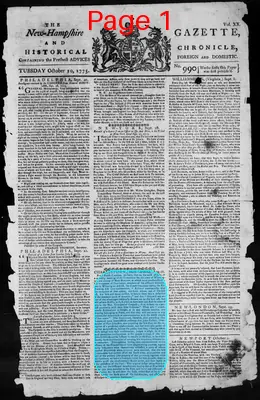
The New Hampshire Gazette And Historical Chronicle
Portsmouth, Greenland, Rockingham County, New Hampshire
What is this article about?
On July 20, Wilmington and New-Hanover Committee in North Carolina unanimously resolved against the Restraining Act, vowed adherence to Continental Congress plans, boycotted Poole shipping, and mobilized volunteers to burn Fort Johnston and demolish fortifications after Commander John Collett fled with arms and ammunition.
Clipping
OCR Quality
Full Text
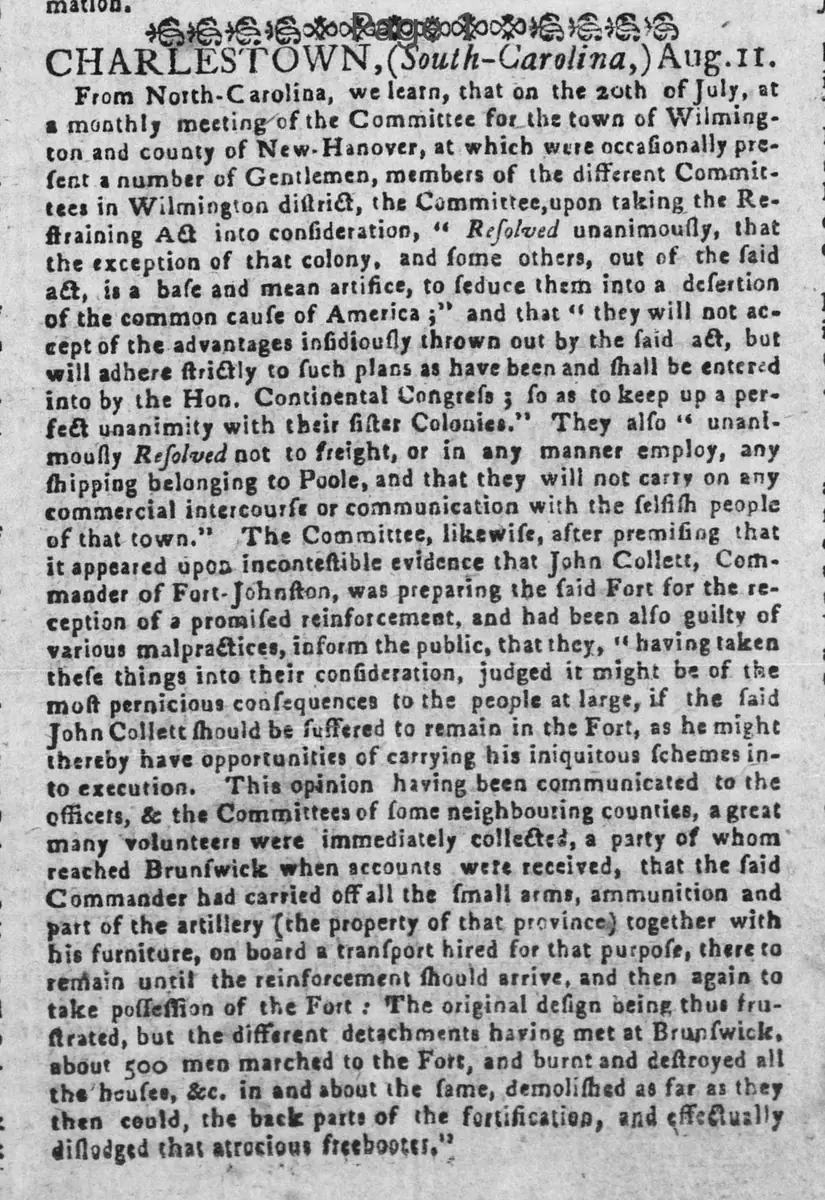
From North-Carolina, we learn, that on the 20th of July, at a monthly meeting of the Committee for the town of Wilmington and county of New-Hanover, at which were occasionally present a number of Gentlemen, members of the different Committees in Wilmington district, the Committee, upon taking the Restraining Act into consideration, "Resolved unanimously, that the exception of that colony. and some others, out of the said Act, is a base and mean artifice, to seduce them into a desertion of the common cause of America;" and that "they will not accept of the advantages insidiously thrown out by the said act, but will adhere strictly to such plans as have been and shall be entered into by the Hon. Continental Congress; so as to keep up a perfect unanimity with their sister Colonies." They also "unanimously Resolved not to freight, or in any manner employ, any shipping belonging to Poole, and that they will not carry on any commercial intercourse or communication with the selfish people of that town." The Committee, likewise, after premising that it appeared upon incontestable evidence that John Collett, Commander of Fort-Johnston, was preparing the said Fort for the reception of a promised reinforcement, and had been also guilty of various malpractices, inform the public, that they, "having taken these things into their consideration, judged it might be of the most pernicious consequences to the people at large, if the said John Collett should be suffered to remain in the Fort, as he might thereby have opportunities of carrying his iniquitous schemes into execution. This opinion having been communicated to the officers, & the Committees of some neighbouring counties, a great many volunteers were immediately collected, a party of whom reached Brunswick when accounts were received, that the said Commander had carried off all the small arms, ammunition and part of the artillery (the property of that province) together with his furniture, on board a transport hired for that purpose, there to remain until the reinforcement should arrive, and then again to take possession of the Fort: The original design being thus frustrated, but the different detachments having met at Brunswick, about 500 men marched to the Fort, and burnt and destroyed all the houses, &c. in and about the same, demolished as far as they then could, the back parts of the fortification, and effectually dislodged that atrocious freebooter."
What sub-type of article is it?
What keywords are associated?
What entities or persons were involved?
Where did it happen?
Domestic News Details
Primary Location
Wilmington And New Hanover, North Carolina
Event Date
20th Of July
Key Persons
Outcome
john collett fled with small arms, ammunition, part of the artillery, and furniture; about 500 volunteers burnt and destroyed houses in and about fort-johnston, demolished back parts of the fortification, and dislodged the commander.
Event Details
At a monthly meeting of the Committee for Wilmington and New-Hanover, with members from Wilmington district present, the Committee resolved unanimously against the Restraining Act as a seduction tactic, vowed adherence to Continental Congress plans for unanimity with sister colonies, and resolved not to employ shipping from Poole or conduct commerce with its people. Upon evidence of John Collett preparing Fort-Johnston for reinforcements and malpractices, the Committee deemed his presence dangerous; communicated to officers and neighboring committees, volunteers collected, but Collett fled; 500 men then marched to the Fort, burnt houses, demolished fortifications, and dislodged him.