Thank you for visiting SNEWPapers!
Sign up free
Editorial
September 19, 1799
Gazette Of The United States, & Philadelphia Daily Advertiser
Philadelphia, Philadelphia County, Pennsylvania
What is this article about?
Criticism of Thomas McKean's judicial conduct in jailing Quaker Norris Jones for refusing the oath of allegiance under the test law, portrayed as illegal and tyrannical, used to argue against his election.
Clipping
OCR Quality
88%
Good
Full Text
COMMUNICATION.
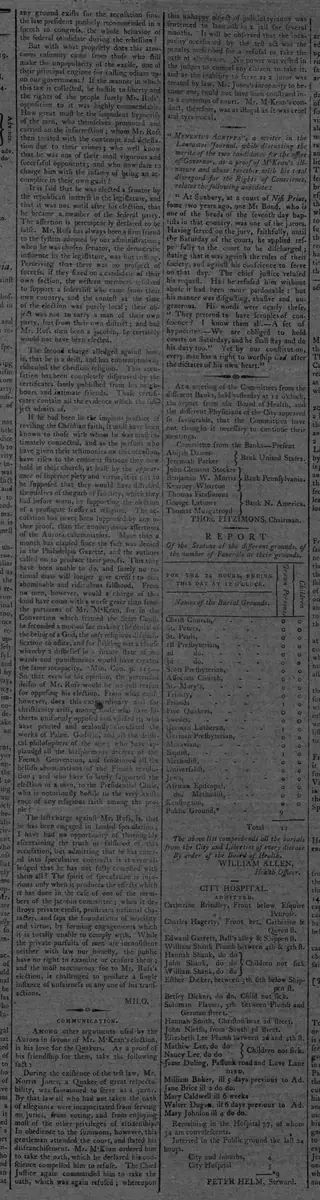
Among other arguments used by the Aurora in favour of Mr. M'Kean's election, is his love for the Quakers. As a proof of his friendship for them, take the following fact:
During the existence of the test law, Mr. Norris Jones, a Quaker of great respectability, was summoned to serve as a juror. By that law all who had not taken the oath of allegiance were incapacitated from serving on juries, from voting, and from enjoying most of the other privileges of citizenship.
In obedience to the summons, however, this gentleman attended the court, and stated his disfranchisement. Mr. M'Kean ordered him to take the oath, which he declared his conscience compelled him to refuse. The Chief Justice again commanded him to take the oath, which was again refused; whereupon this unhappy object of judicial tyranny was sentenced to languish in a jail for several months.
It will be observed that the incapacity occasioned by the test act was the penalty prescribed for a refusal to take the oath of allegiance. No power was vested in the judges to compel any citizen to take it, and as the inability to serve as a juror was created by law, Mr. Jones's incapacity to become one, could not have been construed into a contempt of court. Mr. M'Kean's conduct, therefore, was as illegal as it was cruel and tyrannical.
Among other arguments used by the Aurora in favour of Mr. M'Kean's election, is his love for the Quakers. As a proof of his friendship for them, take the following fact:
During the existence of the test law, Mr. Norris Jones, a Quaker of great respectability, was summoned to serve as a juror. By that law all who had not taken the oath of allegiance were incapacitated from serving on juries, from voting, and from enjoying most of the other privileges of citizenship.
In obedience to the summons, however, this gentleman attended the court, and stated his disfranchisement. Mr. M'Kean ordered him to take the oath, which he declared his conscience compelled him to refuse. The Chief Justice again commanded him to take the oath, which was again refused; whereupon this unhappy object of judicial tyranny was sentenced to languish in a jail for several months.
It will be observed that the incapacity occasioned by the test act was the penalty prescribed for a refusal to take the oath of allegiance. No power was vested in the judges to compel any citizen to take it, and as the inability to serve as a juror was created by law, Mr. Jones's incapacity to become one, could not have been construed into a contempt of court. Mr. M'Kean's conduct, therefore, was as illegal as it was cruel and tyrannical.
What sub-type of article is it?
Legal Reform
Moral Or Religious
Partisan Politics
What keywords are associated?
Quakers
Test Law
Oath Of Allegiance
Judicial Tyranny
Mckean Election
Norris Jones
What entities or persons were involved?
Mr. M'kean
Mr. Norris Jones
Aurora
Editorial Details
Primary Topic
Criticism Of Mckean's Treatment Of Quaker Juror Under Test Law
Stance / Tone
Strongly Critical Of Judicial Tyranny And Illegal Conduct
Key Figures
Mr. M'kean
Mr. Norris Jones
Aurora
Key Arguments
Mckean's Jailing Of Quaker Jones For Refusing Oath Was Illegal
Test Law Already Disqualified Non Oath Takers From Jury Service
No Judicial Power To Compel Oath Taking
Jones's Refusal Not Contempt Of Court
Conduct Cruel And Tyrannical, Contradicting Claims Of Friendship For Quakers