Thank you for visiting SNEWPapers!
Sign up free
Literary
May 9, 1832
Vandalia Whig And Illinois Intelligencer
Vandalia, Fayette County, Illinois
What is this article about?
Narrative poem about an emigrant family in the Western forest: father clears trees with son, daughter brings lunch; children miss New England home; storm night brings wife's reassurance; father dreams of native city, realizes happiness roots in affections. (248 characters)
Clipping
OCR Quality
98%
Excellent
Full Text
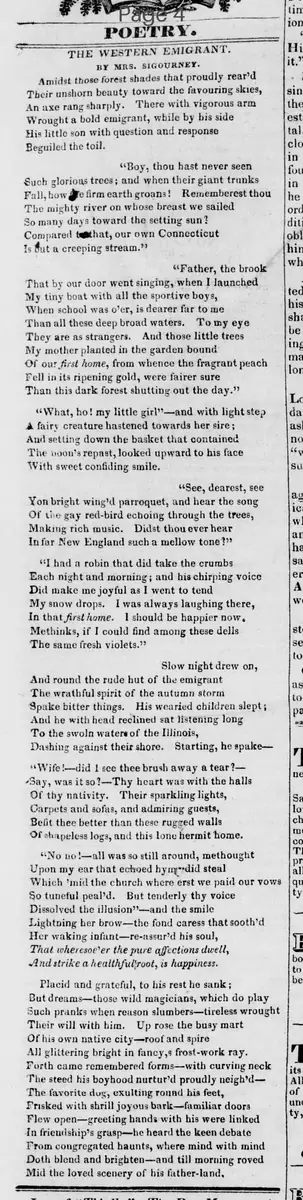
POETRY.
THE WESTERN EMIGRANT
BY MRS. SIGOURNEY.
Amidst those forest shades that proudly rear'd
Their unshorn beauty toward the favouring skies,
An axe rang sharply. There with vigorous arm
Wrought a bold emigrant, while by his side
His little son with question and response
Beguiled the toil.
"Boy, thou hast never seen
Such glorious trees; and when their giant trunks
Fall, how the firm earth groans! Rememberest thou
The mighty river on whose breast we sailed
So many days toward the setting sun?
Compared to that, our own Connecticut
Is but a creeping stream."
"Father, the brook
That by our door went singing, when I launched
My tiny boat with all the sportive boys,
When school was o'er, is dearer far to me
Than all these deep broad waters. To my eye
They are as strangers. And those little trees
My mother planted in the garden bound
Of our first home, from whence the fragrant peach
Fell in its ripening gold, were fairer sure
Than this dark forest shutting out the day."
"What, ho! my little girl" —and with light step
A fairy creature hastened towards her sire;
And setting down the basket that contained
The noon's repast, looked upward to his face
With sweet confiding smile.
"See, dearest, see
Yon bright wing'd parroquet, and hear the song
Of the gay red-bird echoing through the trees,
Making rich music. Didst thou ever hear
In far New England such a mellow tone?"
"I had a robin that did take the crumbs
Each night and morning; and his chirping voice
Did make me joyful as I went to tend
My snow drops. I was always laughing there,
In that first home. I should be happier now.
Methinks, if I could find among these dells
The same fresh violets."
Slow night drew on,
And round the rude hut of the emigrant
The wrathful spirit of the autumn storm
Spake bitter things. His wearied children slept:
And he with head reclined sat listening long
To the swoln waters of the Illinois,
Dashing against their shore. Starting, he spake-
"Wife!-did I see thee brush away a tear?—
-Say, was it so?-Thy heart was with the halls
Of thy nativity. Their sparkling lights,
Carpets and sofas, and admiring guests,
Befit thee better than these rugged walls
Of shapeless logs, and this lone hermit home."
"No no!-all was so still around, methought
Upon my ear that echoed hymn-did steal
Which 'mid the church where erst we paid our vows
So tuneful peal'd. But tenderly thy voice
Dissolved the illusion"—and the smile
Lightening her brow—the fond caress that sooth'd
Her waking infant—re-assur'd his soul,
That wheresoe'er the pure affections dwell,
And strike a healthful root, is happiness.
Placid and grateful, to his rest he sank;
But dreams-those wild magicians, which do play
Such pranks when reason slumbers-tireless wrought
Their will with him. Up rose the busy mart
Of his own native city-roof and spire
All glittering bright in fancy's frost-work ray.
Forth came remembered forms-with curving neck
The steed his boyhood nurtur'd proudly neigh'd-
The favorite dog, exulting round his feet,
Frisked with shrill joyous bark-familiar doors
Flew open-greeting hands with his were linked
In friendship's grasp-he heard the keen debate
From congregated haunts, where mind with mind
Doth blend and brighten-and till morning roved
Mid the loved scenery of his father-land.
THE WESTERN EMIGRANT
BY MRS. SIGOURNEY.
Amidst those forest shades that proudly rear'd
Their unshorn beauty toward the favouring skies,
An axe rang sharply. There with vigorous arm
Wrought a bold emigrant, while by his side
His little son with question and response
Beguiled the toil.
"Boy, thou hast never seen
Such glorious trees; and when their giant trunks
Fall, how the firm earth groans! Rememberest thou
The mighty river on whose breast we sailed
So many days toward the setting sun?
Compared to that, our own Connecticut
Is but a creeping stream."
"Father, the brook
That by our door went singing, when I launched
My tiny boat with all the sportive boys,
When school was o'er, is dearer far to me
Than all these deep broad waters. To my eye
They are as strangers. And those little trees
My mother planted in the garden bound
Of our first home, from whence the fragrant peach
Fell in its ripening gold, were fairer sure
Than this dark forest shutting out the day."
"What, ho! my little girl" —and with light step
A fairy creature hastened towards her sire;
And setting down the basket that contained
The noon's repast, looked upward to his face
With sweet confiding smile.
"See, dearest, see
Yon bright wing'd parroquet, and hear the song
Of the gay red-bird echoing through the trees,
Making rich music. Didst thou ever hear
In far New England such a mellow tone?"
"I had a robin that did take the crumbs
Each night and morning; and his chirping voice
Did make me joyful as I went to tend
My snow drops. I was always laughing there,
In that first home. I should be happier now.
Methinks, if I could find among these dells
The same fresh violets."
Slow night drew on,
And round the rude hut of the emigrant
The wrathful spirit of the autumn storm
Spake bitter things. His wearied children slept:
And he with head reclined sat listening long
To the swoln waters of the Illinois,
Dashing against their shore. Starting, he spake-
"Wife!-did I see thee brush away a tear?—
-Say, was it so?-Thy heart was with the halls
Of thy nativity. Their sparkling lights,
Carpets and sofas, and admiring guests,
Befit thee better than these rugged walls
Of shapeless logs, and this lone hermit home."
"No no!-all was so still around, methought
Upon my ear that echoed hymn-did steal
Which 'mid the church where erst we paid our vows
So tuneful peal'd. But tenderly thy voice
Dissolved the illusion"—and the smile
Lightening her brow—the fond caress that sooth'd
Her waking infant—re-assur'd his soul,
That wheresoe'er the pure affections dwell,
And strike a healthful root, is happiness.
Placid and grateful, to his rest he sank;
But dreams-those wild magicians, which do play
Such pranks when reason slumbers-tireless wrought
Their will with him. Up rose the busy mart
Of his own native city-roof and spire
All glittering bright in fancy's frost-work ray.
Forth came remembered forms-with curving neck
The steed his boyhood nurtur'd proudly neigh'd-
The favorite dog, exulting round his feet,
Frisked with shrill joyous bark-familiar doors
Flew open-greeting hands with his were linked
In friendship's grasp-he heard the keen debate
From congregated haunts, where mind with mind
Doth blend and brighten-and till morning roved
Mid the loved scenery of his father-land.
What sub-type of article is it?
Poem
Journey Narrative
What themes does it cover?
Moral Virtue
Nature
Agriculture Rural
What keywords are associated?
Western Emigrant
Family Nostalgia
Pioneer Life
Forest Clearing
New England
Illinois River
Pure Affections
What entities or persons were involved?
By Mrs. Sigourney.
Literary Details
Title
The Western Emigrant
Author
By Mrs. Sigourney.
Key Lines
"Boy, Thou Hast Never Seen
Such Glorious Trees; And When Their Giant Trunks
Fall, How The Firm Earth Groans! Rememberest Thou
The Mighty River On Whose Breast We Sailed
So Many Days Toward The Setting Sun?
Compared To That, Our Own Connecticut
Is But A Creeping Stream."
"Father, The Brook
That By Our Door Went Singing, When I Launched
My Tiny Boat With All The Sportive Boys,
When School Was O'er, Is Dearer Far To Me
Than All These Deep Broad Waters. To My Eye
They Are As Strangers."
"Wife! Did I See Thee Brush Away A Tear?
Say, Was It So? Thy Heart Was With The Halls
Of Thy Nativity."
"No No! All Was So Still Around, Methought
Upon My Ear That Echoed Hymn Did Steal
Which 'Mid The Church Where Erst We Paid Our Vows
So Tuneful Peal'd. But Tenderly Thy Voice
Dissolved The Illusion"
That Wheresoe'er The Pure Affections Dwell,
And Strike A Healthful Root, Is Happiness.