Thank you for visiting SNEWPapers!
Sign up free
Literary
May 26, 1943
The Ypsilanti Daily Press
Ypsilanti, Washtenaw County, Michigan
What is this article about?
Introduction to the serial story 'The Blind Man's Secret' in the Ypsilanti Daily Press. Agatha Brown, posing as an old maid with a hidden daughter, learns her estranged husband Otto, a traitor from WWI, plans to sell a new invention to enemies in WWII. She grapples with lingering love and moral dilemma as soldier John Callahan visits.
Merged-components note: Introduction and start of serial story 'The Blind Man's Secret'; continuation across pages.
Clippings
1 of 2
OCR Quality
95%
Excellent
Full Text
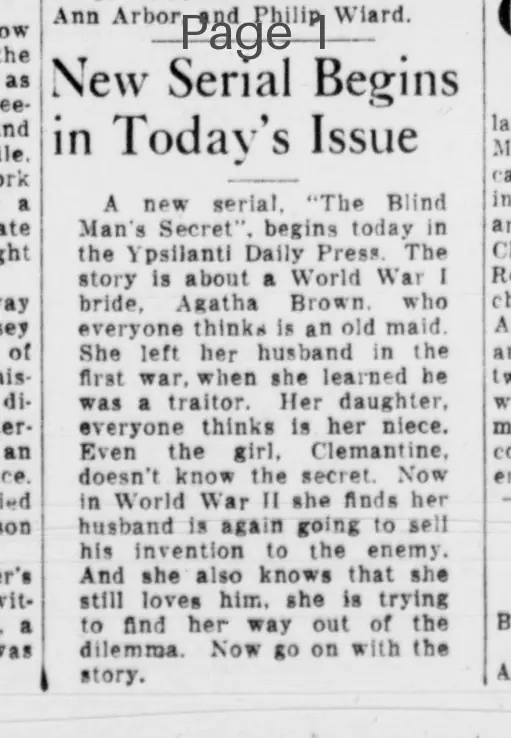
New Serial Begins in Today's Issue
A new serial, "The Blind Man's Secret", begins today in the Ypsilanti Daily Press. The story is about a World War I bride, Agatha Brown, who everyone thinks is an old maid. She left her husband in the first war, when she learned he was a traitor. Her daughter, everyone thinks is her niece. Even the girl, Clemantine, doesn't know the secret. Now in World War II she finds her husband is again going to sell his invention to the enemy. And she also knows that she still loves him. she is trying to find her way out of the dilemma. Now go on with the story.
The Blind Man's Secret
AGATHA BROWN tried to hold a mask-like expression on her face as she slipped the letter inside her handbag. She wanted no one to guess her bad news.
She was not yet 50, but as she stared in the glass of the postoffice door, which was opened against the dark wall, the reflection that stared back at her was the face of an old woman. It was a face suddenly tired, gray from fright.
The man she loved was a traitor to his country! This letter from him told her so—confirmed suspicions she had never wanted to believe.
Irony of it was—the world thought him a hero.
Heroes were walking the streets of Bardsdale this sunny afternoon, in the uniforms of Uncle Sam's Army. Agatha shrank back into the doorway as she recognized John Callahan. She did not want to have to face him now—but he saw her.
"Hi, Aunt Agatha!"
She was not his aunt, although he was practically engaged to the girl she called her niece, Clemantine.
"Cheer up, Agatha. You're not going to war."
She should have smiled, but she couldn't. She was thinking:
"For 25 years, since the first World war, I've prayed Otto would bury his past. I've always wanted to go back to him. Why should this be my answer?"
"This is my big day, you know," said John. "Tomorrow I return to camp, and then . . . Who knows?"
Agatha thought, "Otto has invented another of his war machines. He'll sell it to the highest bidder. It will be used to kill boys like John!"
"I say, Aunt Agatha, aren't you listening? Have I butted in?"
"I'm sorry. Of course I'm listening. Are—are you on your way out to see Clemantine?"
"Right the first time. She's home, isn't she?"
"She arrived on the noon train. Cut all her college classes today and tomorrow so as not to disappoint you, John."
"It makes it a lot easier to go to war—knowing we're fighting for people like you and Clemantine."
His face was suddenly serious.
She laid a hand on his arm as they walked past the deserted park.
"John, you don't like war, do you?"
She thought, "Otto loves it!"
"Aunt Agatha, I hate it! The thought of killing someone . . . We've been taught so long that it's wrong, and then suddenly we're called heroes. The more we kill, the bigger medals we get."
"You're the kind of soldier America can be proud of. You'll be fighting to end bloodshed and evil. That is the only valid reason for war."
"It isn't a valid reason at all. It is a reason that shouldn't ever have been allowed to exist. I can't help remembering that the other fellow is fighting and dying for his country, too."
"It's a battle between two ways of life," said Agatha. "It's a battle between men who have been taught they should be masters, and men who feel in their hearts that everyone should be free."
She was recalling the arguments she had used against Otto. Difference was that Otto had not been a hero in uniform, searching for an answer to a great problem. Otto had been a cheat, seeking to justify his treachery in World War I. He probably would use the same arguments now. It frightened her to think that she might have to face him again in unequal verbal combat. Unequal because he would not listen to her. He was a master. He belonged by temperament to the overlords, even though he was only a college professor with meager income.
That was the trouble. He wanted power—he needed power—and power to him meant money. He did not understand the values of the gentler, more human things in life. He did not feel the arguments in her heart, which her tongue could express only haltingly.
Now he had power again in his hands, as in World War I—probably some horrible new invention that only a scientific genius such as he could devise. How could he be stopped?
"I say, Aunt Agatha," protested John again, "you still aren't listening."
"I? Oh—I'm sorry."
I asked you, do you think it is fair for a soldier to ask a girl to marry him before he goes to war?
She looked up at him as they walked along the acacia-lined sidewalk that led them toward the Brown cottage. He was such a clean-faced youth, tall and blond as a Viking, unspoiled by the hardness of the world of bloodshed he was about to enter. But she didn't trust men.
"That is a very serious question, John."
"And I'm serious about it." His face showed that he was.
"You are going away for a long time. How do we know you will be the same when you come back?"
"You mean— I might be a cripple—I might not be able to support a wife?"
"No. I did not mean—that. But men change in character, John. You are going through a soul-shattering experience, and you are at an age when it will have a deep effect.
Suppose she loves you for a quality you will not possess when the war ends?"
"If she loves me now she will love me then. Hearts don't change, Aunt Agatha."
"Hearts may be the same, but souls may no longer match."
"I think you're wrong."
She knew she was right. God pity her, she still loved Otto! No one suspected—unless Otto did. Yes, she felt sure Otto knew. That was why he could tell her so much in his letters—could torture her with impunity. He knew she would not tell on him.
And now she had to keep up a semblance of conversation—about love—while memories of a past love beat upon her.
She had married Prof. Otto Halder in her senior year at Western. It had been a secret marriage, because he said it would jeopardize his position. Later they could reveal it, he said, when he won a research job in the new field of radio with some manufacturer who had no prejudice against married men.
That time never came. He invented an electrical device that was "stolen" by enemy agents in 1917, and somehow after that he never seemed short of funds. She could guess about how much he had been paid.
Agatha pleaded with him, but he laughed at her idealism. They separated. She left part of her heart behind.
The harm already had been done, and the war was over. She could do no good by revealing him then as a traitor, she had told herself. But now, today, she must disclose him, or stop him!
John unlatched the gate of the garden in front of the cottage and held it open. "I'm sorry you're not on my side," he said. "I'm sure you would be, if you'd ever been deeply in love yourself."
She could not answer. She wanted to run. She was thinking desperately, "I'll catch the 4 o'clock train. If I hurry I'll just make it. Otto will be working in his laboratory late. He always does. This time he'll listen!"
A new serial, "The Blind Man's Secret", begins today in the Ypsilanti Daily Press. The story is about a World War I bride, Agatha Brown, who everyone thinks is an old maid. She left her husband in the first war, when she learned he was a traitor. Her daughter, everyone thinks is her niece. Even the girl, Clemantine, doesn't know the secret. Now in World War II she finds her husband is again going to sell his invention to the enemy. And she also knows that she still loves him. she is trying to find her way out of the dilemma. Now go on with the story.
The Blind Man's Secret
AGATHA BROWN tried to hold a mask-like expression on her face as she slipped the letter inside her handbag. She wanted no one to guess her bad news.
She was not yet 50, but as she stared in the glass of the postoffice door, which was opened against the dark wall, the reflection that stared back at her was the face of an old woman. It was a face suddenly tired, gray from fright.
The man she loved was a traitor to his country! This letter from him told her so—confirmed suspicions she had never wanted to believe.
Irony of it was—the world thought him a hero.
Heroes were walking the streets of Bardsdale this sunny afternoon, in the uniforms of Uncle Sam's Army. Agatha shrank back into the doorway as she recognized John Callahan. She did not want to have to face him now—but he saw her.
"Hi, Aunt Agatha!"
She was not his aunt, although he was practically engaged to the girl she called her niece, Clemantine.
"Cheer up, Agatha. You're not going to war."
She should have smiled, but she couldn't. She was thinking:
"For 25 years, since the first World war, I've prayed Otto would bury his past. I've always wanted to go back to him. Why should this be my answer?"
"This is my big day, you know," said John. "Tomorrow I return to camp, and then . . . Who knows?"
Agatha thought, "Otto has invented another of his war machines. He'll sell it to the highest bidder. It will be used to kill boys like John!"
"I say, Aunt Agatha, aren't you listening? Have I butted in?"
"I'm sorry. Of course I'm listening. Are—are you on your way out to see Clemantine?"
"Right the first time. She's home, isn't she?"
"She arrived on the noon train. Cut all her college classes today and tomorrow so as not to disappoint you, John."
"It makes it a lot easier to go to war—knowing we're fighting for people like you and Clemantine."
His face was suddenly serious.
She laid a hand on his arm as they walked past the deserted park.
"John, you don't like war, do you?"
She thought, "Otto loves it!"
"Aunt Agatha, I hate it! The thought of killing someone . . . We've been taught so long that it's wrong, and then suddenly we're called heroes. The more we kill, the bigger medals we get."
"You're the kind of soldier America can be proud of. You'll be fighting to end bloodshed and evil. That is the only valid reason for war."
"It isn't a valid reason at all. It is a reason that shouldn't ever have been allowed to exist. I can't help remembering that the other fellow is fighting and dying for his country, too."
"It's a battle between two ways of life," said Agatha. "It's a battle between men who have been taught they should be masters, and men who feel in their hearts that everyone should be free."
She was recalling the arguments she had used against Otto. Difference was that Otto had not been a hero in uniform, searching for an answer to a great problem. Otto had been a cheat, seeking to justify his treachery in World War I. He probably would use the same arguments now. It frightened her to think that she might have to face him again in unequal verbal combat. Unequal because he would not listen to her. He was a master. He belonged by temperament to the overlords, even though he was only a college professor with meager income.
That was the trouble. He wanted power—he needed power—and power to him meant money. He did not understand the values of the gentler, more human things in life. He did not feel the arguments in her heart, which her tongue could express only haltingly.
Now he had power again in his hands, as in World War I—probably some horrible new invention that only a scientific genius such as he could devise. How could he be stopped?
"I say, Aunt Agatha," protested John again, "you still aren't listening."
"I? Oh—I'm sorry."
I asked you, do you think it is fair for a soldier to ask a girl to marry him before he goes to war?
She looked up at him as they walked along the acacia-lined sidewalk that led them toward the Brown cottage. He was such a clean-faced youth, tall and blond as a Viking, unspoiled by the hardness of the world of bloodshed he was about to enter. But she didn't trust men.
"That is a very serious question, John."
"And I'm serious about it." His face showed that he was.
"You are going away for a long time. How do we know you will be the same when you come back?"
"You mean— I might be a cripple—I might not be able to support a wife?"
"No. I did not mean—that. But men change in character, John. You are going through a soul-shattering experience, and you are at an age when it will have a deep effect.
Suppose she loves you for a quality you will not possess when the war ends?"
"If she loves me now she will love me then. Hearts don't change, Aunt Agatha."
"Hearts may be the same, but souls may no longer match."
"I think you're wrong."
She knew she was right. God pity her, she still loved Otto! No one suspected—unless Otto did. Yes, she felt sure Otto knew. That was why he could tell her so much in his letters—could torture her with impunity. He knew she would not tell on him.
And now she had to keep up a semblance of conversation—about love—while memories of a past love beat upon her.
She had married Prof. Otto Halder in her senior year at Western. It had been a secret marriage, because he said it would jeopardize his position. Later they could reveal it, he said, when he won a research job in the new field of radio with some manufacturer who had no prejudice against married men.
That time never came. He invented an electrical device that was "stolen" by enemy agents in 1917, and somehow after that he never seemed short of funds. She could guess about how much he had been paid.
Agatha pleaded with him, but he laughed at her idealism. They separated. She left part of her heart behind.
The harm already had been done, and the war was over. She could do no good by revealing him then as a traitor, she had told herself. But now, today, she must disclose him, or stop him!
John unlatched the gate of the garden in front of the cottage and held it open. "I'm sorry you're not on my side," he said. "I'm sure you would be, if you'd ever been deeply in love yourself."
She could not answer. She wanted to run. She was thinking desperately, "I'll catch the 4 o'clock train. If I hurry I'll just make it. Otto will be working in his laboratory late. He always does. This time he'll listen!"
What sub-type of article is it?
Prose Fiction
Dialogue
What themes does it cover?
War Peace
Love Romance
Political
What keywords are associated?
Serial Story
Wwii
Wwi
Treason
Traitor
Invention
Love
Family Secret
Soldier
Literary Details
Title
The Blind Man's Secret
Key Lines
"For 25 Years, Since The First World War, I've Prayed Otto Would Bury His Past. I've Always Wanted To Go Back To Him. Why Should This Be My Answer?"
"It's A Battle Between Two Ways Of Life," Said Agatha. "It's A Battle Between Men Who Have Been Taught They Should Be Masters, And Men Who Feel In Their Hearts That Everyone Should Be Free."
She Knew She Was Right. God Pity Her, She Still Loved Otto! No One Suspected—Unless Otto Did. Yes, She Felt Sure Otto Knew. That Was Why He Could Tell Her So Much In His Letters—Could Torture Her With Impunity. He Knew She Would Not Tell On Him.
"I'll Catch The 4 O'clock Train. If I Hurry I'll Just Make It. Otto Will Be Working In His Laboratory Late. He Always Does. This Time He'll Listen!"