Thank you for visiting SNEWPapers!
Sign up free
Literary
August 1, 1872
Wyandot County Republican
Upper Sandusky, Wyandot County, Ohio
What is this article about?
Essay critiquing mothers' use of distorted 'baby talk' as an affectation that confuses children and delays proper language learning, advocating instead for teaching correct pronunciation, grammar, and refined speech from infancy to foster pride in the child's eloquence.
Clipping
OCR Quality
95%
Excellent
Full Text
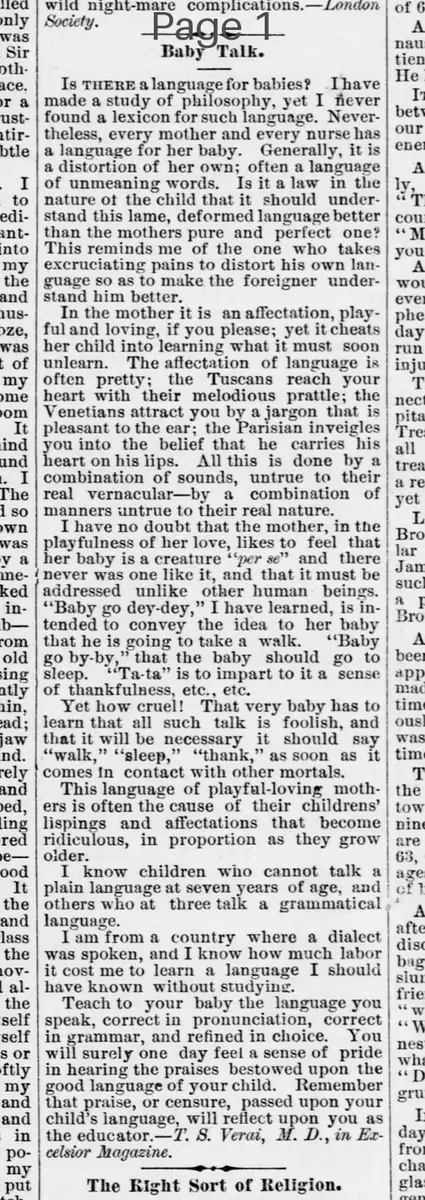
Baby Talk.
Is there a language for babies? I have made a study of philosophy, yet I never found a lexicon for such language. Nevertheless, every mother and every nurse has a language for her baby. Generally, it is a distortion of her own; often a language of unmeaning words. Is it a law in the nature of the child that it should understand this lame, deformed language better than the mother's pure and perfect one?
This reminds me of the one who takes excruciating pains to distort his own language so as to make the foreigner understand him better.
In the mother it is an affectation, playful and loving, if you please; yet it cheats her child into learning what it must soon unlearn. The affectation of language is often pretty; the Tuscans reach your heart with their melodious prattle; the Venetians attract you by a jargon that is pleasant to the ear; the Parisian inveigles you into the belief that he carries his heart on his lips. All this is done by a combination of sounds, untrue to their real vernacular-by a combination of manners untrue to their real nature.
I have no doubt that the mother, in the playfulness of her love, likes to feel that her baby is a creature "per se" and there never was one like it, and that it must be addressed unlike other human beings. "Baby go dey-dey," I have learned, is intended to convey the idea to her baby that he is going to take a walk. "Baby go by-by," that the baby should go to sleep. "Ta-ta" is to impart to it a sense of thankfulness, etc., etc.
Yet how cruel! That very baby has to learn that all such talk is foolish, and that it will be necessary it should say "walk," "sleep," "thank," as soon as it comes in contact with other mortals.
This language of playful-loving mothers is often the cause of their childrens' lispings and affectations that become ridiculous, in proportion as they grow older.
I know children who cannot talk a plain language at seven years of age, and others who at three talk a grammatical language.
I am from a country where a dialect was spoken, and I know how much labor it cost me to learn a language I should have known without studying
Teach to your baby the language you speak, correct in pronunciation, correct in grammar, and refined in choice. You will surely one day feel a sense of pride in hearing the praises bestowed upon the good language of your child. Remember that praise, or censure, passed upon your child's language, will reflect upon you as the educator.-T. S. Verai, M. D., in Excelsior Magazine.
Is there a language for babies? I have made a study of philosophy, yet I never found a lexicon for such language. Nevertheless, every mother and every nurse has a language for her baby. Generally, it is a distortion of her own; often a language of unmeaning words. Is it a law in the nature of the child that it should understand this lame, deformed language better than the mother's pure and perfect one?
This reminds me of the one who takes excruciating pains to distort his own language so as to make the foreigner understand him better.
In the mother it is an affectation, playful and loving, if you please; yet it cheats her child into learning what it must soon unlearn. The affectation of language is often pretty; the Tuscans reach your heart with their melodious prattle; the Venetians attract you by a jargon that is pleasant to the ear; the Parisian inveigles you into the belief that he carries his heart on his lips. All this is done by a combination of sounds, untrue to their real vernacular-by a combination of manners untrue to their real nature.
I have no doubt that the mother, in the playfulness of her love, likes to feel that her baby is a creature "per se" and there never was one like it, and that it must be addressed unlike other human beings. "Baby go dey-dey," I have learned, is intended to convey the idea to her baby that he is going to take a walk. "Baby go by-by," that the baby should go to sleep. "Ta-ta" is to impart to it a sense of thankfulness, etc., etc.
Yet how cruel! That very baby has to learn that all such talk is foolish, and that it will be necessary it should say "walk," "sleep," "thank," as soon as it comes in contact with other mortals.
This language of playful-loving mothers is often the cause of their childrens' lispings and affectations that become ridiculous, in proportion as they grow older.
I know children who cannot talk a plain language at seven years of age, and others who at three talk a grammatical language.
I am from a country where a dialect was spoken, and I know how much labor it cost me to learn a language I should have known without studying
Teach to your baby the language you speak, correct in pronunciation, correct in grammar, and refined in choice. You will surely one day feel a sense of pride in hearing the praises bestowed upon the good language of your child. Remember that praise, or censure, passed upon your child's language, will reflect upon you as the educator.-T. S. Verai, M. D., in Excelsior Magazine.
What sub-type of article is it?
Essay
What themes does it cover?
Moral Virtue
Social Manners
What keywords are associated?
Baby Talk
Child Language
Motherly Affectation
Proper Education
Linguistic Development
Grammar Teaching
Dialect Challenges
What entities or persons were involved?
T. S. Verai, M. D., In Excelsior Magazine.
Literary Details
Title
Baby Talk.
Author
T. S. Verai, M. D., In Excelsior Magazine.
Subject
On The Affectation Of Baby Talk And The Importance Of Teaching Correct Language
Key Lines
Teach To Your Baby The Language You Speak, Correct In Pronunciation, Correct In Grammar, And Refined In Choice.
You Will Surely One Day Feel A Sense Of Pride In Hearing The Praises Bestowed Upon The Good Language Of Your Child.
This Language Of Playful Loving Mothers Is Often The Cause Of Their Childrens' Lispings And Affectations That Become Ridiculous, In Proportion As They Grow Older.
"Baby Go Dey Dey," I Have Learned, Is Intended To Convey The Idea To Her Baby That He Is Going To Take A Walk.
Yet How Cruel! That Very Baby Has To Learn That All Such Talk Is Foolish, And That It Will Be Necessary It Should Say "Walk," "Sleep," "Thank," As Soon As It Comes In Contact With Other Mortals.