Thank you for visiting SNEWPapers!
Sign up free
Literary
April 14, 1934
The Times News
Hendersonville, Henderson County, North Carolina
What is this article about?
In this personal essay, Wickes Wamboldt recounts a morning moment of anger toward a public attacker, transformed by recalling the biblical exhortation to pray for persecutors. He realizes such prayer invokes good forces to free individuals from evil influences, fostering mutual benefit and inner peace.
Clipping
OCR Quality
98%
Excellent
Full Text
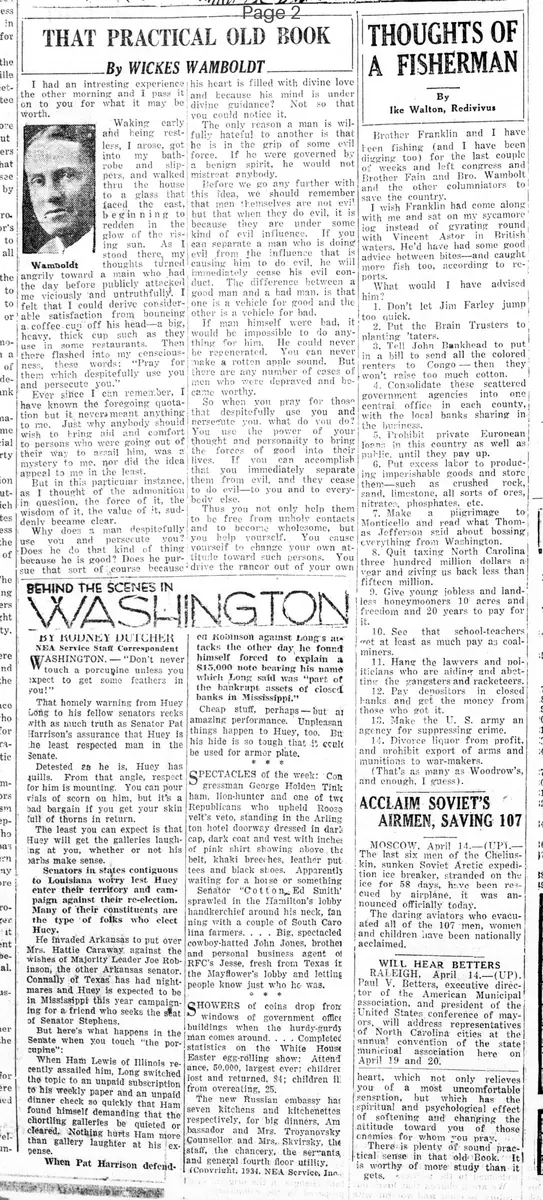
THOUGHTS OF A FISHERMAN
By WICKES WAMBOLDT
I had an interesting experience the other morning and I pass it on to you for what it may be worth.
Waking early and being restless, I arose, got into my bathrobe and slippers, and walked thru the house to a glass that faced the east, beginning to redden in the glow of the rising sun. As I stood there, my thoughts turned angrily toward a man who had the day before publicly attacked me viciously and untruthfully. I felt that I could derive considerable satisfaction from bouncing a coffee cup off his head—a big, heavy, thick cup such as they use in some restaurants. Then there flashed into my consciousness, these words: "Pray for them which despitefully use you and persecute you."
Ever since I can remember, I have known the foregoing quotation but it never meant anything to me. Just why anybody should wish to bring aid and comfort to persons who were going out of their way to assail him, was a mystery to me, nor did the idea appeal to me in the least.
But in this particular instance, as I thought of the admonition in question, the force of it, the wisdom of it, the value of it, suddenly became clear.
Why does a man despitefully use you and persecute you? Does he do that kind of thing because he is good? Does he pursue that sort of course because his heart is filled with divine love and because his mind is under divine guidance? Not so that you could notice it.
The only reason a man is willfully hateful to another is that he is in the grip of some evil force. If he were governed by a benign spirit, he would not mistreat anybody.
Before we go any further with this idea, we should remember that men themselves are not evil but that when they do evil, it is because they are under some kind of evil influence. If you can separate a man who is doing evil from the influence that is causing him to do evil, he will immediately cease his evil conduct. The difference between a good man and a bad man is that one is a vehicle for good and the other is a vehicle for bad.
If man himself were bad, it would be impossible to do anything for him. He could never be regenerated. You can never make a rotten apple sound. But there are any number of cases of men who were depraved and became worthy.
So when you pray for those that despitefully use you and persecute you, what do you do? You use the power of your thought and personality to bring the forces of good into their lives. If you can accomplish that you immediately separate them from evil, and they cease to do evil—to you and to everybody else.
Thus you not only help them to be free from unholy contacts and to become wholesome, but you help yourself. You cause yourself to change your own attitude toward such persons. You drive the rancor out of your own heart, which not only relieves you of a most uncomfortable sensation, but which has the spiritual and psychological effect of softening and changing the attitude toward you of those enemies for whom you pray.
There is plenty of sound practical sense in that old Book. It is worthy of more study than it gets.
By WICKES WAMBOLDT
I had an interesting experience the other morning and I pass it on to you for what it may be worth.
Waking early and being restless, I arose, got into my bathrobe and slippers, and walked thru the house to a glass that faced the east, beginning to redden in the glow of the rising sun. As I stood there, my thoughts turned angrily toward a man who had the day before publicly attacked me viciously and untruthfully. I felt that I could derive considerable satisfaction from bouncing a coffee cup off his head—a big, heavy, thick cup such as they use in some restaurants. Then there flashed into my consciousness, these words: "Pray for them which despitefully use you and persecute you."
Ever since I can remember, I have known the foregoing quotation but it never meant anything to me. Just why anybody should wish to bring aid and comfort to persons who were going out of their way to assail him, was a mystery to me, nor did the idea appeal to me in the least.
But in this particular instance, as I thought of the admonition in question, the force of it, the wisdom of it, the value of it, suddenly became clear.
Why does a man despitefully use you and persecute you? Does he do that kind of thing because he is good? Does he pursue that sort of course because his heart is filled with divine love and because his mind is under divine guidance? Not so that you could notice it.
The only reason a man is willfully hateful to another is that he is in the grip of some evil force. If he were governed by a benign spirit, he would not mistreat anybody.
Before we go any further with this idea, we should remember that men themselves are not evil but that when they do evil, it is because they are under some kind of evil influence. If you can separate a man who is doing evil from the influence that is causing him to do evil, he will immediately cease his evil conduct. The difference between a good man and a bad man is that one is a vehicle for good and the other is a vehicle for bad.
If man himself were bad, it would be impossible to do anything for him. He could never be regenerated. You can never make a rotten apple sound. But there are any number of cases of men who were depraved and became worthy.
So when you pray for those that despitefully use you and persecute you, what do you do? You use the power of your thought and personality to bring the forces of good into their lives. If you can accomplish that you immediately separate them from evil, and they cease to do evil—to you and to everybody else.
Thus you not only help them to be free from unholy contacts and to become wholesome, but you help yourself. You cause yourself to change your own attitude toward such persons. You drive the rancor out of your own heart, which not only relieves you of a most uncomfortable sensation, but which has the spiritual and psychological effect of softening and changing the attitude toward you of those enemies for whom you pray.
There is plenty of sound practical sense in that old Book. It is worthy of more study than it gets.
What sub-type of article is it?
Essay
What themes does it cover?
Religious
Moral Virtue
What keywords are associated?
Personal Reflection
Prayer For Enemies
Evil Influence
Biblical Wisdom
Moral Regeneration
What entities or persons were involved?
By Wickes Wamboldt
Literary Details
Title
Thoughts Of A Fisherman
Author
By Wickes Wamboldt
Key Lines
"Pray For Them Which Despitefully Use You And Persecute You."
The Only Reason A Man Is Willfully Hateful To Another Is That He Is In The Grip Of Some Evil Force.
If You Can Separate A Man Who Is Doing Evil From The Influence That Is Causing Him To Do Evil, He Will Immediately Cease His Evil Conduct.
You Use The Power Of Your Thought And Personality To Bring The Forces Of Good Into Their Lives.
There Is Plenty Of Sound Practical Sense In That Old Book.