Thank you for visiting SNEWPapers!
Sign up free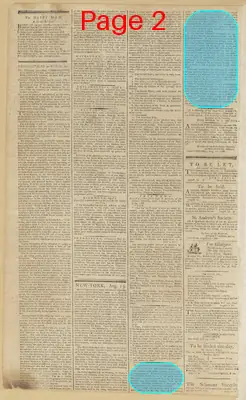
Literary
August 13, 1788
The Daily Advertiser
New York, New York County, New York
What is this article about?
An essay reflecting on human inconstancy, likening the mind to a weathercock swayed by passions, with examples from friendships, diet, recreations, apparel, and self-satisfaction despite flaws, concluding with a poetic line on vanity.
Clipping
OCR Quality
88%
Good
Full Text
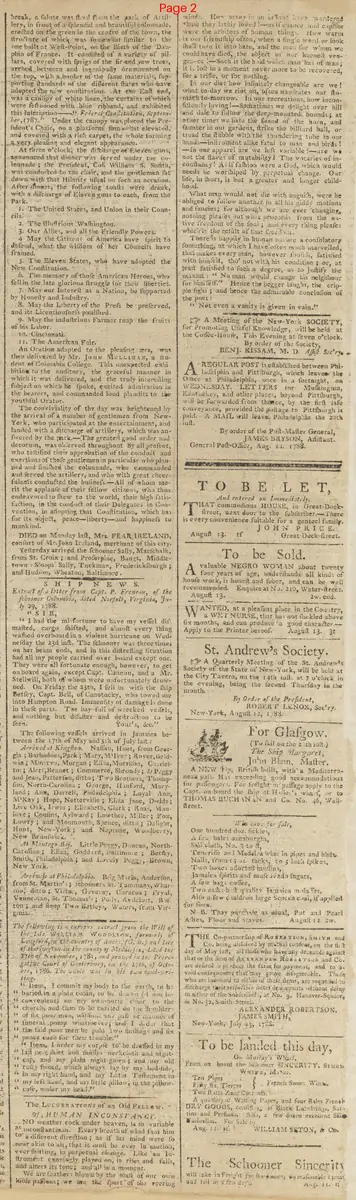
The Lucubrations of an Old Fellow.
Of HUMAN INCONSTANCY.
No weather cock under heaven, is so variable
as human constancy. Every breath of wind turns him
to a different direction; as if his mind were so
near akin to air, that it must be ever in motion,
ever shifting, in perpetual change. Like an
Instrument cunningly played on, it rises and falls,
and alters its tone; and all in a moment.
We are feathers blown by the blast of our own
foolish passions; we are the sport of the veering
winds. How many in an instant have murdered
those they lately loved!—as if chance and caprice
were the arbiters of human things. How warm
is our friendship often, when a single word or look
shall turn it into hate, and the man for whom we
could have died, the object of our keenest
vengeance Such is the hold which man has of man;
it is lost in a moment never more to be recovered,
for a trifle, or for nothing.
In our diet how infinitely changeable are we!
what to-day we riot on, often nauseates our
stomach to-morrow. in our recreations, how incon-
sistently loving!—Sometimes we delight over hill
and dale to follow the deep-mouthed hounds; at
other times we hate the sound of the horn, and
saunter in our gardens, strike the billiard ball, or
tread the stubble with the thundering tube in our
hands—instrument alike fatal to man and birds!
—in our apparel are we less variable?—are we
not the slaves of mutability? The votaries of in-
constancy! As if fashion were a God, which would
needs be worshiped by perpetual change. Our
life, in short, is but a greater and longer child-
hood.
What man would not die with anguish, were he
obliged to follow another in all his giddy motions
and fancies; for although we are ever changing,
nothing pleases but what proceeds from the
native freedom of the soul; and every thing pleases
which is the result of that freedom.
There is happily in human nature a consolatory
something, at which I have often much marvelled,
that makes every man, however foolish, satisfied
with himself, tho not with his condition; or, at
least satisfied to such a degree, as to justify the
maxim: "No man would change his neighbour
for himself." Hence the beggar laughs, the
cripple sighs; and hence the admirable conclusion of
the poet:
Not even a vanity is given in vain.
Of HUMAN INCONSTANCY.
No weather cock under heaven, is so variable
as human constancy. Every breath of wind turns him
to a different direction; as if his mind were so
near akin to air, that it must be ever in motion,
ever shifting, in perpetual change. Like an
Instrument cunningly played on, it rises and falls,
and alters its tone; and all in a moment.
We are feathers blown by the blast of our own
foolish passions; we are the sport of the veering
winds. How many in an instant have murdered
those they lately loved!—as if chance and caprice
were the arbiters of human things. How warm
is our friendship often, when a single word or look
shall turn it into hate, and the man for whom we
could have died, the object of our keenest
vengeance Such is the hold which man has of man;
it is lost in a moment never more to be recovered,
for a trifle, or for nothing.
In our diet how infinitely changeable are we!
what to-day we riot on, often nauseates our
stomach to-morrow. in our recreations, how incon-
sistently loving!—Sometimes we delight over hill
and dale to follow the deep-mouthed hounds; at
other times we hate the sound of the horn, and
saunter in our gardens, strike the billiard ball, or
tread the stubble with the thundering tube in our
hands—instrument alike fatal to man and birds!
—in our apparel are we less variable?—are we
not the slaves of mutability? The votaries of in-
constancy! As if fashion were a God, which would
needs be worshiped by perpetual change. Our
life, in short, is but a greater and longer child-
hood.
What man would not die with anguish, were he
obliged to follow another in all his giddy motions
and fancies; for although we are ever changing,
nothing pleases but what proceeds from the
native freedom of the soul; and every thing pleases
which is the result of that freedom.
There is happily in human nature a consolatory
something, at which I have often much marvelled,
that makes every man, however foolish, satisfied
with himself, tho not with his condition; or, at
least satisfied to such a degree, as to justify the
maxim: "No man would change his neighbour
for himself." Hence the beggar laughs, the
cripple sighs; and hence the admirable conclusion of
the poet:
Not even a vanity is given in vain.
What sub-type of article is it?
Essay
What themes does it cover?
Moral Virtue
What keywords are associated?
Human Inconstancy
Foolish Passions
Self Satisfaction
Moral Reflection
Fashion Mutability
Literary Details
Title
Of Human Inconstancy
Subject
On Human Inconstancy
Form / Style
Prose Reflection
Key Lines
No Weather Cock Under Heaven, Is So Variable As Human Constancy.
We Are Feathers Blown By The Blast Of Our Own Foolish Passions; We Are The Sport Of The Veering Winds.
Our Life, In Short, Is But A Greater And Longer Childhood.
No Man Would Change His Neighbour For Himself.
Not Even A Vanity Is Given In Vain.