Thank you for visiting SNEWPapers!
Sign up free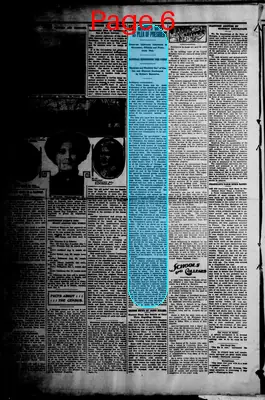
Story
May 22, 1908
The Charles Mix New Era
Wagner, Charles Mix County, South Dakota
What is this article about?
President Roosevelt hosts a major conference at the White House with governors, officials, industrialists like Andrew Carnegie, and experts to discuss conserving America's natural resources, including forests, minerals, and waters, urging action against wasteful use for future generations.
Clipping

OCR Quality
98%
Excellent
Full Text
SAVE NATURE'S GIFTS IS PLEA OF PRESIDENT
Roosevelt Addresses Governors, Officials and Prominent Men.
NATURAL RESOURCES THE TOPIC
"Reckless and Wasteful Use" of Timber and Minerals Condemned by Nation's Executive.
Washington correspondence:
The White House was the scene Wednesday of the assemblage of many of the most notable figures in the political and industrial life of the nation. It was perhaps one of the most representative gatherings that have ever met to consider a great public question in that historic mansion. The occasion was the conference by President Roosevelt with the Governors of practically all the States and Territories to consider the broad question of conservation of the country's natural resources.
The men who know how the natural resources of the country have been wasted—captains of industry who have dealt with these resources and experts who have studied the conditions—told of the nation's prodigality in the exploitation and consumption of its natural resources.
Representing the government were the President of the United States, the Vice President, the cabinet, justices of the United States Supreme Court and members of both houses of Congress. The States were represented by their chief executives and the conferees appointed by them. The industries were represented by Andrew Carnegie, the Iron master; James J. Hill, the genius of railway expansion; John Mitchell the labor leader; Prof. T. C. Chamberlin of the University of Chicago, and Dr. L. C. White, State geologist of West Virginia and perhaps the leading expert on coal in the United States.
The specially invited guests included three men mentioned as Democratic presidential candidates—William Jennings Bryan, Judge George Gray of Delaware and Gov. John A. Johnson of Minnesota. The subjects considered included the use and conservation of mineral resources, resources of the land and resources of the waters.
The conference was opened by the President with an address on "Conservation as a National Duty." The program for the day included addresses by Andrew Carnegie on "Ores and Related Minerals," and by Dr. I. C. White, professor of geology, University of West Virginia, and State geologist of that State, on "Mineral Fuels." Former President John Mitchell of the United Mine Workers of America, led the general discussion on coal mining.
The President's speech is not controversial. Nor is it an alarm cry to the people. It does not even voice a demand for remedial legislation. On the contrary it is a simple plea couched in businesslike and statesmanlike terms for constructive action upon the weightiest problem now before the nation. Upon the practical, homely plea that a father must provide for his sons Mr. Roosevelt rests his whole case. Using almost the same figure Mr. Gifford Pinchot has recently said: "We have hitherto as a nation taken the same course as does at first the young man who comes into possession of his property. It is time for a change."
Our wonderfully rapid development has led us to destroy needlessly our forests, to waste our mineral wealth in careless mining and still more careless use, to exhaust our soils and to ruthlessly neglect our rivers for the sake of faster transportation by steam. Our duty to the next generation makes it imperative that we should do better in all these respects.
How this new business system shall be installed or what form it shall take the President does not attempt to dictate. Having called together a national council he properly leaves the ways and means to the determination of the councilors laying down only the policy of Washington that water ways, forests, agricultural and mineral wealth should be treated as one indivisible subject in all plans made for their proper use and conservation. He closes by citing important judicial decisions indicating how far such plans may go under the fundamental law.
Roosevelt Addresses Governors, Officials and Prominent Men.
NATURAL RESOURCES THE TOPIC
"Reckless and Wasteful Use" of Timber and Minerals Condemned by Nation's Executive.
Washington correspondence:
The White House was the scene Wednesday of the assemblage of many of the most notable figures in the political and industrial life of the nation. It was perhaps one of the most representative gatherings that have ever met to consider a great public question in that historic mansion. The occasion was the conference by President Roosevelt with the Governors of practically all the States and Territories to consider the broad question of conservation of the country's natural resources.
The men who know how the natural resources of the country have been wasted—captains of industry who have dealt with these resources and experts who have studied the conditions—told of the nation's prodigality in the exploitation and consumption of its natural resources.
Representing the government were the President of the United States, the Vice President, the cabinet, justices of the United States Supreme Court and members of both houses of Congress. The States were represented by their chief executives and the conferees appointed by them. The industries were represented by Andrew Carnegie, the Iron master; James J. Hill, the genius of railway expansion; John Mitchell the labor leader; Prof. T. C. Chamberlin of the University of Chicago, and Dr. L. C. White, State geologist of West Virginia and perhaps the leading expert on coal in the United States.
The specially invited guests included three men mentioned as Democratic presidential candidates—William Jennings Bryan, Judge George Gray of Delaware and Gov. John A. Johnson of Minnesota. The subjects considered included the use and conservation of mineral resources, resources of the land and resources of the waters.
The conference was opened by the President with an address on "Conservation as a National Duty." The program for the day included addresses by Andrew Carnegie on "Ores and Related Minerals," and by Dr. I. C. White, professor of geology, University of West Virginia, and State geologist of that State, on "Mineral Fuels." Former President John Mitchell of the United Mine Workers of America, led the general discussion on coal mining.
The President's speech is not controversial. Nor is it an alarm cry to the people. It does not even voice a demand for remedial legislation. On the contrary it is a simple plea couched in businesslike and statesmanlike terms for constructive action upon the weightiest problem now before the nation. Upon the practical, homely plea that a father must provide for his sons Mr. Roosevelt rests his whole case. Using almost the same figure Mr. Gifford Pinchot has recently said: "We have hitherto as a nation taken the same course as does at first the young man who comes into possession of his property. It is time for a change."
Our wonderfully rapid development has led us to destroy needlessly our forests, to waste our mineral wealth in careless mining and still more careless use, to exhaust our soils and to ruthlessly neglect our rivers for the sake of faster transportation by steam. Our duty to the next generation makes it imperative that we should do better in all these respects.
How this new business system shall be installed or what form it shall take the President does not attempt to dictate. Having called together a national council he properly leaves the ways and means to the determination of the councilors laying down only the policy of Washington that water ways, forests, agricultural and mineral wealth should be treated as one indivisible subject in all plans made for their proper use and conservation. He closes by citing important judicial decisions indicating how far such plans may go under the fundamental law.
What sub-type of article is it?
Historical Event
What themes does it cover?
Moral Virtue
Nature
Survival
What keywords are associated?
Conservation
Natural Resources
Roosevelt Speech
White House Conference
Governors Meeting
Mineral Fuels
Coal Mining
Wasteful Exploitation
What entities or persons were involved?
President Roosevelt
Andrew Carnegie
James J. Hill
John Mitchell
Prof. T. C. Chamberlin
Dr. L. C. White
William Jennings Bryan
Judge George Gray
Gov. John A. Johnson
Gifford Pinchot
Where did it happen?
White House, Washington
Story Details
Key Persons
President Roosevelt
Andrew Carnegie
James J. Hill
John Mitchell
Prof. T. C. Chamberlin
Dr. L. C. White
William Jennings Bryan
Judge George Gray
Gov. John A. Johnson
Gifford Pinchot
Location
White House, Washington
Event Date
Wednesday
Story Details
President Roosevelt convenes conference with governors, officials, and experts at the White House to address conservation of natural resources, condemning wasteful exploitation of timber, minerals, soils, and waters; delivers speech on conservation as a national duty to future generations.