Thank you for visiting SNEWPapers!
Sign up free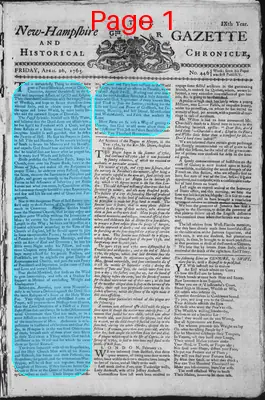
Literary
April 26, 1765
The New Hampshire Gazette And Historical Chronicle
Portsmouth, Greenland, Rockingham County, New Hampshire
What is this article about?
An essay critiquing religious hypocrisy across Christian denominations, arguing that outward forms of worship (Catholic rituals, Protestant ceremonies, Nonconformist scrupulosity) without true repentance, faith, and piety cannot secure salvation. Emphasizes the need for inward holiness over empty rituals.
Clipping
OCR Quality
98%
Excellent
Full Text
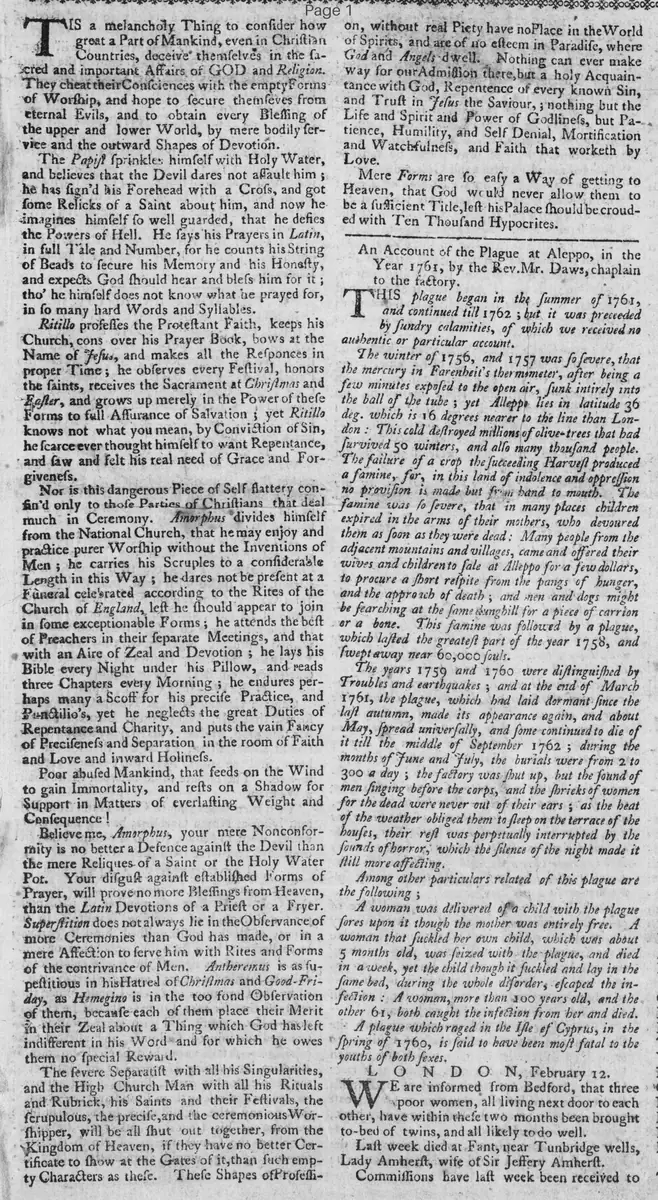
'Tis a melancholy Thing to consider how great a Part of Mankind, even in Christian Countries, deceive themselves in the sacred and important Affairs of GOD and Religion.
They cheat their Consciences with the empty Forms of Worship, and hope to secure themselves from eternal Evils, and to obtain every Blessing of the upper and lower World, by mere bodily service and the outward Shapes of Devotion.
The Papist sprinkles himself with Holy Water, and believes that the Devil dares not assault him; he has signed his Forehead with a Cross, and got some Relicks of a Saint about him, and now he imagines himself so well guarded, that he defies the Powers of Hell. He says his Prayers in Latin, in full Tale and Number, for he counts his String of Beads to secure his Memory and his Honesty, and expects God should hear and bless him for it: tho' he himself does not know what he prayed for, in so many hard Words and Syllables.
Ristillo professes the Protestant Faith, keeps his Church, conns over his Prayer Book, bows at the Name of Jesus, and makes all the Responses in proper Time; he observes every Festival, honors the Saints, receives the Sacrament at Christmas and Easter, and grows up merely in the Power of these Forms to full Assurance of Salvation: yet Ristillo knows not what you mean, by Conviction of Sin, he scarce ever thought himself to want Repentance, and saw and felt his real need of Grace and Forgiveness.
Nor is this dangerous Piece of Self-flattery confin'd only to those Parties of Christians that deal much in Ceremony. Amorphus divides himself from the National Church, that he may enjoy and practice purer Worship without the Inventions of Men; he carries his Scruples to a considerable Length in this Way; he dares not be present at a Funeral celebrated according to the Rites of the Church of England, lest he should appear to join in some exceptionable Forms; he attends the best of Preachers in their separate Meetings, and that with an Air of Zeal and Devotion; he lays his Bible every Night under his Pillow, and reads three Chapters every Morning; he endures perhaps many a Scoff for his precise Practice, and Punctilios, yet he neglects the great Duties of Repentance and Charity, and puts the vain Fancy of Preciseness and Separation in the room of Faith and Love and inward Holiness.
Poor abused Mankind, that feeds on the Wind to gain Immortality, and rests on a Shadow for Support in Matters of everlasting Weight and Consequence!
Believe me, Amorphus, your mere Nonconformity is no better a Defence against the Devil than the mere Reliques of a Saint or the Holy Water Pot. Your disgust against established Forms of Prayer, will prove no more Blessings from Heaven, than the Latin Devotions of a Priest or a Fryer.
Superstition does not always lie in the Observance of more Ceremonies than God has made, or in a mere Affection to serve him with Rites and Forms of the contrivance of Men. Antheremus is as superstitious in his Hatred of Christmas and Good-Friday, as Hemegino is in the too fond Observation of them, because each of them place their Merit In their Zeal about a Thing which God has left indifferent in his Word and for which he owes them no special Reward.
The severe Separatist with all his Singularities, and the High Church Man with all his Rituals and Rubrick, his Saints and their Festivals, the scrupulous, the precise, and the ceremonious Worshipper, will be all shut out together, from the Kingdom of Heaven, if they have no better Certificate to show at the Gates of it, than such empty Characters as these. These Shapes of Profession, without real Piety have no Place in the World of Spirits, and are of no Esteem in Paradise, where God and Angels dwell. Nothing can ever make way for our Admission there, but a holy Acquaintance with God, Repentance of every known Sin, and Trust in Jesus the Saviour; nothing but the Life and Spirit and Power of Godliness, but Patience, Humility, and Self Denial, Mortification and Watchfulness, and Faith that worketh by Love.
Mere Forms are So easy a Way of getting to Heaven, that God would never allow them to be a sufficient Title lest his Palace should be crowded with Ten Thousand Hypocrites.
They cheat their Consciences with the empty Forms of Worship, and hope to secure themselves from eternal Evils, and to obtain every Blessing of the upper and lower World, by mere bodily service and the outward Shapes of Devotion.
The Papist sprinkles himself with Holy Water, and believes that the Devil dares not assault him; he has signed his Forehead with a Cross, and got some Relicks of a Saint about him, and now he imagines himself so well guarded, that he defies the Powers of Hell. He says his Prayers in Latin, in full Tale and Number, for he counts his String of Beads to secure his Memory and his Honesty, and expects God should hear and bless him for it: tho' he himself does not know what he prayed for, in so many hard Words and Syllables.
Ristillo professes the Protestant Faith, keeps his Church, conns over his Prayer Book, bows at the Name of Jesus, and makes all the Responses in proper Time; he observes every Festival, honors the Saints, receives the Sacrament at Christmas and Easter, and grows up merely in the Power of these Forms to full Assurance of Salvation: yet Ristillo knows not what you mean, by Conviction of Sin, he scarce ever thought himself to want Repentance, and saw and felt his real need of Grace and Forgiveness.
Nor is this dangerous Piece of Self-flattery confin'd only to those Parties of Christians that deal much in Ceremony. Amorphus divides himself from the National Church, that he may enjoy and practice purer Worship without the Inventions of Men; he carries his Scruples to a considerable Length in this Way; he dares not be present at a Funeral celebrated according to the Rites of the Church of England, lest he should appear to join in some exceptionable Forms; he attends the best of Preachers in their separate Meetings, and that with an Air of Zeal and Devotion; he lays his Bible every Night under his Pillow, and reads three Chapters every Morning; he endures perhaps many a Scoff for his precise Practice, and Punctilios, yet he neglects the great Duties of Repentance and Charity, and puts the vain Fancy of Preciseness and Separation in the room of Faith and Love and inward Holiness.
Poor abused Mankind, that feeds on the Wind to gain Immortality, and rests on a Shadow for Support in Matters of everlasting Weight and Consequence!
Believe me, Amorphus, your mere Nonconformity is no better a Defence against the Devil than the mere Reliques of a Saint or the Holy Water Pot. Your disgust against established Forms of Prayer, will prove no more Blessings from Heaven, than the Latin Devotions of a Priest or a Fryer.
Superstition does not always lie in the Observance of more Ceremonies than God has made, or in a mere Affection to serve him with Rites and Forms of the contrivance of Men. Antheremus is as superstitious in his Hatred of Christmas and Good-Friday, as Hemegino is in the too fond Observation of them, because each of them place their Merit In their Zeal about a Thing which God has left indifferent in his Word and for which he owes them no special Reward.
The severe Separatist with all his Singularities, and the High Church Man with all his Rituals and Rubrick, his Saints and their Festivals, the scrupulous, the precise, and the ceremonious Worshipper, will be all shut out together, from the Kingdom of Heaven, if they have no better Certificate to show at the Gates of it, than such empty Characters as these. These Shapes of Profession, without real Piety have no Place in the World of Spirits, and are of no Esteem in Paradise, where God and Angels dwell. Nothing can ever make way for our Admission there, but a holy Acquaintance with God, Repentance of every known Sin, and Trust in Jesus the Saviour; nothing but the Life and Spirit and Power of Godliness, but Patience, Humility, and Self Denial, Mortification and Watchfulness, and Faith that worketh by Love.
Mere Forms are So easy a Way of getting to Heaven, that God would never allow them to be a sufficient Title lest his Palace should be crowded with Ten Thousand Hypocrites.
What sub-type of article is it?
Essay
Satire
What themes does it cover?
Religious
Moral Virtue
What keywords are associated?
Religious Hypocrisy
Forms Of Worship
True Piety
Repentance
Salvation
Christian Denominations
Superstition
Literary Details
Key Lines
'Tis A Melancholy Thing To Consider How Great A Part Of Mankind, Even In Christian Countries, Deceive Themselves In The Sacred And Important Affairs Of God And Religion.
Poor Abused Mankind, That Feeds On The Wind To Gain Immortality, And Rests On A Shadow For Support In Matters Of Everlasting Weight And Consequence!
Nothing Can Ever Make Way For Our Admission There, But A Holy Acquaintance With God, Repentance Of Every Known Sin, And Trust In Jesus The Saviour; Nothing But The Life And Spirit And Power Of Godliness, But Patience, Humility, And Self Denial, Mortification And Watchfulness, And Faith That Worketh By Love.
Mere Forms Are So Easy A Way Of Getting To Heaven, That God Would Never Allow Them To Be A Sufficient Title Lest His Palace Should Be Crowded With Ten Thousand Hypocrites.