Thank you for visiting SNEWPapers!
Sign up free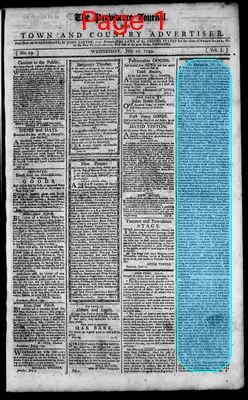
Literary
July 17, 1799
The Providence Journal, And Town And Country Advertiser
Providence, Providence County, Rhode Island
What is this article about?
In 'The Guelphian. No. IX.,' a narrator reflects on a lady's claim of lacking curiosity, then dreams of an eastern sage who lectures on the limits of human knowledge, the futility of overreaching curiosity, and the path to happiness through moral living and enjoying life's blessings.
Clipping

OCR Quality
95%
Excellent
Full Text
FOR THE PROVIDENCE JOURNAL.
The Guelphian. No. IX.
I WAS much surprised, the other evening, to hear a lady say she had no curiosity--not that I ever thought women possessed more of that passion than men, though certain petulant philosophers have been pleased to call it their most remarkable foible. I had ever considered curiosity as a kind of thirst for knowledge, and wondered how a lady could have so much information as I know she possesses, and at the same time have no appetite for it. After I had returned home, I could not forget this extraordinary declaration. Surely, said I, as I retired to my bed-chamber with Young in my hand, curiosity is a needful, though a restless passion. I read my usual hour, laid my head on my pillow, and, still thinking on curiosity and knowledge, I lost myself in slumber. In the visions of the night, one stood before me habited like an eastern sage.--His figure was tall and majestic; years had silvered his head; his eyes beamed the benignity of wisdom, and, leaning over his white staff, he thus addressed me:
"My son, Nature is too extensive for human comprehension. The mind, travelling in the fields of philosophy, plunging into the regions of metaphysical research, or soaring aloft to the realms of imagination, finds itself surrounded with immensity. When on the wing of retrospection, we contemplate the extensive past, uncertainty perplexes the mind, or impenetrable darkness forbids the research: Clouds forever hang round futurity; nor can the eye of scrutiny itself penetrate one moment towards to-morrow. If on either hand the mind makes her excursions, she returns, like the patriarch's dove, without finding a place of rest, baffled and bewildered, "of nothing certain but of labour lost." Even the few things of the present moment are greater than the mind can grasp. What is here presented to the senses, with which man is perfectly acquainted? Can the eye discover the causes, the relations or the essences of bodies? Though the voice of harmony is delightful, yet how is it made perceptible by the ear, and why is not the same sound alike pleasing to all? The zephyrs gales breathe on man the perfumes of morn --he is warmed by the genial rays of autumnal noon, and all he knows not how. Even with himself he holds but small acquaintance. Who, by searching, ever found out his own heart? or, seated within himself, could trace the movements of restless imagination? What nameless power of the soul has seen the origin of thought, or traced the "young idea" through all the stages of its existence, up to full grown maturity? How many recesses of the human mind have never been penetrated by the eye of self-survey? How difficult for the soul, early taught to rove in the fields of fancy, to form a domestic acquaintance? Philosophy exclaims, "how small a part of man is known by man!" Yet this being, called man, who is confined to an atom, and lives but a moment, makes his capacity the measure of what is possible in nature. He proudly stretches out the slender line of his reason on the works of infinity; and poising the feeble scale of his judgment, attempts to weigh the laws of the Eternal. Nothing can be found in the physical or moral world with which man is perfectly acquainted; yet on every thing he immediately gives a decision: Born the heir of ignorance and uncertainty, man hourly exposes himself to the censure of that maxim of philosophy which declares that the judgment of the fool always anticipates his knowledge.
"Since, therefore, he knows so little of his own beginning or his end: either how he came into existence, or what will befall him to-morrow, it would be ruin to abandon that restless curiosity which forever keeps the mind upon the stretch to pass the bound prescribed by nature. If man were formed for happiness, his bliss cannot depend on knowledge; since, were his wretchedness measured by his ignorance, the cup of human misery would be forever overflowing. If to enjoy the bounties of Providence be to obey the laws of Heaven, the only knowledge man may pursue, is that which teaches him how to live. The mind may build a thousand fanciful systems, and bewilder itself in the mazes of theory: but that man alone will be happy who knows how to enjoy the blessings of life; who tastes the bounties of nature without dissipation, nor feels the sting of envy and malevolence at the prosperity of merit; into whose possession Heaven pours his profusion as a reservoir for mankind; or who bears the weight of poverty without repining; who can enjoy the world, his friend, or his family; or, when higher obligations call, can forego the social, the amiable, and the domestic delight, and give his life a sacrifice with becoming fortitude. This man knows as much as man can know, and is prepared to be as blessed as mortals ought to be."
He ceased. I awoke. The venerable vision was departed with my slumber, and while I listened for the voice of the holy sage, I heard nothing but the solemn sound of the midnight bell. P.
The Guelphian. No. IX.
I WAS much surprised, the other evening, to hear a lady say she had no curiosity--not that I ever thought women possessed more of that passion than men, though certain petulant philosophers have been pleased to call it their most remarkable foible. I had ever considered curiosity as a kind of thirst for knowledge, and wondered how a lady could have so much information as I know she possesses, and at the same time have no appetite for it. After I had returned home, I could not forget this extraordinary declaration. Surely, said I, as I retired to my bed-chamber with Young in my hand, curiosity is a needful, though a restless passion. I read my usual hour, laid my head on my pillow, and, still thinking on curiosity and knowledge, I lost myself in slumber. In the visions of the night, one stood before me habited like an eastern sage.--His figure was tall and majestic; years had silvered his head; his eyes beamed the benignity of wisdom, and, leaning over his white staff, he thus addressed me:
"My son, Nature is too extensive for human comprehension. The mind, travelling in the fields of philosophy, plunging into the regions of metaphysical research, or soaring aloft to the realms of imagination, finds itself surrounded with immensity. When on the wing of retrospection, we contemplate the extensive past, uncertainty perplexes the mind, or impenetrable darkness forbids the research: Clouds forever hang round futurity; nor can the eye of scrutiny itself penetrate one moment towards to-morrow. If on either hand the mind makes her excursions, she returns, like the patriarch's dove, without finding a place of rest, baffled and bewildered, "of nothing certain but of labour lost." Even the few things of the present moment are greater than the mind can grasp. What is here presented to the senses, with which man is perfectly acquainted? Can the eye discover the causes, the relations or the essences of bodies? Though the voice of harmony is delightful, yet how is it made perceptible by the ear, and why is not the same sound alike pleasing to all? The zephyrs gales breathe on man the perfumes of morn --he is warmed by the genial rays of autumnal noon, and all he knows not how. Even with himself he holds but small acquaintance. Who, by searching, ever found out his own heart? or, seated within himself, could trace the movements of restless imagination? What nameless power of the soul has seen the origin of thought, or traced the "young idea" through all the stages of its existence, up to full grown maturity? How many recesses of the human mind have never been penetrated by the eye of self-survey? How difficult for the soul, early taught to rove in the fields of fancy, to form a domestic acquaintance? Philosophy exclaims, "how small a part of man is known by man!" Yet this being, called man, who is confined to an atom, and lives but a moment, makes his capacity the measure of what is possible in nature. He proudly stretches out the slender line of his reason on the works of infinity; and poising the feeble scale of his judgment, attempts to weigh the laws of the Eternal. Nothing can be found in the physical or moral world with which man is perfectly acquainted; yet on every thing he immediately gives a decision: Born the heir of ignorance and uncertainty, man hourly exposes himself to the censure of that maxim of philosophy which declares that the judgment of the fool always anticipates his knowledge.
"Since, therefore, he knows so little of his own beginning or his end: either how he came into existence, or what will befall him to-morrow, it would be ruin to abandon that restless curiosity which forever keeps the mind upon the stretch to pass the bound prescribed by nature. If man were formed for happiness, his bliss cannot depend on knowledge; since, were his wretchedness measured by his ignorance, the cup of human misery would be forever overflowing. If to enjoy the bounties of Providence be to obey the laws of Heaven, the only knowledge man may pursue, is that which teaches him how to live. The mind may build a thousand fanciful systems, and bewilder itself in the mazes of theory: but that man alone will be happy who knows how to enjoy the blessings of life; who tastes the bounties of nature without dissipation, nor feels the sting of envy and malevolence at the prosperity of merit; into whose possession Heaven pours his profusion as a reservoir for mankind; or who bears the weight of poverty without repining; who can enjoy the world, his friend, or his family; or, when higher obligations call, can forego the social, the amiable, and the domestic delight, and give his life a sacrifice with becoming fortitude. This man knows as much as man can know, and is prepared to be as blessed as mortals ought to be."
He ceased. I awoke. The venerable vision was departed with my slumber, and while I listened for the voice of the holy sage, I heard nothing but the solemn sound of the midnight bell. P.
What sub-type of article is it?
Vision Or Dream
Essay
Soliloquy
What themes does it cover?
Moral Virtue
Religious
What keywords are associated?
Curiosity
Knowledge
Dream Vision
Philosophy
Happiness
Moral Living
Providence
What entities or persons were involved?
P.
Literary Details
Title
The Guelphian. No. Ix.
Author
P.
Subject
On Curiosity And The Limits Of Knowledge
Form / Style
Prose Dream Vision With Philosophical Monologue
Key Lines
"My Son, Nature Is Too Extensive For Human Comprehension."
"If Man Were Formed For Happiness, His Bliss Cannot Depend On Knowledge;"
"This Man Knows As Much As Man Can Know, And Is Prepared To Be As Blessed As Mortals Ought To Be."