Thank you for visiting SNEWPapers!
Sign up free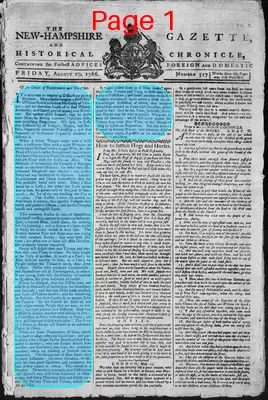
Literary
August 29, 1766
The New Hampshire Gazette And Historical Chronicle
Portsmouth, Greenland, Rockingham County, New Hampshire
What is this article about?
This essay examines the paradoxical causes of friendship and hatred, arguing that similarities in temperament, pursuits, and vices often breed discord and envy, while differences strengthen bonds, supported by historical and everyday examples like Socrates and Xantippe.
Clipping
OCR Quality
95%
Excellent
Full Text
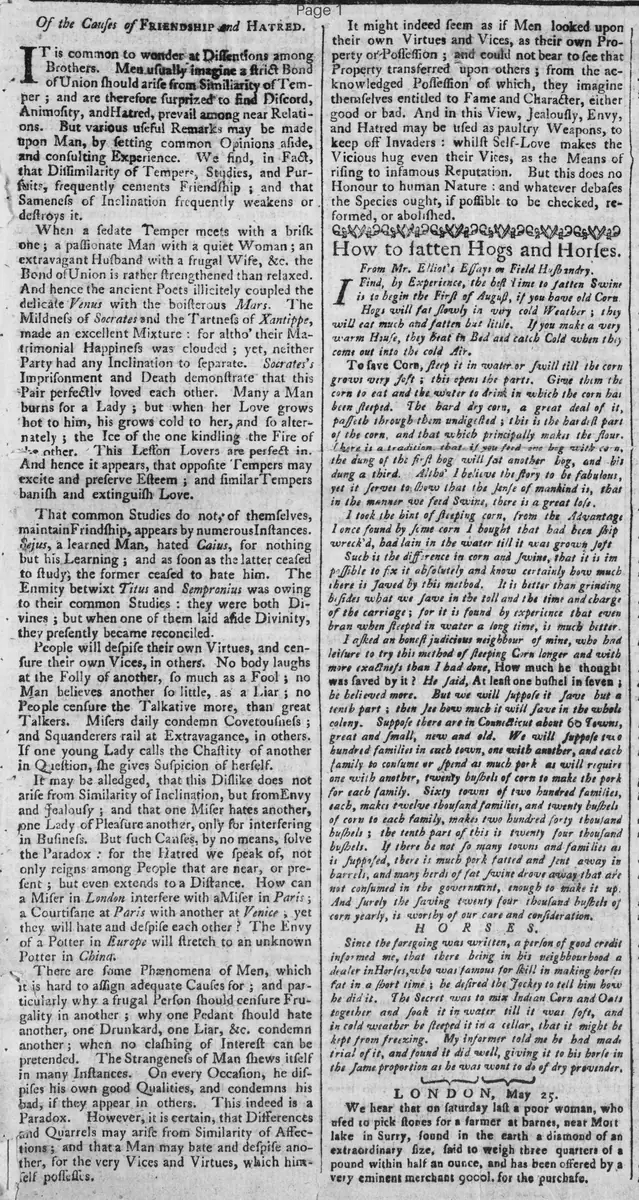
Of the Causes of FRIENDSHIP and HATRED.
'Tis common to wonder at Dissensions among Brothers. Men usually imagine a strict Bond of Union should arise from Similarity of Temper; and are therefore surprised to find Discord, Animosity, and Hatred, prevail among near Relations. But various useful Remarks may be made upon Man, by setting common Opinions aside, and consulting Experience. We find, in Fact, that Dissimilarity of Tempers, Studies, and Pursuits, frequently cements Friendship: and that Sameness of Inclination frequently weakens or destroys it.
When a sedate Temper meets with a brisk one; a passionate Man with a quiet Woman; an extravagant Husband with a frugal Wife, &c. the Bond of Union is rather strengthened than relaxed. And hence the ancient Poets illicitly coupled the delicate Venus with the boisterous Mars. The Mildness of Socrates and the Tartness of Xantippe, made an excellent Mixture: for altho' their Matrimonial Happiness was clouded; yet, neither Party had any Inclination to separate. Socrates's Imprisonment and Death demonstrate that this Pair perfectly loved each other. Many a Man burns for a Lady: but when her Love grows hot to him, his grows cold to her, and so alternately: the Ice of the one kindling the Fire of the other. This Lesson Lovers are perfect in. And hence it appears, that opposite Tempers may excite and preserve Esteem; and similar Tempers banish and extinguish Love.
That common Studies do not, of themselves, maintain Friendship, appears by numerous Instances. Sejus, a learned Man, hated Caius, for nothing but his Learning; and as soon as the latter ceased to study: the former ceased to hate him. The Enmity betwixt Titus and Sempranius was owing to their common Studies: they were both Divines; but when one of them laid aside Divinity, they presently became reconciled.
People will despise their own Virtues, and censure their own Vices, in others. No body laughs at the Folly of another, so much as a Fool; no Man believes another so little, as a Liar; no People censure the Talkative more, than great Talkers. Misers daily condemn Covetousness; and Squanderers rail at Extravagance, in others. If one young Lady calls the Chastity of another in Question, she gives Suspicion of herself.
It may be alleged, that this Dislike does not arise from Similarity of Inclination, but from Envy and Jealousy: and that one Miser hates another, one Lady of Pleasure another, only for interfering in Business. But such Cases, by no means, solve the Paradox: for the Hatred we speak of, not only reigns among People that are near, or present: but even extends to a Distance. How can a Miser in London interfere with a Miser in Paris: a Courtesan at Paris with another at Venice; yet they will hate and despise each other? The Envy of a Potter in Europe will stretch to an unknown Potter in China.
There are some Phenomena of Men, which it is hard to assign adequate Causes for: and particularly why a frugal Person should censure Frugality in another; why one Pedant should hate another, one Drunkard, one Liar, &c. condemn another; when no clashing of Interest can be pretended. The Strangeness of Man Shews itself in many Instances. On every Occasion, he despises his own good Qualities, and condemns his bad, if they appear in others. This indeed is a Paradox. However, it is certain, that Differences and Quarrels may arise from Similarity of Affections; and that a Man may hate and despise another, for the very Vices and Virtues, which himself possesses.
It might indeed seem as if Men looked upon their own Virtues and Vices, as their own Property or Possession; and could not bear to see that Property transferred upon others; from the acknowledged Possession of which, they imagine themselves entitled to Fame and Character, either good or bad. And in this View, Jealousy, Envy, and Hatred may be used as paultry Weapons, to keep off Invaders: whilst Self-Love makes the Vicious hug even their Vices, as the Means of rising to infamous Reputation. But this does no Honour to human Nature: and whatever debases the Species ought, if possible to be checked, reformed, or abolished.
'Tis common to wonder at Dissensions among Brothers. Men usually imagine a strict Bond of Union should arise from Similarity of Temper; and are therefore surprised to find Discord, Animosity, and Hatred, prevail among near Relations. But various useful Remarks may be made upon Man, by setting common Opinions aside, and consulting Experience. We find, in Fact, that Dissimilarity of Tempers, Studies, and Pursuits, frequently cements Friendship: and that Sameness of Inclination frequently weakens or destroys it.
When a sedate Temper meets with a brisk one; a passionate Man with a quiet Woman; an extravagant Husband with a frugal Wife, &c. the Bond of Union is rather strengthened than relaxed. And hence the ancient Poets illicitly coupled the delicate Venus with the boisterous Mars. The Mildness of Socrates and the Tartness of Xantippe, made an excellent Mixture: for altho' their Matrimonial Happiness was clouded; yet, neither Party had any Inclination to separate. Socrates's Imprisonment and Death demonstrate that this Pair perfectly loved each other. Many a Man burns for a Lady: but when her Love grows hot to him, his grows cold to her, and so alternately: the Ice of the one kindling the Fire of the other. This Lesson Lovers are perfect in. And hence it appears, that opposite Tempers may excite and preserve Esteem; and similar Tempers banish and extinguish Love.
That common Studies do not, of themselves, maintain Friendship, appears by numerous Instances. Sejus, a learned Man, hated Caius, for nothing but his Learning; and as soon as the latter ceased to study: the former ceased to hate him. The Enmity betwixt Titus and Sempranius was owing to their common Studies: they were both Divines; but when one of them laid aside Divinity, they presently became reconciled.
People will despise their own Virtues, and censure their own Vices, in others. No body laughs at the Folly of another, so much as a Fool; no Man believes another so little, as a Liar; no People censure the Talkative more, than great Talkers. Misers daily condemn Covetousness; and Squanderers rail at Extravagance, in others. If one young Lady calls the Chastity of another in Question, she gives Suspicion of herself.
It may be alleged, that this Dislike does not arise from Similarity of Inclination, but from Envy and Jealousy: and that one Miser hates another, one Lady of Pleasure another, only for interfering in Business. But such Cases, by no means, solve the Paradox: for the Hatred we speak of, not only reigns among People that are near, or present: but even extends to a Distance. How can a Miser in London interfere with a Miser in Paris: a Courtesan at Paris with another at Venice; yet they will hate and despise each other? The Envy of a Potter in Europe will stretch to an unknown Potter in China.
There are some Phenomena of Men, which it is hard to assign adequate Causes for: and particularly why a frugal Person should censure Frugality in another; why one Pedant should hate another, one Drunkard, one Liar, &c. condemn another; when no clashing of Interest can be pretended. The Strangeness of Man Shews itself in many Instances. On every Occasion, he despises his own good Qualities, and condemns his bad, if they appear in others. This indeed is a Paradox. However, it is certain, that Differences and Quarrels may arise from Similarity of Affections; and that a Man may hate and despise another, for the very Vices and Virtues, which himself possesses.
It might indeed seem as if Men looked upon their own Virtues and Vices, as their own Property or Possession; and could not bear to see that Property transferred upon others; from the acknowledged Possession of which, they imagine themselves entitled to Fame and Character, either good or bad. And in this View, Jealousy, Envy, and Hatred may be used as paultry Weapons, to keep off Invaders: whilst Self-Love makes the Vicious hug even their Vices, as the Means of rising to infamous Reputation. But this does no Honour to human Nature: and whatever debases the Species ought, if possible to be checked, reformed, or abolished.
What sub-type of article is it?
Essay
What themes does it cover?
Friendship
Moral Virtue
Social Manners
What keywords are associated?
Friendship
Hatred
Similarity
Dissimilarity
Envy
Jealousy
Human Nature
Temperament
Virtues
Vices
Literary Details
Title
Of The Causes Of Friendship And Hatred.
Key Lines
We Find, In Fact, That Dissimilarity Of Tempers, Studies, And Pursuits, Frequently Cements Friendship: And That Sameness Of Inclination Frequently Weakens Or Destroys It.
The Mildness Of Socrates And The Tartness Of Xantippe, Made An Excellent Mixture: For Altho' Their Matrimonial Happiness Was Clouded; Yet, Neither Party Had Any Inclination To Separate.
People Will Despise Their Own Virtues, And Censure Their Own Vices, In Others.
How Can A Miser In London Interfere With A Miser In Paris: A Courtesan At Paris With Another At Venice; Yet They Will Hate And Despise Each Other?
It Might Indeed Seem As If Men Looked Upon Their Own Virtues And Vices, As Their Own Property Or Possession; And Could Not Bear To See That Property Transferred Upon Others;