Thank you for visiting SNEWPapers!
Sign up free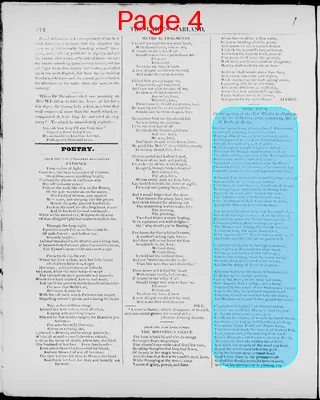
Poem
December 2, 1826
The Ladies' Garland
Harpers Ferry, Jefferson County, West Virginia
What is this article about?
Prize poem by Mrs. A. M. Wells of Boston, written for the opening of the New Theatre in Nashville on October 9, 1826. It praises the drama's historical role from ancient Athens, its exile and revival, and calls for virtuous guidance in the new American theater to draw hearts to virtue.
Clipping
OCR Quality
95%
Excellent
Full Text
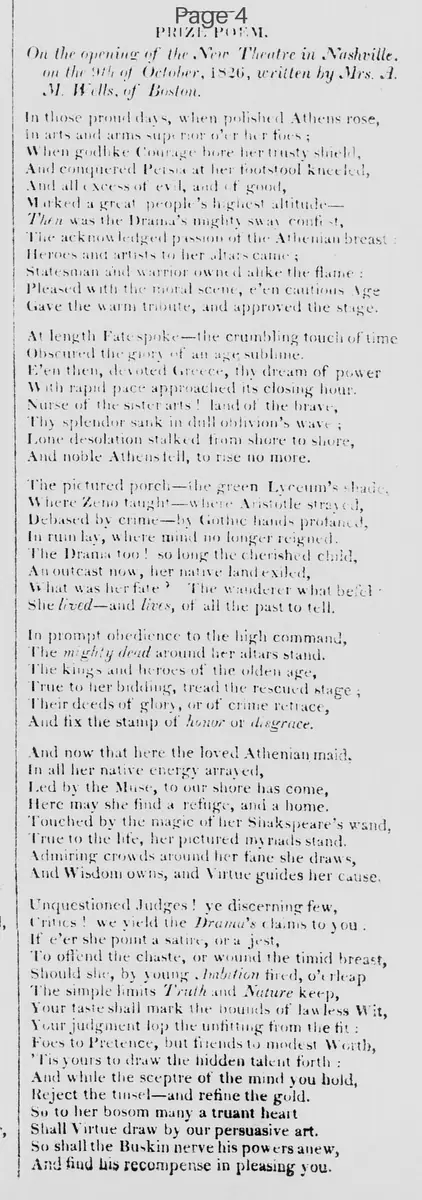
PRIZE POEM.
On the opening of the New Theatre in Nashville, on the 9th of October, 1826, written by Mrs. A. M. Wells, of Boston.
In those proud days, when polished Athens rose,
in arts and arms superior o’er her foes;
When godlike Courage bore her trusty shield,
And conquered Persia at her footstool kneeled,
And excellence of evil, and of good,
Marked a great people’s highest altitude—
Then was the Drama’s mighty sway confest,
The acknowledged passion of the Athenian breast
Heroes and artists to her altars came;
Statesman and warrior owned alike the flame:
Pleased with the moral scene, e’en cautious Age
Gave the warm tribute, and approved the stage.
At length Fate spoke—the crumbling touch of time
Obscured the glory of an age sublime.
E’en then, devoted Greece, thy dream of power
With rapid pace approached its closing hour.
Nurse of the sister arts! land of the brave,
Thy splendor sank in dull oblivion’s wave;
Lone desolation stalked from shore to shore,
And noble Athens fell, to rise no more.
The pictured porch—the green Lyceum’s shade.
Where Zeno taught—where Aristotle strayed,
Debased by crime—by Gothic hands profaned,
In ruin lay, where mind no longer reigned.
The Drama too! so long the cherished child,
An outcast now, her native land exiled,
What was her fate
The wanderer what befell
She lived—and lives, of all the past to tell.
In prompt obedience to the high command,
The mighty dead around her altars stand.
The kings and heroes of the olden age,
True to her bidding, tread the rescued stage;
Their deeds of glory, or of crime retrace,
And fix the stamp of honor or disgrace.
And now that here the loved Athenian maid,
In all her native energy arrayed,
Led by the Muse, to our shore has come,
Here may she find a refuge, and a home.
Touched by the magic of her Shakespeare’s wind,
True to the life, her pictured myriads stand.
Admiring crowds around her fane she draws,
And Wisdom owns, and Virtue guides her Cause.
Unquestioned Judges! ye discerning few,
Critics! we yield the Drama’s claims to you.
If e’er she point a satire, or a jest,
To offend the chaste, or wound the timid breast,
Should she, by young Ambition fired, o’erleap
The simple limits Truth and Nature keep,
Your taste shall mark the bounds of lawless Wit,
Your judgment lop the unfitting from the fit:
Foes to Pretence, but friends to modest Worth,
’Tis yours to draw the hidden talent forth:
And while the sceptre of the mind you hold,
Reject the tinsel—and refine the gold.
So to her bosom many a truant heart
Shall Virtue draw by our persuasive art.
So shall the Buskin nerve his powers anew,
And find his recompense in pleasing you.
On the opening of the New Theatre in Nashville, on the 9th of October, 1826, written by Mrs. A. M. Wells, of Boston.
In those proud days, when polished Athens rose,
in arts and arms superior o’er her foes;
When godlike Courage bore her trusty shield,
And conquered Persia at her footstool kneeled,
And excellence of evil, and of good,
Marked a great people’s highest altitude—
Then was the Drama’s mighty sway confest,
The acknowledged passion of the Athenian breast
Heroes and artists to her altars came;
Statesman and warrior owned alike the flame:
Pleased with the moral scene, e’en cautious Age
Gave the warm tribute, and approved the stage.
At length Fate spoke—the crumbling touch of time
Obscured the glory of an age sublime.
E’en then, devoted Greece, thy dream of power
With rapid pace approached its closing hour.
Nurse of the sister arts! land of the brave,
Thy splendor sank in dull oblivion’s wave;
Lone desolation stalked from shore to shore,
And noble Athens fell, to rise no more.
The pictured porch—the green Lyceum’s shade.
Where Zeno taught—where Aristotle strayed,
Debased by crime—by Gothic hands profaned,
In ruin lay, where mind no longer reigned.
The Drama too! so long the cherished child,
An outcast now, her native land exiled,
What was her fate
The wanderer what befell
She lived—and lives, of all the past to tell.
In prompt obedience to the high command,
The mighty dead around her altars stand.
The kings and heroes of the olden age,
True to her bidding, tread the rescued stage;
Their deeds of glory, or of crime retrace,
And fix the stamp of honor or disgrace.
And now that here the loved Athenian maid,
In all her native energy arrayed,
Led by the Muse, to our shore has come,
Here may she find a refuge, and a home.
Touched by the magic of her Shakespeare’s wind,
True to the life, her pictured myriads stand.
Admiring crowds around her fane she draws,
And Wisdom owns, and Virtue guides her Cause.
Unquestioned Judges! ye discerning few,
Critics! we yield the Drama’s claims to you.
If e’er she point a satire, or a jest,
To offend the chaste, or wound the timid breast,
Should she, by young Ambition fired, o’erleap
The simple limits Truth and Nature keep,
Your taste shall mark the bounds of lawless Wit,
Your judgment lop the unfitting from the fit:
Foes to Pretence, but friends to modest Worth,
’Tis yours to draw the hidden talent forth:
And while the sceptre of the mind you hold,
Reject the tinsel—and refine the gold.
So to her bosom many a truant heart
Shall Virtue draw by our persuasive art.
So shall the Buskin nerve his powers anew,
And find his recompense in pleasing you.
What sub-type of article is it?
Ode
What themes does it cover?
Moral Virtue
Patriotism
What keywords are associated?
Prize Poem
Nashville Theater
Athens Drama
Moral Virtue
Shakespeare Influence
1826 Opening
What entities or persons were involved?
Mrs. A. M. Wells, Of Boston
Poem Details
Title
Prize Poem.
Author
Mrs. A. M. Wells, Of Boston
Subject
On The Opening Of The New Theatre In Nashville, On The 9th Of October, 1826
Form / Style
Rhymed Couplets
Key Lines
In Those Proud Days, When Polished Athens Rose,
In Arts And Arms Superior O’er Her Foes;
And Now That Here The Loved Athenian Maid,
In All Her Native Energy Arrayed,
Led By The Muse, To Our Shore Has Come,
Here May She Find A Refuge, And A Home.
Touched By The Magic Of Her Shakespeare’s Wind,
True To The Life, Her Pictured Myriads Stand.
So To Her Bosom Many A Truant Heart
Shall Virtue Draw By Our Persuasive Art.
And Find His Recompense In Pleasing You.