Thank you for visiting SNEWPapers!
Sign up free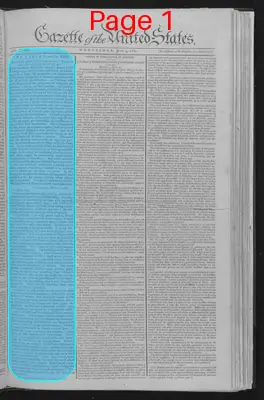
Literary
July 1, 1789
Gazette Of The United States
New York, New York County, New York
What is this article about?
An essay in 'The Tablet' No. XXIII reflects on a sermon about sacrificing future happiness for present gratification, introducing a letter from a retired friend who finds retirement unfulfilling due to ingrained habits of diligence, dated May 10, 1789, to be continued.
Clipping
OCR Quality
95%
Excellent
Full Text
[No. XXIII.]
THE TABLET.-No. XXIII.
"A course of rigorous self-denial in youth may prove inimical to the happiness of old age."
In an excellent discourse which I heard a few Sundays ago, the preacher exhibited, in a striking point of light, the propensity of mankind to sacrifice their prospects of future happiness to the love of present gratification. As I seldom wish to call in question the propriety of religious admonitions; and as, on this occasion, the illustrations were peculiarly pointed and forcible, I might have proceeded to the end of life, under the full conviction that such sentiments were just and reasonable, had not some doubts been excited by the following letter, I lately received from a friend.
The reader must be informed, that this acquaintance of mine retired a few years ago into the country, with a view of softening the asperities of life by relaxation and indulgence. He had long been engaged in business, with much care and assiduity, that he might put himself in circumstances to enjoy leisure and amusement. But it happened that his ardour to acquire property had produced such habits of diligence and activity, that he is utterly at a loss, how to occupy his mind, in the tranquil scenes of so calm a retreat. Removed from the anxiety and exercise of vigorous pursuits, he cannot change his feelings with his situation. In the early periods of life, he had solaced himself with the expectations of finding exquisite delight, in devoting his declining years to retirement, which might be alternately employed in contemplation or diversions. But unfortunately he did not consult the principles of human nature. No man can suddenly relinquish a course of old habits, without subjecting himself to a tedious interval, before he can form new ones. By destroying his accustomed sources of happiness, bad as they may be, he cannot readily adopt others that are not worse. The letter, to which I allude, thus describes the situation of my correspondent.
"L , May 10, 1789.
"Dear SIR,
"Your congratulations are pleasing, as they demonstrate your good will and friendship; but they are painful, in convincing me that you can wish my happiness more easily than I can realize it. If any felicity can be derived from being happy in your imagination, while in my own I am miserable, you congratulate me with propriety.
"You will ask, and with great reason, why I am not happy; and you will even wonder to hear me complain, when at the same time, I assure you that I have not a wish ungratified. Still however I am as unhappy a being as exists. It is not disappointed ambition; it is not an unsatisfied temper of avarice; it is not perverse or disgraceful conduct in my family; it is not pain or infirmity of body; it is not a reluctance to leave this world, or the dread of appearing in another, that disturbs my tranquility. No! None of these causes operate in my disquietude. My infelicity only results from disappointed hopes. I have formed expectations of happiness which I shall never realize. My anticipations were vain and fallacious, because they amused me with prospects that were contrary to the natural disposition of things. The mind that has accustomed itself to reject present gratification, for the sake of enjoying that which is future, loses by this means the relish for any enjoyment at all. I am in possession of every ingredient to gratify my wishes, that I ever hoped or anticipated. They are far however from producing the effect I intended.
"In short, my past habits are at variance with my present plans and prospects. We are so much the slaves of custom, that whatever mode of life we have long pursued, cannot be suddenly altered, without its striking a dangerous blow upon our happiness. In vain had I flattered myself, that this elegant retreat would be a delightful substitute for the bustle and watchfulness of an anxious employment. The disagreeable incidents of my former occupations, have all escaped my memory; while the pleasing circumstances are heightened by the contrast of my present situation. I would not regard what noise or tumult I could hear, if it would serve to wear away my tedious, vacant hours, in this insipid place of solitude. Every charm, I had figured to myself from this retirement, has fled from my imagination. When I awake in the morning, I cannot form schemes to amuse me half through the day; and before night, I am tempted to believe that nature has changed her laws, and that the planets do not move with their wonted celerity. My hopes have been defeated; as those of every other person who expects contentment from business and parsimony can afford liberal enjoyments. The moral world will no sooner change its laws than the natural."
[This letter to be concluded in our next number.]
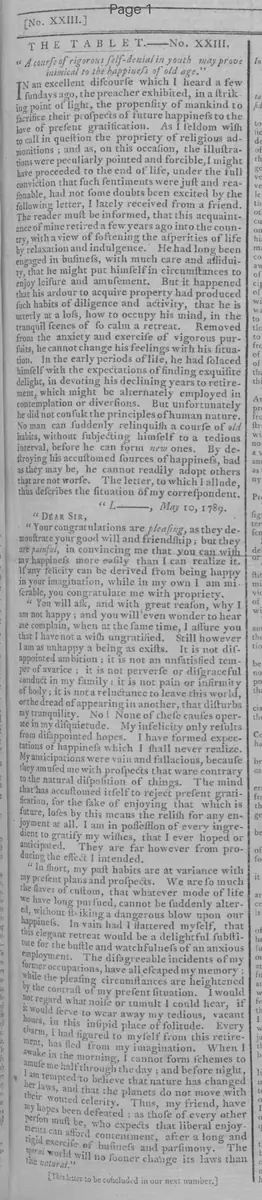
THE TABLET.-No. XXIII.
"A course of rigorous self-denial in youth may prove inimical to the happiness of old age."
In an excellent discourse which I heard a few Sundays ago, the preacher exhibited, in a striking point of light, the propensity of mankind to sacrifice their prospects of future happiness to the love of present gratification. As I seldom wish to call in question the propriety of religious admonitions; and as, on this occasion, the illustrations were peculiarly pointed and forcible, I might have proceeded to the end of life, under the full conviction that such sentiments were just and reasonable, had not some doubts been excited by the following letter, I lately received from a friend.
The reader must be informed, that this acquaintance of mine retired a few years ago into the country, with a view of softening the asperities of life by relaxation and indulgence. He had long been engaged in business, with much care and assiduity, that he might put himself in circumstances to enjoy leisure and amusement. But it happened that his ardour to acquire property had produced such habits of diligence and activity, that he is utterly at a loss, how to occupy his mind, in the tranquil scenes of so calm a retreat. Removed from the anxiety and exercise of vigorous pursuits, he cannot change his feelings with his situation. In the early periods of life, he had solaced himself with the expectations of finding exquisite delight, in devoting his declining years to retirement, which might be alternately employed in contemplation or diversions. But unfortunately he did not consult the principles of human nature. No man can suddenly relinquish a course of old habits, without subjecting himself to a tedious interval, before he can form new ones. By destroying his accustomed sources of happiness, bad as they may be, he cannot readily adopt others that are not worse. The letter, to which I allude, thus describes the situation of my correspondent.
"L , May 10, 1789.
"Dear SIR,
"Your congratulations are pleasing, as they demonstrate your good will and friendship; but they are painful, in convincing me that you can wish my happiness more easily than I can realize it. If any felicity can be derived from being happy in your imagination, while in my own I am miserable, you congratulate me with propriety.
"You will ask, and with great reason, why I am not happy; and you will even wonder to hear me complain, when at the same time, I assure you that I have not a wish ungratified. Still however I am as unhappy a being as exists. It is not disappointed ambition; it is not an unsatisfied temper of avarice; it is not perverse or disgraceful conduct in my family; it is not pain or infirmity of body; it is not a reluctance to leave this world, or the dread of appearing in another, that disturbs my tranquility. No! None of these causes operate in my disquietude. My infelicity only results from disappointed hopes. I have formed expectations of happiness which I shall never realize. My anticipations were vain and fallacious, because they amused me with prospects that were contrary to the natural disposition of things. The mind that has accustomed itself to reject present gratification, for the sake of enjoying that which is future, loses by this means the relish for any enjoyment at all. I am in possession of every ingredient to gratify my wishes, that I ever hoped or anticipated. They are far however from producing the effect I intended.
"In short, my past habits are at variance with my present plans and prospects. We are so much the slaves of custom, that whatever mode of life we have long pursued, cannot be suddenly altered, without its striking a dangerous blow upon our happiness. In vain had I flattered myself, that this elegant retreat would be a delightful substitute for the bustle and watchfulness of an anxious employment. The disagreeable incidents of my former occupations, have all escaped my memory; while the pleasing circumstances are heightened by the contrast of my present situation. I would not regard what noise or tumult I could hear, if it would serve to wear away my tedious, vacant hours, in this insipid place of solitude. Every charm, I had figured to myself from this retirement, has fled from my imagination. When I awake in the morning, I cannot form schemes to amuse me half through the day; and before night, I am tempted to believe that nature has changed her laws, and that the planets do not move with their wonted celerity. My hopes have been defeated; as those of every other person who expects contentment from business and parsimony can afford liberal enjoyments. The moral world will no sooner change its laws than the natural."
[This letter to be concluded in our next number.]
What sub-type of article is it?
Essay
Epistolary
What themes does it cover?
Moral Virtue
What keywords are associated?
Retirement
Happiness
Habits
Self Denial
Custom
Gratification
Literary Details
Title
The Tablet. No. Xxiii.
Subject
"A Course Of Rigorous Self Denial In Youth May Prove Inimical To The Happiness Of Old Age."
Form / Style
Prose Essay With Embedded Epistolary Excerpt
Key Lines
The Mind That Has Accustomed Itself To Reject Present Gratification, For The Sake Of Enjoying That Which Is Future, Loses By This Means The Relish For Any Enjoyment At All.
We Are So Much The Slaves Of Custom, That Whatever Mode Of Life We Have Long Pursued, Cannot Be Suddenly Altered, Without Its Striking A Dangerous Blow Upon Our Happiness.
My Hopes Have Been Defeated; As Those Of Every Other Person Who Expects Contentment From Business And Parsimony Can Afford Liberal Enjoyments.