Thank you for visiting SNEWPapers!
Sign up free
Literary
May 12, 1939
The Hagerstown Globe
Hagerstown, Washington County, Maryland
What is this article about?
This essay praises the horse's profound historical and universal service to humanity, detailing famous examples: Bucephalus tamed by young Alexander the Great; Messala, Garibaldi's war horse left behind in 1848; Washington's retired steed Nelson; McKinley's brave ride on Bob-tail during the Civil War; and Sheridan's inspiring ride on Rienzi in 1864, turning defeat to victory.
Clipping
OCR Quality
98%
Excellent
Full Text
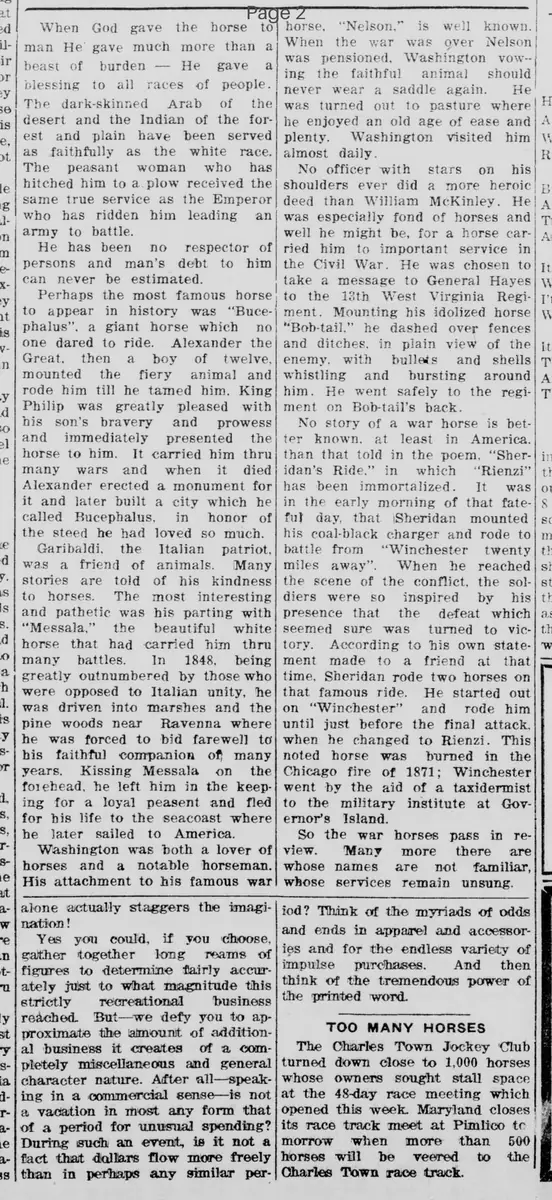
When God gave the horse to man He gave much more than a beast of burden - He gave a blessing to all races of people.
The dark-skinned Arab of the desert and the Indian of the forest and plain have been served as faithfully as the white race.
The peasant woman who has hitched him to a plow received the same true service as the Emperor who has ridden him leading an army to battle.
He has been no respecter of persons and man's debt to him can never be estimated.
Perhaps the most famous horse to appear in history was "Bucephalus", a giant horse which no one dared to ride.
Alexander the Great, then a boy of twelve, mounted the fiery animal and rode him till he tamed him. King Philip was greatly pleased with his son's bravery and prowess and immediately presented the horse to him.
It carried him thru many wars and when it died Alexander erected a monument for it and later built a city which he called Bucephalus, in honor of the steed he had loved so much.
Garibaldi, the Italian patriot, was a friend of animals.
Many stories are told of his kindness to horses.
The most interesting and pathetic was his parting with "Messala," the beautiful white horse that had carried him thru many battles.
In 1848, being greatly outnumbered by those who were opposed to Italian unity, he was driven into marshes and the pine woods near Ravenna where he was forced to bid farewell to his faithful companion of many years.
Kissing Messala on the forehead, he left him in the keeping of a loyal peasant and fled for his life to the seacoast where he later sailed to America.
Washington was both a lover of horses and a notable horseman.
His attachment to his famous war horse, "Nelson," is well known.
When the war was over Nelson was pensioned, Washington vowing the faithful animal should never wear a saddle again.
He was turned out to pasture where he enjoyed an old age of ease and plenty.
Washington visited him almost daily.
No officer with stars on his shoulders ever did a more heroic deed than William McKinley.
He was especially fond of horses and well he might be, for a horse carried him to important service in the Civil War.
He was chosen to take a message to General Hayes to the 13th West Virginia Regiment.
Mounting his idolized horse "Bob-tail," he dashed over fences and ditches, in plain view of the enemy, with bullets and shells whistling and bursting around him.
He went safely to the regiment on Bob-tail's back.
No story of a war horse is better known, at least in America, than that told in the poem, "Sheridan's Ride," in which "Rienzi" has been immortalized.
It was in the early morning of that fateful day that Sheridan mounted his coal-black charger and rode to battle from "Winchester twenty miles away".
When he reached the scene of the conflict, the soldiers were so inspired by his presence that the defeat which seemed sure was turned to victory.
According to his own statement made to a friend at that time, Sheridan rode two horses on that famous ride.
He started out on "Winchester" and rode him until just before the final attack, when he changed to Rienzi.
This noted horse was burned in the Chicago fire of 1871; Winchester went by the aid of a taxidermist to the military institute at Governor's Island.
So the war horses pass in review.
Many more there are whose names are not familiar, whose services remain unsung.
Yes you could, if you choose, gather together long reams of figures to determine fairly accurately just to what magnitude this strictly recreational business reached.
But we defy you to approximate the amount of additional business it creates of a completely miscellaneous and general character nature.
After all-speaking in a commercial sense-is not a vacation in most any form that of a period for unusual spending?
During such an event, is it not a fact that dollars flow more freely than in perhaps any similar period?
The dark-skinned Arab of the desert and the Indian of the forest and plain have been served as faithfully as the white race.
The peasant woman who has hitched him to a plow received the same true service as the Emperor who has ridden him leading an army to battle.
He has been no respecter of persons and man's debt to him can never be estimated.
Perhaps the most famous horse to appear in history was "Bucephalus", a giant horse which no one dared to ride.
Alexander the Great, then a boy of twelve, mounted the fiery animal and rode him till he tamed him. King Philip was greatly pleased with his son's bravery and prowess and immediately presented the horse to him.
It carried him thru many wars and when it died Alexander erected a monument for it and later built a city which he called Bucephalus, in honor of the steed he had loved so much.
Garibaldi, the Italian patriot, was a friend of animals.
Many stories are told of his kindness to horses.
The most interesting and pathetic was his parting with "Messala," the beautiful white horse that had carried him thru many battles.
In 1848, being greatly outnumbered by those who were opposed to Italian unity, he was driven into marshes and the pine woods near Ravenna where he was forced to bid farewell to his faithful companion of many years.
Kissing Messala on the forehead, he left him in the keeping of a loyal peasant and fled for his life to the seacoast where he later sailed to America.
Washington was both a lover of horses and a notable horseman.
His attachment to his famous war horse, "Nelson," is well known.
When the war was over Nelson was pensioned, Washington vowing the faithful animal should never wear a saddle again.
He was turned out to pasture where he enjoyed an old age of ease and plenty.
Washington visited him almost daily.
No officer with stars on his shoulders ever did a more heroic deed than William McKinley.
He was especially fond of horses and well he might be, for a horse carried him to important service in the Civil War.
He was chosen to take a message to General Hayes to the 13th West Virginia Regiment.
Mounting his idolized horse "Bob-tail," he dashed over fences and ditches, in plain view of the enemy, with bullets and shells whistling and bursting around him.
He went safely to the regiment on Bob-tail's back.
No story of a war horse is better known, at least in America, than that told in the poem, "Sheridan's Ride," in which "Rienzi" has been immortalized.
It was in the early morning of that fateful day that Sheridan mounted his coal-black charger and rode to battle from "Winchester twenty miles away".
When he reached the scene of the conflict, the soldiers were so inspired by his presence that the defeat which seemed sure was turned to victory.
According to his own statement made to a friend at that time, Sheridan rode two horses on that famous ride.
He started out on "Winchester" and rode him until just before the final attack, when he changed to Rienzi.
This noted horse was burned in the Chicago fire of 1871; Winchester went by the aid of a taxidermist to the military institute at Governor's Island.
So the war horses pass in review.
Many more there are whose names are not familiar, whose services remain unsung.
Yes you could, if you choose, gather together long reams of figures to determine fairly accurately just to what magnitude this strictly recreational business reached.
But we defy you to approximate the amount of additional business it creates of a completely miscellaneous and general character nature.
After all-speaking in a commercial sense-is not a vacation in most any form that of a period for unusual spending?
During such an event, is it not a fact that dollars flow more freely than in perhaps any similar period?
What sub-type of article is it?
Essay
What themes does it cover?
War Peace
Patriotism
Moral Virtue
What keywords are associated?
Historical Horses
Bucephalus
Alexander The Great
Garibaldi
Messala
Washington
Nelson
Mckinley
Bob Tail
Sheridans Ride
Rienzi
Literary Details
Key Lines
When God Gave The Horse To Man He Gave Much More Than A Beast Of Burden He Gave A Blessing To All Races Of People.
He Has Been No Respecter Of Persons And Man's Debt To Him Can Never Be Estimated.
Kissing Messala On The Forehead, He Left Him In The Keeping Of A Loyal Peasant And Fled For His Life To The Seacoast Where He Later Sailed To America.
When The War Was Over Nelson Was Pensioned, Washington Vowing The Faithful Animal Should Never Wear A Saddle Again.
When He Reached The Scene Of The Conflict, The Soldiers Were So Inspired By His Presence That The Defeat Which Seemed Sure Was Turned To Victory.