Thank you for visiting SNEWPapers!
Sign up free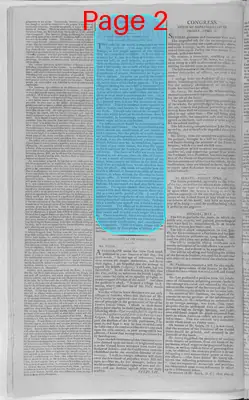
Literary
May 5, 1790
Gazette Of The United States
New York, New York County, New York
What is this article about?
An essay in The Tablet critiques how fashion overrides personal taste and convenience in dress, advocating for climate-appropriate attire to preserve health, especially for American women in northern regions, countering the effects of irregular weather.
Clipping
OCR Quality
98%
Excellent
Full Text
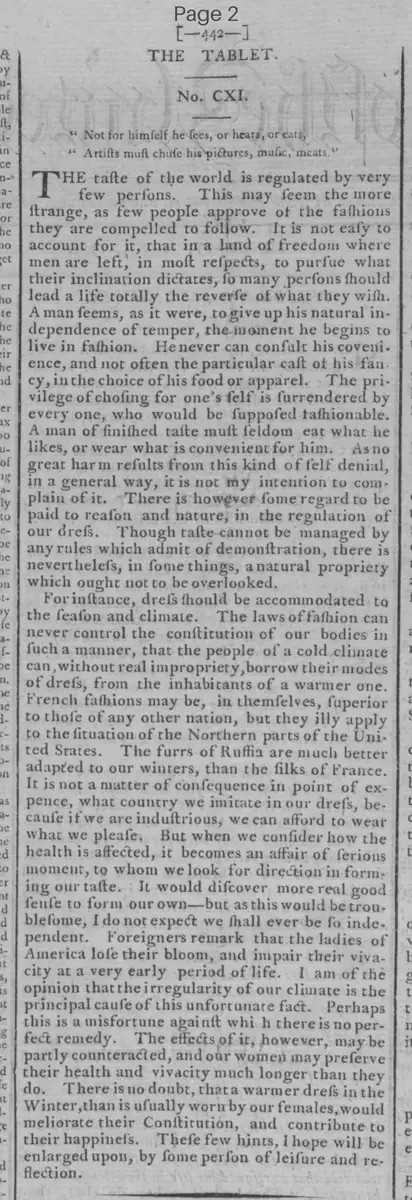
[-442-]
THE TABLET.
No. CXI.
"Not for himself he sees, or hears, or eats,
Artists must choose his pictures, music, meats."
The state of the world is regulated by very few persons. This may seem the more strange, as few people approve of the fashions they are compelled to follow. It is not easy to account for it, that in a land of freedom where men are left, in most respects, to pursue what their inclination dictates, so many persons should lead a life totally the reverse of what they wish.
A man seems, as it were, to give up his natural independence of temper, the moment he begins to live in fashion. He never can consult his convenience, and not often the particular cast of his fancy, in the choice of his food or apparel. The privilege of choosing for one's self is surrendered by every one, who would be supposed fashionable.
A man of finished taste must seldom eat what he likes, or wear what is convenient for him. As no great harm results from this kind of self denial, in a general way, it is not my intention to complain of it. There is however some regard to be paid to reason and nature, in the regulation of our dress. Though taste cannot be managed by any rules which admit of demonstration, there is nevertheless, in some things, a natural propriety which ought not to be overlooked.
For instance, dress should be accommodated to the season and climate. The laws of fashion can never control the constitution of our bodies in such a manner, that the people of a cold climate can, without real impropriety, borrow their modes of dress, from the inhabitants of a warmer one.
French fashions may be, in themselves, superior to those of any other nation, but they ill apply to the situation of the Northern parts of the United States. The furs of Russia are much better adapted to our winters, than the silks of France.
It is not a matter of consequence in point of expense, what country we imitate in our dress, because if we are industrious, we can afford to wear what we please. But when we consider how the health is affected, it becomes an affair of serious moment, to whom we look for direction in forming our taste. It would discover more real good sense to form our own—but as this would be troublesome, I do not expect we shall ever be so independent. Foreigners remark that the ladies of America lose their bloom, and impair their vivacity at a very early period of life. I am of the opinion that the irregularity of our climate is the principal cause of this unfortunate fact. Perhaps this is a misfortune against which there is no perfect remedy. The effects of it, however, may be partly counteracted, and our women may preserve their health and vivacity much longer than they do. There is no doubt, that a warmer dress in the Winter, than is usually worn by our females, would meliorate their Constitution, and contribute to their happiness. These few hints, I hope will be enlarged upon, by some person of leisure and reflection.
THE TABLET.
No. CXI.
"Not for himself he sees, or hears, or eats,
Artists must choose his pictures, music, meats."
The state of the world is regulated by very few persons. This may seem the more strange, as few people approve of the fashions they are compelled to follow. It is not easy to account for it, that in a land of freedom where men are left, in most respects, to pursue what their inclination dictates, so many persons should lead a life totally the reverse of what they wish.
A man seems, as it were, to give up his natural independence of temper, the moment he begins to live in fashion. He never can consult his convenience, and not often the particular cast of his fancy, in the choice of his food or apparel. The privilege of choosing for one's self is surrendered by every one, who would be supposed fashionable.
A man of finished taste must seldom eat what he likes, or wear what is convenient for him. As no great harm results from this kind of self denial, in a general way, it is not my intention to complain of it. There is however some regard to be paid to reason and nature, in the regulation of our dress. Though taste cannot be managed by any rules which admit of demonstration, there is nevertheless, in some things, a natural propriety which ought not to be overlooked.
For instance, dress should be accommodated to the season and climate. The laws of fashion can never control the constitution of our bodies in such a manner, that the people of a cold climate can, without real impropriety, borrow their modes of dress, from the inhabitants of a warmer one.
French fashions may be, in themselves, superior to those of any other nation, but they ill apply to the situation of the Northern parts of the United States. The furs of Russia are much better adapted to our winters, than the silks of France.
It is not a matter of consequence in point of expense, what country we imitate in our dress, because if we are industrious, we can afford to wear what we please. But when we consider how the health is affected, it becomes an affair of serious moment, to whom we look for direction in forming our taste. It would discover more real good sense to form our own—but as this would be troublesome, I do not expect we shall ever be so independent. Foreigners remark that the ladies of America lose their bloom, and impair their vivacity at a very early period of life. I am of the opinion that the irregularity of our climate is the principal cause of this unfortunate fact. Perhaps this is a misfortune against which there is no perfect remedy. The effects of it, however, may be partly counteracted, and our women may preserve their health and vivacity much longer than they do. There is no doubt, that a warmer dress in the Winter, than is usually worn by our females, would meliorate their Constitution, and contribute to their happiness. These few hints, I hope will be enlarged upon, by some person of leisure and reflection.
What sub-type of article is it?
Essay
What themes does it cover?
Social Manners
Temperance
What keywords are associated?
Fashion
Dress
Climate
Health
American Women
Northern United States
Self Denial
Taste
Literary Details
Subject
On Fashion, Dress, And Health In America
Form / Style
Prose Essay On Taste And Climate
Key Lines
"Not For Himself He Sees, Or Hears, Or Eats, Artists Must Choose His Pictures, Music, Meats."
French Fashions May Be, In Themselves, Superior To Those Of Any Other Nation, But They Ill Apply To The Situation Of The Northern Parts Of The United States.
The Furs Of Russia Are Much Better Adapted To Our Winters, Than The Silks Of France.
Foreigners Remark That The Ladies Of America Lose Their Bloom, And Impair Their Vivacity At A Very Early Period Of Life.
There Is No Doubt, That A Warmer Dress In The Winter, Than Is Usually Worn By Our Females, Would Meliorate Their Constitution, And Contribute To Their Happiness.