Thank you for visiting SNEWPapers!
Sign up free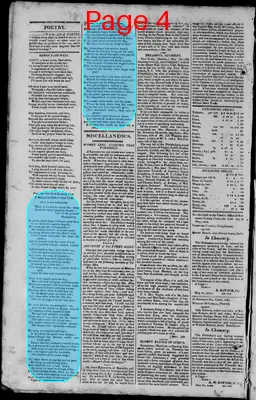
Poem
May 28, 1824
Fincastle Mirror
Fincastle, Botetourt County, Virginia
What is this article about?
A melancholy elegy tracing a young man's life from youthful hope and love, through betrayal, failed ambitions, and despair, to a peaceful death, with his lyre left to echo his farewell.
Clipping
OCR Quality
95%
Excellent
Full Text
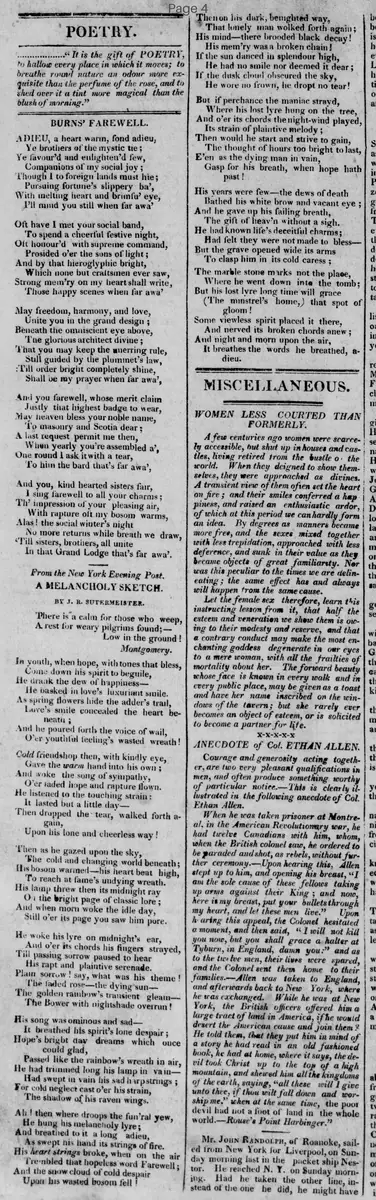
From the New York Evening Post.
A MELANCHOLY SKETCH.
BY J. R. SUTERMEISTER.
There is a calm for those who weep,
A rest for weary pilgrims found—
Low in the ground!
Montgomery.
In youth, when hope, with tones that bless,
Came down his spirit to beguile,
He drank the dew of happiness—
He basked in love's luxuriant smile.
As spring flowers hide the adder's trail,
Love's smile concealed the heart beneath;
And he poured forth the voice of wail,
O'er youthful feeling's wasted wreath!
Cold friendship then, with kindly eye,
Gave the warm hand into his own;
And woke the song of sympathy,
O'er faded hope and rapture flown.
He listened to the touching strain:
It lasted but a little day—
Then dropped the tear, walked forth again,
Upon his lone and cheerless way!
Then as he gazed upon the sky,
The cold and changing world beneath;
His bosom warmed—his heart beat high,
To reach at fame's undying wreath.
His lamp threw then its midnight ray
O'er the bright page of classic lore;
And when morn woke the idle day,
Still o'er its page you saw him pore.
He woke his lyre on midnight's ear,
And o'er its chords his fingers strayed,
Till passing sorrow paused to hear
His rapt and plaintive serenade.
Plain sorrow! say, what was his theme!
The faded rose—the dying sun—
The golden rainbow's transient gleam—
The bower with nightshade overrun!
His song was ominous and sad—
It breathed his spirit's lone despair;
Hope's bright day dreams which once could glad,
Passed like the rainbow's wreath in air.
He had trained long his lamp in vain—
Had swept in vain his sad harp-strings;
For cold neglect cast o'er his strain,
The shadow of his raven wings.
Ah! then where droops the fun'ral yew,
He hung his melancholy lyre;
And breathed to it a long adieu,
As swept his hand its strings of fire.
His heart-strings broke, when on the air
Trembled that hopeless word—Farewell!
And the snow-cloud of cold despair
Upon his wasted bosom fell!
Then on his dark, benighted way.
That lonely man walked forth again;
His mind—there brooded black decay!
His mem'ry was a broken chain!
If the sun danced in splendour high,
He had no smile nor deemed it dear;
If the dusk cloud obscured the sky,
He wore no frown, he dropt no tear!
But if perchance the maniac strayed,
Where his lost lyre hung on the tree,
And o'er its chords the night-wind played,
Its strain of plaintive melody;
Then would he start and strive to gain,
The thought of hours too bright to last,
E'en as the dying man in vain,
Gasp for his breath, when hope hath past!
His years were few—the dews of death
Bathed his white brow and vacant eye;
And he gave up his failing breath,
The gift of heaven without a sigh.
He had known life's deceitful charms;
Had felt they were not made to bless—
But the grave opened wide its arms
To clasp him in its cold caress;
The marble stone marks not the place,
Where he went down into the tomb:
But his lost lyre long time will grace
(The minstrel's home,) that spot of gloom!
Some viewless spirit placed it there,
And nerved its broken chords anew;
And night and morn upon the air,
It breathes the words he breathed—adieu.
A MELANCHOLY SKETCH.
BY J. R. SUTERMEISTER.
There is a calm for those who weep,
A rest for weary pilgrims found—
Low in the ground!
Montgomery.
In youth, when hope, with tones that bless,
Came down his spirit to beguile,
He drank the dew of happiness—
He basked in love's luxuriant smile.
As spring flowers hide the adder's trail,
Love's smile concealed the heart beneath;
And he poured forth the voice of wail,
O'er youthful feeling's wasted wreath!
Cold friendship then, with kindly eye,
Gave the warm hand into his own;
And woke the song of sympathy,
O'er faded hope and rapture flown.
He listened to the touching strain:
It lasted but a little day—
Then dropped the tear, walked forth again,
Upon his lone and cheerless way!
Then as he gazed upon the sky,
The cold and changing world beneath;
His bosom warmed—his heart beat high,
To reach at fame's undying wreath.
His lamp threw then its midnight ray
O'er the bright page of classic lore;
And when morn woke the idle day,
Still o'er its page you saw him pore.
He woke his lyre on midnight's ear,
And o'er its chords his fingers strayed,
Till passing sorrow paused to hear
His rapt and plaintive serenade.
Plain sorrow! say, what was his theme!
The faded rose—the dying sun—
The golden rainbow's transient gleam—
The bower with nightshade overrun!
His song was ominous and sad—
It breathed his spirit's lone despair;
Hope's bright day dreams which once could glad,
Passed like the rainbow's wreath in air.
He had trained long his lamp in vain—
Had swept in vain his sad harp-strings;
For cold neglect cast o'er his strain,
The shadow of his raven wings.
Ah! then where droops the fun'ral yew,
He hung his melancholy lyre;
And breathed to it a long adieu,
As swept his hand its strings of fire.
His heart-strings broke, when on the air
Trembled that hopeless word—Farewell!
And the snow-cloud of cold despair
Upon his wasted bosom fell!
Then on his dark, benighted way.
That lonely man walked forth again;
His mind—there brooded black decay!
His mem'ry was a broken chain!
If the sun danced in splendour high,
He had no smile nor deemed it dear;
If the dusk cloud obscured the sky,
He wore no frown, he dropt no tear!
But if perchance the maniac strayed,
Where his lost lyre hung on the tree,
And o'er its chords the night-wind played,
Its strain of plaintive melody;
Then would he start and strive to gain,
The thought of hours too bright to last,
E'en as the dying man in vain,
Gasp for his breath, when hope hath past!
His years were few—the dews of death
Bathed his white brow and vacant eye;
And he gave up his failing breath,
The gift of heaven without a sigh.
He had known life's deceitful charms;
Had felt they were not made to bless—
But the grave opened wide its arms
To clasp him in its cold caress;
The marble stone marks not the place,
Where he went down into the tomb:
But his lost lyre long time will grace
(The minstrel's home,) that spot of gloom!
Some viewless spirit placed it there,
And nerved its broken chords anew;
And night and morn upon the air,
It breathes the words he breathed—adieu.
What sub-type of article is it?
Elegy
What themes does it cover?
Death Mourning
Moral Virtue
What keywords are associated?
Melancholy Sketch
Poet Despair
Lyre Farewell
Life Deceptions
Quiet Death
What entities or persons were involved?
By J. R. Sutermeister
Poem Details
Title
A Melancholy Sketch
Author
By J. R. Sutermeister
Subject
A Poet's Life Of Despair And Death
Form / Style
Rhymed Stanzas
Key Lines
There Is A Calm For Those Who Weep,
A Rest For Weary Pilgrims Found—
Low In The Ground!
His Heart Strings Broke, When On The Air
Trembled That Hopeless Word—Farewell!
It Breathes The Words He Breathed—Adieu.