Thank you for visiting SNEWPapers!
Sign up free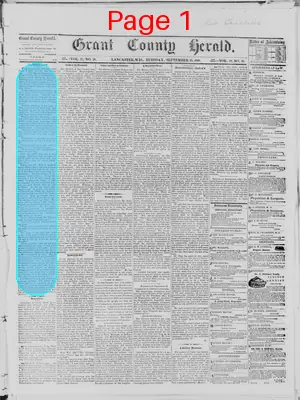
Literary
September 25, 1866
Grant County Herald
Lancaster, Grant County, Wisconsin
What is this article about?
A boy recounts breaking a neighbor's window with a tossed china cup, fleeing in fear, and later confessing to his father, who praises his honesty and advises owning up to faults immediately. Moral: Confessing is noble; concealing is cowardly.
Clipping

OCR Quality
98%
Excellent
Full Text
The Unlucky Throw.
When I was a boy, like most other boys, I often did idle and foolish things. One day, for instance, when I was walking up the street, I saw a broken china tea-cup in the road.
Picking it up, instead of letting it alone, as I ought, I began to toss it into the air. This I did several times, trying to throw it higher with each new effort.
At last, thinking to toss it high as the cornices of the house, I threw it with great energy. Alas for me!
My arm struck my side, and the unlucky piece of china went crashing through the window of a dwelling house.
Without thinking of my duty, I took counsel of my fears only, and ran home as fast as my feet could carry me. Nor did I either pause or look back until I turned a corner.
Shortly after this misfortune, the son of the man whose window I had broken came home from play, and seeing the window broken, he stood outside with his hands in his pockets, looking at it. A man passing said:
"Your father will think you broke that window, my little fellow, and he'll tickle your back with a rawhide."
"No he won't," said the boy, calmly, "for I shall tell him I didn't do it."
"You may tell him so, but will he believe you?" rejoined the man.
"To be sure he will, he always believes what I say."
That was nobly said, and it was just so. That boy wore a diamond called truth on his heart, and his father knew that he could safely trust him.
Where was I? Well, I sneaked home, feeling that I had done a mean act in not going right to the owner of the house and confessing my misfortune. For several days I carried my secret with me. It was like wearing a belt of burs round my waist. It pained me badly. I was in torments, too, lest somebody had seen me, and should, after all, tell my father. At last my secret was dragged out. A person who knew me had seen me break the window, and had told the owner of the house about me. That gentleman knew my father, and the first time he saw him told him what I had done. My father paid for setting a new square of glass, and on his return home called me to his side. His face wore a serious expression. I trembled and blushed like a culprit, for I guessed he had found me out. Looking right in my eye, he said:
"Peter, did you break Mr. Comerford's window a few days ago?"
"Yes sir," I replied, holding down my head.
"What did you do that for?" asked my father, with less sternness in his manner.
The worst of my load was now gone. That secret millstone which had been crushing me was now rolled off, and I told my father all about the affair.
"Peter, my boy," said my father, after hearing my story, "I am glad you did not deny your guilt. I regret you did not play the man when the misfortune happened, by going to Mr. Comerford at once. But I honor you for frankly and truthfully answering my question. I have paid for the window. Go. Be more careful hereafter about tossing old china in the street; and, above all, if you should ever be unlucky or foolish enough to meet with a similar accident, don't run away like a sneak.
Act the part of a thoroughly honest boy, and own your fault at once."
I promised I would, and I tried to keep my promise. The advice my father gave me I commend to you, hoping you will all remember that it is honest, noble and manly to confess fault, while to conceal it is to act the part of a coward. - Sunday School Advocate.
When I was a boy, like most other boys, I often did idle and foolish things. One day, for instance, when I was walking up the street, I saw a broken china tea-cup in the road.
Picking it up, instead of letting it alone, as I ought, I began to toss it into the air. This I did several times, trying to throw it higher with each new effort.
At last, thinking to toss it high as the cornices of the house, I threw it with great energy. Alas for me!
My arm struck my side, and the unlucky piece of china went crashing through the window of a dwelling house.
Without thinking of my duty, I took counsel of my fears only, and ran home as fast as my feet could carry me. Nor did I either pause or look back until I turned a corner.
Shortly after this misfortune, the son of the man whose window I had broken came home from play, and seeing the window broken, he stood outside with his hands in his pockets, looking at it. A man passing said:
"Your father will think you broke that window, my little fellow, and he'll tickle your back with a rawhide."
"No he won't," said the boy, calmly, "for I shall tell him I didn't do it."
"You may tell him so, but will he believe you?" rejoined the man.
"To be sure he will, he always believes what I say."
That was nobly said, and it was just so. That boy wore a diamond called truth on his heart, and his father knew that he could safely trust him.
Where was I? Well, I sneaked home, feeling that I had done a mean act in not going right to the owner of the house and confessing my misfortune. For several days I carried my secret with me. It was like wearing a belt of burs round my waist. It pained me badly. I was in torments, too, lest somebody had seen me, and should, after all, tell my father. At last my secret was dragged out. A person who knew me had seen me break the window, and had told the owner of the house about me. That gentleman knew my father, and the first time he saw him told him what I had done. My father paid for setting a new square of glass, and on his return home called me to his side. His face wore a serious expression. I trembled and blushed like a culprit, for I guessed he had found me out. Looking right in my eye, he said:
"Peter, did you break Mr. Comerford's window a few days ago?"
"Yes sir," I replied, holding down my head.
"What did you do that for?" asked my father, with less sternness in his manner.
The worst of my load was now gone. That secret millstone which had been crushing me was now rolled off, and I told my father all about the affair.
"Peter, my boy," said my father, after hearing my story, "I am glad you did not deny your guilt. I regret you did not play the man when the misfortune happened, by going to Mr. Comerford at once. But I honor you for frankly and truthfully answering my question. I have paid for the window. Go. Be more careful hereafter about tossing old china in the street; and, above all, if you should ever be unlucky or foolish enough to meet with a similar accident, don't run away like a sneak.
Act the part of a thoroughly honest boy, and own your fault at once."
I promised I would, and I tried to keep my promise. The advice my father gave me I commend to you, hoping you will all remember that it is honest, noble and manly to confess fault, while to conceal it is to act the part of a coward. - Sunday School Advocate.
What sub-type of article is it?
Prose Fiction
What themes does it cover?
Moral Virtue
What keywords are associated?
Boyhood Mischief
Breaking Window
Confession
Honesty
Moral Lesson
Fatherly Advice
What entities or persons were involved?
Sunday School Advocate
Literary Details
Title
The Unlucky Throw.
Author
Sunday School Advocate
Subject
Lesson On Honesty And Confessing Faults
Key Lines
"Peter, My Boy," Said My Father, After Hearing My Story, "I Am Glad You Did Not Deny Your Guilt. I Regret You Did Not Play The Man When The Misfortune Happened, By Going To Mr. Comerford At Once. But I Honor You For Frankly And Truthfully Answering My Question."
"Act The Part Of A Thoroughly Honest Boy, And Own Your Fault At Once."
The Advice My Father Gave Me I Commend To You, Hoping You Will All Remember That It Is Honest, Noble And Manly To Confess Fault, While To Conceal It Is To Act The Part Of A Coward.