Thank you for visiting SNEWPapers!
Sign up free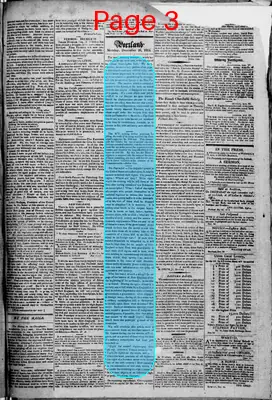
Editorial
December 26, 1814
Portland Gazette, And Maine Advertiser
Portland, Cumberland County, Maine
What is this article about?
Editorial in Portland on December 26, 1814, strongly opposes the U.S. Conscription Act of December 10, 1814, for filling army ranks. It praises Rufus King's speech, warns of liberty loss like Bonaparte's downfall, decries violation of family ties and rights, and cites historical New England resistance to similar measures.
Clipping

OCR Quality
95%
Excellent
Full Text
Portland:
Monday, December 26, 1814.
The most interesting intelligence which has
reached us for the week past, is the passage of
the odious Conscription Law. We have,
therefore, devoted a large portion of our paper
to that subject—and have omitted many articles
of minor importance, in order that as many of
our columns as possible may be ornamented
with the excellent Speech of the Hon. Rufus
King. The measure which is contended against
in this Speech, is the rock on which even the
iron sceptre of Bonaparte was dashed to
pieces. It is a rock which must yet be avoided
or our liberties are gone forever!
Should the administration presume to carry
this law into effect, there does not exist a state,
says the Federal Republican, which would not
furnish twenty thousand Freemen, each of
whom would strike this weapon from their
hands and themselves to the earth.—The blood
which runs in our veins has not yet wandered
so far from its revolutionary fountain, as to
become so flat, stale and heavy as to submit to
servitude.
The ACT, making further provision for
filling the ranks of the army, received the President's
signature the 10th inst. This abominable Act violates the ties of natural affection,
destroys parental authority, cuts the cord which
binds the son to his parent, the apprentice to his
master, and dissolves the long-established contracts in civil life. By this Act, the Minor of
eighteen is received into the ranks of the army
without consulting any one's will but his own,
and in direct violation of the statutes of the
Commonwealth.—Salem Gaz.
The Cup is full—The degraded people of
the United States are called upon, in mighty
earnest to defend their rights. The people's
rights! Where are they? What rights
worth the naming will be left them to defend after having submitted to a Bonaparte-
ian conscription? What! Tell of the rights
of a people who permit themselves to be
huddled together in droves like herds of
cattle, and quietly suffer it to be determined
by lot, who of them shall be dragged
away to slaughter! It is mockery. It is
adding cruel insult to the deepest injury.
What is house or land, father, mother,
brother, sister, wife or child; what are the
benefits of civil society and the sweets of
domestic enjoyment—What are any or all
of these to a man, if the government under
which he lives has the power to tear him
away from them all, to reduce him to the
condition of a slave, and to sacrifice his
blood in its foreign wars? If such iron-
handed despotism be submitted to, it will
then be high time for the people of New-
England to have done with prattlement about their civil rights, and to have done
with holding in remembrance the ancestry
from which they sprung: an ancestry
dauntless in the cause of civil freedom,
whose necks no earthly power could accustom to a tame submission to the yoke of
oppression and tyranny.
Who has heard of such a thing? In no
page of the history of New-England, since
the beginning of its settlement, is the like
to be found. During the space of nearly a
century and a half while New-England was
held in colonial dependence under a foreign
government, a government often engaged
in foreign wars; during all that time, was
a military conscription laid, or threatened
to be laid, upon these then colonies? No,
never. Such an abominable measure would
have caused a general burst of indignation
tenfold greater, if possible, than that which
was caused by the small impost duties.
which were the principal ground of the
revolution.
We will conclude this article with a
short extract from an excellent speech of
Mr Gaston during the last session of Congress, and at a period of time when the idea
of a military conscription had been just
broached—
"Fight for sailors' rights—yet rivet
on our citizens a French conscription!
Fight for rights on the ocean, and annihilate the most precious of all rights—
the right of a freeman never to be forced
out of his own country! How alarming
is the infatuation of that zeal, which, in
its ardor of obtaining its object, tramples
in the dust objects of an infinitely higher
price!" Conn. Courant.
Monday, December 26, 1814.
The most interesting intelligence which has
reached us for the week past, is the passage of
the odious Conscription Law. We have,
therefore, devoted a large portion of our paper
to that subject—and have omitted many articles
of minor importance, in order that as many of
our columns as possible may be ornamented
with the excellent Speech of the Hon. Rufus
King. The measure which is contended against
in this Speech, is the rock on which even the
iron sceptre of Bonaparte was dashed to
pieces. It is a rock which must yet be avoided
or our liberties are gone forever!
Should the administration presume to carry
this law into effect, there does not exist a state,
says the Federal Republican, which would not
furnish twenty thousand Freemen, each of
whom would strike this weapon from their
hands and themselves to the earth.—The blood
which runs in our veins has not yet wandered
so far from its revolutionary fountain, as to
become so flat, stale and heavy as to submit to
servitude.
The ACT, making further provision for
filling the ranks of the army, received the President's
signature the 10th inst. This abominable Act violates the ties of natural affection,
destroys parental authority, cuts the cord which
binds the son to his parent, the apprentice to his
master, and dissolves the long-established contracts in civil life. By this Act, the Minor of
eighteen is received into the ranks of the army
without consulting any one's will but his own,
and in direct violation of the statutes of the
Commonwealth.—Salem Gaz.
The Cup is full—The degraded people of
the United States are called upon, in mighty
earnest to defend their rights. The people's
rights! Where are they? What rights
worth the naming will be left them to defend after having submitted to a Bonaparte-
ian conscription? What! Tell of the rights
of a people who permit themselves to be
huddled together in droves like herds of
cattle, and quietly suffer it to be determined
by lot, who of them shall be dragged
away to slaughter! It is mockery. It is
adding cruel insult to the deepest injury.
What is house or land, father, mother,
brother, sister, wife or child; what are the
benefits of civil society and the sweets of
domestic enjoyment—What are any or all
of these to a man, if the government under
which he lives has the power to tear him
away from them all, to reduce him to the
condition of a slave, and to sacrifice his
blood in its foreign wars? If such iron-
handed despotism be submitted to, it will
then be high time for the people of New-
England to have done with prattlement about their civil rights, and to have done
with holding in remembrance the ancestry
from which they sprung: an ancestry
dauntless in the cause of civil freedom,
whose necks no earthly power could accustom to a tame submission to the yoke of
oppression and tyranny.
Who has heard of such a thing? In no
page of the history of New-England, since
the beginning of its settlement, is the like
to be found. During the space of nearly a
century and a half while New-England was
held in colonial dependence under a foreign
government, a government often engaged
in foreign wars; during all that time, was
a military conscription laid, or threatened
to be laid, upon these then colonies? No,
never. Such an abominable measure would
have caused a general burst of indignation
tenfold greater, if possible, than that which
was caused by the small impost duties.
which were the principal ground of the
revolution.
We will conclude this article with a
short extract from an excellent speech of
Mr Gaston during the last session of Congress, and at a period of time when the idea
of a military conscription had been just
broached—
"Fight for sailors' rights—yet rivet
on our citizens a French conscription!
Fight for rights on the ocean, and annihilate the most precious of all rights—
the right of a freeman never to be forced
out of his own country! How alarming
is the infatuation of that zeal, which, in
its ardor of obtaining its object, tramples
in the dust objects of an infinitely higher
price!" Conn. Courant.
What sub-type of article is it?
Military Affairs
Constitutional
What keywords are associated?
Conscription Law
Military Draft
Civil Liberties
Rufus King Speech
War Of 1812
New England Rights
Bonaparte Comparison
What entities or persons were involved?
Rufus King
Bonaparte
President
Mr Gaston
Federal Republican
Salem Gaz.
Conn. Courant
Editorial Details
Primary Topic
Opposition To The Conscription Act Of 1814
Stance / Tone
Strongly Opposed To Conscription As Tyrannical Violation Of Liberties
Key Figures
Rufus King
Bonaparte
President
Mr Gaston
Federal Republican
Salem Gaz.
Conn. Courant
Key Arguments
Conscription Law Is Odious And Must Be Avoided To Preserve Liberties
It Was The Rock That Dashed Bonaparte's Power
States Would Resist With 20,000 Freemen If Enforced
Violates Natural Affections, Parental Authority, And Civil Contracts
Allows Minors Of 18 To Enlist Without Consent, Against State Laws
Reduces Freemen To Slaves, Tearing Them From Families For Foreign Wars
Unprecedented In New England's Colonial History Under Britain
Worse Than The Impost Duties That Sparked The Revolution
Contradicts Fighting For Sailors' Rights By Imposing French Style Conscription
Tramples The Right Of Freemen Not To Be Forced From Their Country