Thank you for visiting SNEWPapers!
Sign up free
Literary
June 3, 1835
The Rhode Island Republican
Newport, Newport County, Rhode Island
What is this article about?
In Philadelphia, Harriet buys twin forget-me-not flowers meant for her fiancé Charles Leland, but a misunderstanding makes her think he favors another woman, leading her to end their engagement. He sails to England; they reunite 40 years later in New York, resolving the issue through explanation, though they never marry.
Clipping
OCR Quality
98%
Excellent
Full Text
THE TWIN FLOWERS.
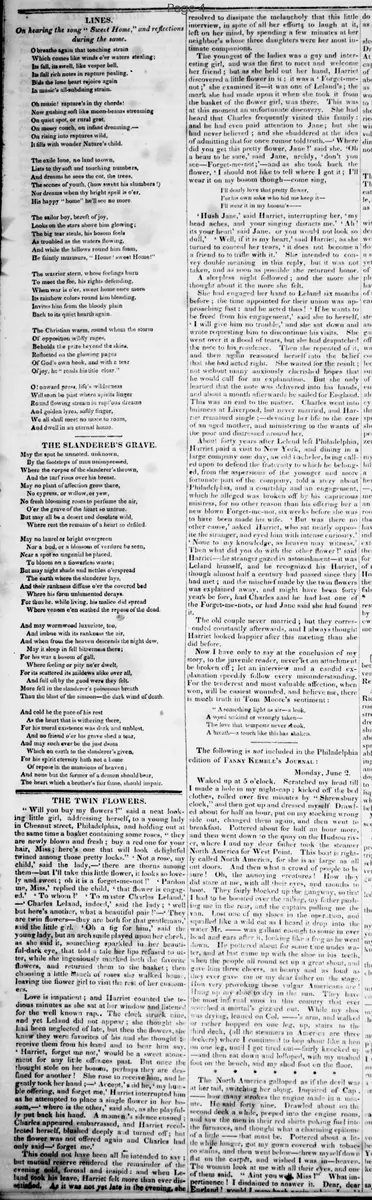
"Will you buy my flowers?" said a neat looking little girl, addressing herself to a young lady in Chestnut street, Philadelphia, and holding out at the same time a basket containing some roses, "they are newly blown and fresh; buy a red one for your hair, Miss; here's one that will look delightful twined among those pretty locks." "Not a rose, my child," said the lady, "there are thorns among them-but I'll take this little flower, it looks so lovely and sweet; oh it is a forget-me-not!" "Pardon me, Miss," replied the child, "that flower is engaged." "To whom?" "To mister Charles Leland." "Charles Leland, indeed," said the lady; "well but here's another, what a beautiful pair!" "They are twin flowers-they are both for that gentleman," said the little girl. "Oh a fig for him," said the young lady, but an arch smile played upon her cheek, as she said it, something sparkled in her beautiful-dark eye, that told a tale her lips refused to utter, while she ingeniously marked both the favorite flowers, and returned them to the basket; then choosing a little bunch of roses she walked home, leaving the flower girl to visit the rest of her customers.
Love is impatient; and Harriet counted the tedious minutes as she sat at her window and listened for the well known rap. The clock struck nine, and yet Leland did not appear; she thought she had been neglected of late, but then the flowers, she knew they were favorites of his and she thought to receive them from his hand and to hear him say, "Harriet, forget me not," would be a sweet atonement for any little offences past. But once the thought stole on her bosom, perhaps they are destined for another! She rose to receive him, and he gently took her hand; "Accept," said he, "my humble offering, and forget me," Harriet interrupted him as he attempted to place a single flower in her bosom, "where is the other," said she, as she playfully put back his hand. A moment's silence ensued: Charles appeared embarrassed, and Harriet recollected herself, blushed deeply and turned off'; but the flower was not offered again and Charles had only said-"forget me."
This could not have been all he intended to say: but mutual reserve rendered the remainder of the evening cold, formal and insipid: and when Leland took his leave, Harriet felt more than ever dissatisfied. As it was not yet late in the evening, she resolved to dissipate the melancholy that this little interview, in spite of all her efforts to laugh at it, left on her mind, by spending a few minutes at her neighbor's whose three daughters were her most intimate companions.
The youngest of the ladies was a gay and interesting girl, and was the first to meet and welcome her friend; but as she held out her hand, Harriet discovered a little flower in it; it was a 'Forget-me-not;' she examined it it was one of Leland's; the mark she had made upon it when she took it from the basket of the flower girl, was there. This was at this moment an unfortunate discovery. She had heard that Charles frequently visited this family: and he had even paid attention to Jane; but she had never believed; and she shuddered at the idea of admitting that for once rumor told truth. "Where did you get this pretty flower, Jane?" said she. "Oh a beau to be sure," said Jane, archly, "don't you see--Forget-me-not;"-and as she took back the flower, "I should not like to tell where I got it; I'll wear it on my bosom though-come sing,
I'll dearly love that pretty flower,
For his own sake who bid me keep it-
I'll wear it in my bosom's—
Hush Jane," said Harriet, interrupting her, "my head aches, and your singing distracts me." Ah! its your heart said Jane. or you would not look so dull," Well, if it is my heart," said Harriet, as she turned to conceal her tears, "it does not become a friend to trifle with it." She intended to convey double meaning in this reply, but it was not taken, and as soon as possible she returned home.
A sleepless night followed; and the more she thought about it the more she felt. She had engaged her hand to Leland six months before; the time appointed for their union was approaching fast: and he acted thus! "If he wants to be freed from his engagement," said she to herself, "I will give him no trouble," and she sat down and wrote requesting him to discontinue his visits. She went over it a flood of tears, but she had despatched the note to his residence. Then she repented of it, and then again reasoned herself into the belief that she had acted right. She waited for the result; not without many anxiously cherished hopes that he would call for an explanation. But she only learned that the note was delivered into his hands, and about a month afterwards he sailed for England.
This was an end to the matter. Charles went into business at Liverpool, but never married, and Harriet remained single ;-devoting her life to the care of an aged mother, and ministering to the wants of the poor and distressed around her.
About forty years after Leland left Philadelphia, Harriet paid a visit to New York, and dining in a large company one day, an old bachelor, being called upon to defend the fraternity to which he belonged, from the aspersions of the younger and more fortunate part of the company, told a story about Philadelphia, and a courtship and an engagement, which he alleged was broken off by his capricious mistress, for no other reason than his offering her a new blown Forget-me-not, six weeks before she was to have been made his wife. "But was there no other cause," asked Harriet, who sat nearly opposite the stranger, and eyed him with intense curiosity. "None to my knowledge, as heaven may witness." "Then what did you do with the other flower?" said Harriet—the stranger gazed in astonishment-it was Leland himself, and he recognized his Harriet, though almost half a century had passed since they had met; and the mischief made by the twin flowers was explained away, and might have been forty years before, had Charles said he had lost one of the Forget-me-nots, or had Jane said she had found it.
The old couple never married; but they corresponded constantly afterwards, and I always thought Harriet looked happier after this meeting than she did before.
Now I have only to say at the conclusion of my story, to the juvenile reader, never let an attachment be broken off; let an interview and a candid explanation speedily follow every misunderstanding. For the tenderest and most valuable affection, when won, will be easiest wounded, and believe me, there is much truth in Tom Moore's sentiment:
"A something light as air-a look,
A word unkind or wrongly taken—
The love that tempests never shook,
A breath-a touch like this has shaken."
"Will you buy my flowers?" said a neat looking little girl, addressing herself to a young lady in Chestnut street, Philadelphia, and holding out at the same time a basket containing some roses, "they are newly blown and fresh; buy a red one for your hair, Miss; here's one that will look delightful twined among those pretty locks." "Not a rose, my child," said the lady, "there are thorns among them-but I'll take this little flower, it looks so lovely and sweet; oh it is a forget-me-not!" "Pardon me, Miss," replied the child, "that flower is engaged." "To whom?" "To mister Charles Leland." "Charles Leland, indeed," said the lady; "well but here's another, what a beautiful pair!" "They are twin flowers-they are both for that gentleman," said the little girl. "Oh a fig for him," said the young lady, but an arch smile played upon her cheek, as she said it, something sparkled in her beautiful-dark eye, that told a tale her lips refused to utter, while she ingeniously marked both the favorite flowers, and returned them to the basket; then choosing a little bunch of roses she walked home, leaving the flower girl to visit the rest of her customers.
Love is impatient; and Harriet counted the tedious minutes as she sat at her window and listened for the well known rap. The clock struck nine, and yet Leland did not appear; she thought she had been neglected of late, but then the flowers, she knew they were favorites of his and she thought to receive them from his hand and to hear him say, "Harriet, forget me not," would be a sweet atonement for any little offences past. But once the thought stole on her bosom, perhaps they are destined for another! She rose to receive him, and he gently took her hand; "Accept," said he, "my humble offering, and forget me," Harriet interrupted him as he attempted to place a single flower in her bosom, "where is the other," said she, as she playfully put back his hand. A moment's silence ensued: Charles appeared embarrassed, and Harriet recollected herself, blushed deeply and turned off'; but the flower was not offered again and Charles had only said-"forget me."
This could not have been all he intended to say: but mutual reserve rendered the remainder of the evening cold, formal and insipid: and when Leland took his leave, Harriet felt more than ever dissatisfied. As it was not yet late in the evening, she resolved to dissipate the melancholy that this little interview, in spite of all her efforts to laugh at it, left on her mind, by spending a few minutes at her neighbor's whose three daughters were her most intimate companions.
The youngest of the ladies was a gay and interesting girl, and was the first to meet and welcome her friend; but as she held out her hand, Harriet discovered a little flower in it; it was a 'Forget-me-not;' she examined it it was one of Leland's; the mark she had made upon it when she took it from the basket of the flower girl, was there. This was at this moment an unfortunate discovery. She had heard that Charles frequently visited this family: and he had even paid attention to Jane; but she had never believed; and she shuddered at the idea of admitting that for once rumor told truth. "Where did you get this pretty flower, Jane?" said she. "Oh a beau to be sure," said Jane, archly, "don't you see--Forget-me-not;"-and as she took back the flower, "I should not like to tell where I got it; I'll wear it on my bosom though-come sing,
I'll dearly love that pretty flower,
For his own sake who bid me keep it-
I'll wear it in my bosom's—
Hush Jane," said Harriet, interrupting her, "my head aches, and your singing distracts me." Ah! its your heart said Jane. or you would not look so dull," Well, if it is my heart," said Harriet, as she turned to conceal her tears, "it does not become a friend to trifle with it." She intended to convey double meaning in this reply, but it was not taken, and as soon as possible she returned home.
A sleepless night followed; and the more she thought about it the more she felt. She had engaged her hand to Leland six months before; the time appointed for their union was approaching fast: and he acted thus! "If he wants to be freed from his engagement," said she to herself, "I will give him no trouble," and she sat down and wrote requesting him to discontinue his visits. She went over it a flood of tears, but she had despatched the note to his residence. Then she repented of it, and then again reasoned herself into the belief that she had acted right. She waited for the result; not without many anxiously cherished hopes that he would call for an explanation. But she only learned that the note was delivered into his hands, and about a month afterwards he sailed for England.
This was an end to the matter. Charles went into business at Liverpool, but never married, and Harriet remained single ;-devoting her life to the care of an aged mother, and ministering to the wants of the poor and distressed around her.
About forty years after Leland left Philadelphia, Harriet paid a visit to New York, and dining in a large company one day, an old bachelor, being called upon to defend the fraternity to which he belonged, from the aspersions of the younger and more fortunate part of the company, told a story about Philadelphia, and a courtship and an engagement, which he alleged was broken off by his capricious mistress, for no other reason than his offering her a new blown Forget-me-not, six weeks before she was to have been made his wife. "But was there no other cause," asked Harriet, who sat nearly opposite the stranger, and eyed him with intense curiosity. "None to my knowledge, as heaven may witness." "Then what did you do with the other flower?" said Harriet—the stranger gazed in astonishment-it was Leland himself, and he recognized his Harriet, though almost half a century had passed since they had met; and the mischief made by the twin flowers was explained away, and might have been forty years before, had Charles said he had lost one of the Forget-me-nots, or had Jane said she had found it.
The old couple never married; but they corresponded constantly afterwards, and I always thought Harriet looked happier after this meeting than she did before.
Now I have only to say at the conclusion of my story, to the juvenile reader, never let an attachment be broken off; let an interview and a candid explanation speedily follow every misunderstanding. For the tenderest and most valuable affection, when won, will be easiest wounded, and believe me, there is much truth in Tom Moore's sentiment:
"A something light as air-a look,
A word unkind or wrongly taken—
The love that tempests never shook,
A breath-a touch like this has shaken."
What sub-type of article is it?
Prose Fiction
What themes does it cover?
Love Romance
Moral Virtue
What keywords are associated?
Twin Flowers
Forget Me Not
Misunderstanding
Courtship
Philadelphia
Reunion
Literary Details
Title
The Twin Flowers.
Key Lines
"Pardon Me, Miss," Replied The Child, "That Flower Is Engaged." "To Whom?" "To Mister Charles Leland."
"Accept," Said He, "My Humble Offering, And Forget Me," Harriet Interrupted Him... "Where Is The Other," Said She...
"Oh A Beau To Be Sure," Said Jane, Archly, "Don't You See Forget Me Not;"
"A Something Light As Air A Look, A Word Unkind Or Wrongly Taken— The Love That Tempests Never Shook, A Breath A Touch Like This Has Shaken."