Thank you for visiting SNEWPapers!
Sign up free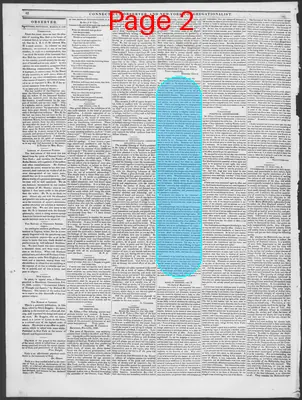
Editorial
March 16, 1839
The Connecticut Observer, And New York Congregationalist
Hartford, Hartford County, Connecticut
What is this article about?
This editorial argues for the congregational practice of church members electing their own officers, citing biblical examples from Acts and emphasizing religious liberty as freemen, while warning against hierarchical ecclesiastical domination.
Clipping
OCR Quality
98%
Excellent
Full Text
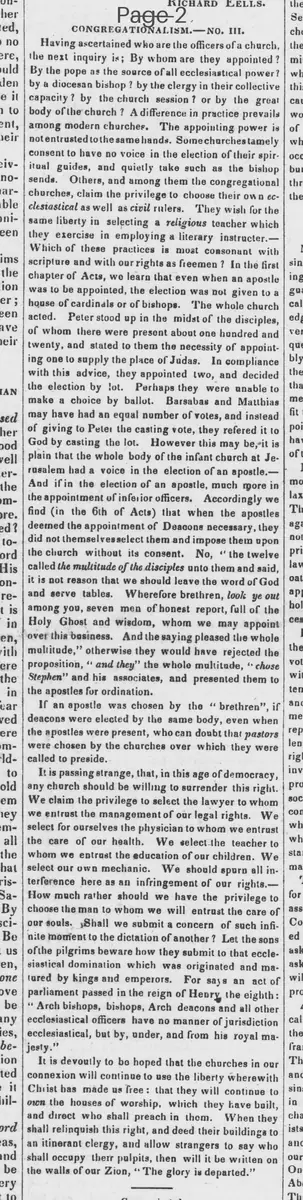
CONGREGATIONALISM.—NO. III.
Having ascertained who are the officers of a church, the next inquiry is; By whom are they appointed? By the pope as the source of all ecclesiastical power? by a diocesan bishop? by the clergy in their collective capacity? by the church session? or by the great body of the church? A difference in practice prevails among modern churches. The appointing power is not entrusted to the same hands. Some churches tamely consent to have no voice in the election of their spiritual guides, and quietly take such as the bishop sends. Others, and among them the congregational churches, claim the privilege to choose their own ecclesiastical as well as civil rulers. They wish for the same liberty in selecting a religious teacher which they exercise in employing a literary instructer.— Which of these practices is most consonant with scripture and with our rights as freemen? In the first chapter of Acts, we learn that even when an apostle was to be appointed, the election was not given to a house of cardinals or of bishops. The whole church acted. Peter stood up in the midst of the disciples, of whom there were present about one hundred and twenty, and stated to them the necessity of appointing one to supply the place of Judas. In compliance with this advice, they appointed two, and decided the election by lot. Perhaps they were unable to make a choice by ballot. Barsabas and Matthias may have had an equal number of votes, and instead of giving to Peter the casting vote, they referred it to God by casting the lot. However this may be, it is plain that the whole body of the infant church at Jerusalem had a voice in the election of an apostle.— And if in the election of an apostle, much more in the appointment of inferior officers. Accordingly we find (in the 6th of Acts) that when the apostles deemed the appointment of Deacons necessary, they did not themselves select them and impose them upon the church without its consent. No. "the twelve called the multitude of the disciples unto them and said, it is not reason that we should leave the word of God and serve tables. Wherefore brethren, look ye out among you, seven men of honest report, full of the Holy Ghost and wisdom, whom we may appoint over this business. And the saying pleased the whole multitude." otherwise they would have rejected the proposition, "and they" the whole multitude, "chose Stephen" and his associates, and presented them to the apostles for ordination.
If an apostle was chosen by the "brethren", if deacons were elected by the same body, even when the apostles were present, who can doubt that pastors were chosen by the churches over which they were called to preside.
It is passing strange, that, in this age of democracy any church should be willing to surrender this right. We claim the privilege to select the lawyer to whom we entrust the management of our legal rights. We select for ourselves the physician to whom we entrust the care of our health. We select the teacher to whom we entrust the education of our children. We select our own mechanic. We should spurn all interference here as an infringement of our rights.— How much rather should we have the privilege to choose the man to whom we will entrust the care of our souls, Shall we submit a concern of such infinite moment to the dictation of another? Let the sons of the pilgrims beware how they submit to that ecclesiastical domination which was originated and matured by kings and emperors. For says an act of parliament passed in the reign of Henry the eighth: "Arch bishops, bishops, Arch deacons and all other ecclesiastical officers have no manner of jurisdiction ecclesiastical, but by, under, and from his royal majesty."
It is devoutly to be hoped that the churches in our connexion will continue to use the liberty wherewith Christ has made us free: that they will continue to own the houses of worship, which they have built, and direct who shall preach in them. When they shall relinquish this right, and deed their buildings to an itinerant clergy, and allow strangers to say who shall occupy their pulpits, then will it be written on the walls of our Zion, "The glory is departed."
Having ascertained who are the officers of a church, the next inquiry is; By whom are they appointed? By the pope as the source of all ecclesiastical power? by a diocesan bishop? by the clergy in their collective capacity? by the church session? or by the great body of the church? A difference in practice prevails among modern churches. The appointing power is not entrusted to the same hands. Some churches tamely consent to have no voice in the election of their spiritual guides, and quietly take such as the bishop sends. Others, and among them the congregational churches, claim the privilege to choose their own ecclesiastical as well as civil rulers. They wish for the same liberty in selecting a religious teacher which they exercise in employing a literary instructer.— Which of these practices is most consonant with scripture and with our rights as freemen? In the first chapter of Acts, we learn that even when an apostle was to be appointed, the election was not given to a house of cardinals or of bishops. The whole church acted. Peter stood up in the midst of the disciples, of whom there were present about one hundred and twenty, and stated to them the necessity of appointing one to supply the place of Judas. In compliance with this advice, they appointed two, and decided the election by lot. Perhaps they were unable to make a choice by ballot. Barsabas and Matthias may have had an equal number of votes, and instead of giving to Peter the casting vote, they referred it to God by casting the lot. However this may be, it is plain that the whole body of the infant church at Jerusalem had a voice in the election of an apostle.— And if in the election of an apostle, much more in the appointment of inferior officers. Accordingly we find (in the 6th of Acts) that when the apostles deemed the appointment of Deacons necessary, they did not themselves select them and impose them upon the church without its consent. No. "the twelve called the multitude of the disciples unto them and said, it is not reason that we should leave the word of God and serve tables. Wherefore brethren, look ye out among you, seven men of honest report, full of the Holy Ghost and wisdom, whom we may appoint over this business. And the saying pleased the whole multitude." otherwise they would have rejected the proposition, "and they" the whole multitude, "chose Stephen" and his associates, and presented them to the apostles for ordination.
If an apostle was chosen by the "brethren", if deacons were elected by the same body, even when the apostles were present, who can doubt that pastors were chosen by the churches over which they were called to preside.
It is passing strange, that, in this age of democracy any church should be willing to surrender this right. We claim the privilege to select the lawyer to whom we entrust the management of our legal rights. We select for ourselves the physician to whom we entrust the care of our health. We select the teacher to whom we entrust the education of our children. We select our own mechanic. We should spurn all interference here as an infringement of our rights.— How much rather should we have the privilege to choose the man to whom we will entrust the care of our souls, Shall we submit a concern of such infinite moment to the dictation of another? Let the sons of the pilgrims beware how they submit to that ecclesiastical domination which was originated and matured by kings and emperors. For says an act of parliament passed in the reign of Henry the eighth: "Arch bishops, bishops, Arch deacons and all other ecclesiastical officers have no manner of jurisdiction ecclesiastical, but by, under, and from his royal majesty."
It is devoutly to be hoped that the churches in our connexion will continue to use the liberty wherewith Christ has made us free: that they will continue to own the houses of worship, which they have built, and direct who shall preach in them. When they shall relinquish this right, and deed their buildings to an itinerant clergy, and allow strangers to say who shall occupy their pulpits, then will it be written on the walls of our Zion, "The glory is departed."
What sub-type of article is it?
Moral Or Religious
Constitutional
What keywords are associated?
Congregationalism
Church Officers
Election By Congregation
Religious Liberty
Scriptural Authority
Ecclesiastical Domination
What entities or persons were involved?
Peter
Barsabas
Matthias
Stephen
Apostles
Congregational Churches
Bishops
Pope
Henry The Eighth
Editorial Details
Primary Topic
Congregational Right To Elect Church Officers
Stance / Tone
Strongly Supportive Of Congregational Liberty And Election By The Church Body
Key Figures
Peter
Barsabas
Matthias
Stephen
Apostles
Congregational Churches
Bishops
Pope
Henry The Eighth
Key Arguments
Election Of Apostle Matthias Involved The Whole Church Body Per Acts 1
Deacons Like Stephen Elected By The Multitude Of Disciples Per Acts 6
Pastors Should Be Chosen By The Churches They Serve
Comparison To Selecting Civil Professionals Like Lawyers And Physicians
Warning Against Ecclesiastical Domination By Kings And Emperors
Churches Should Retain Ownership And Control Of Pulpits