Thank you for visiting SNEWPapers!
Sign up free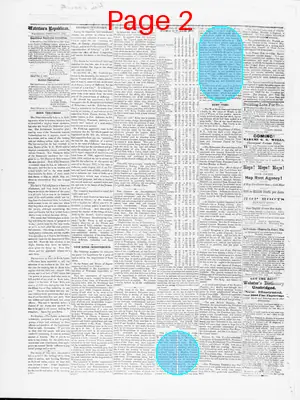
Watertown Republican
Watertown, Jefferson County, Dodge County, Wisconsin
What is this article about?
A London Daily News correspondent, Mr. W. F. Rae, argues against 'Historicus' that England's neutrality proclamation granting belligerent rights to US Civil War rebels was invalid and a blunder, as it preceded official US blockade notice. He criticizes Lord Stanley's position and asserts international law favors the strong, urging England to atone.
Clipping
OCR Quality
Full Text
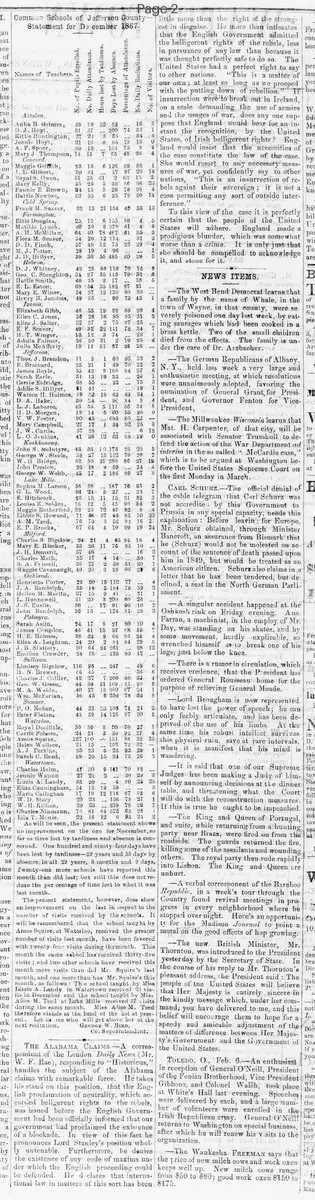
A correspondent of the London Daily News (Mr. W. F. Rae), responding to "Historicus," handles the subject of the Alabama claims with remarkable force. He takes his stand on this position, that the English proclamation of neutrality, which accorded belligerent rights to the rebels, was issued before the English Government had been officially informed that our government had proclaimed the existence of a blockade. In view of this fact he pronounces Lord Stanley's position wholly untenable. Furthermore, he denies the existence of any code of maxims under which the English proceeding could be defended. He declares that international law in matters of this sort has been little more than the right of the strongest. He more than intimates that the English Government admitted the belligerent rights of the rebels, less in pursuance of any law than because it was thought perfectly safe to do so. The United States had a perfect right to say to other nations, "This is a matter of our own; at least so long as we proceed with the putting down of rebellion." If insurrection were to break out in Ireland, on a scale demanding the use of armies and the usages of war, does any one suppose that England would bear for an instant the recognition, by the United States, of Irish belligerent rights? England would insist that the necessities of the case constitute the law of the case. She would resort to any necessary measures of war, yet confidently say to other nations, "This is an insurrection of rebels against their sovereign; it is not a case permitting any sort of outside interference."
To this view of the case it is perfectly certain that the people of the United States will adhere. England made a prodigious blunder, which was somewhat worse than a crime. It is only just that she should be compelled to acknowledge it, and atone for it.
What sub-type of article is it?
What keywords are associated?
What entities or persons were involved?
Where did it happen?
Foreign News Details
Primary Location
England
Key Persons
Outcome
england made a prodigious blunder, which was somewhat worse than a crime. it is only just that she should be compelled to acknowledge it, and atone for it.
Event Details
A correspondent of the London Daily News (Mr. W. F. Rae), responding to "Historicus," handles the subject of the Alabama claims with remarkable force. He takes his stand on this position, that the English proclamation of neutrality, which accorded belligerent rights to the rebels, was issued before the English Government had been officially informed that our government had proclaimed the existence of a blockade. In view of this fact he pronounces Lord Stanley's position wholly untenable. Furthermore, he denies the existence of any code of maxims under which the English proceeding could be defended. He declares that international law in matters of this sort has been little more than the right of the strongest. He more than intimates that the English Government admitted the belligerent rights of the rebels, less in pursuance of any law than because it was thought perfectly safe to do so. The United States had a perfect right to say to other nations, "This is a matter of our own; at least so long as we proceed with the putting down of rebellion." If insurrection were to break out in Ireland, on a scale demanding the use of armies and the usages of war, does any one suppose that England would bear for an instant the recognition, by the United States, of Irish belligerent rights? England would insist that the necessities of the case constitute the law of the case. She would resort to any necessary measures of war, yet confidently say to other nations, "This is an insurrection of rebels against their sovereign; it is not a case permitting any sort of outside interference." To this view of the case it is perfectly certain that the people of the United States will adhere.