Thank you for visiting SNEWPapers!
Sign up free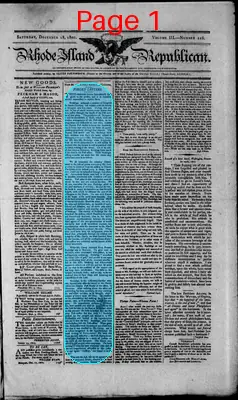
Story
December 18, 1802
Rhode Island Republican
Newport, Newport County, Rhode Island
What is this article about?
Political exposé accusing South Carolina congressman Rutledge of forging and anonymously sending slanderous letters against Elbridge Gerry after his return from the 1798 French mission, uncovered by Newport Deputy Postmaster Richardson who recognized Rutledge's handwriting.
Clipping

OCR Quality
88%
Good
Full Text
From the (New-York) American Citizen
FORGED LETTERS.
THESE celebrated letters have already been
given to the public, and it is therefore
deemed unnecessary to reprint them.
Rutledge, although a member of Congress
for South Carolina, has resided with his family
at Newport near five years. During this period, he has of course written many letters that
have passed through the hands of the Postmaster of that place. The population of Newport,
it will be recollected, is small, which, with the
familiar arrangement of the Post-office, an arrangement very dissimilar to our own, enables
the Deputy Post master to know the handwriting of every man who is in the habit of corresponding extensively through that channel. The
Deputy Post master and Mr. Rutledge have
been intimate ever since the latter resided at
Newport....
--Mr. Richardson, senior
has also seen Mr. Rutledge write frequently,
from all which circumstances it will hardly be
doubted that the former is well acquainted with
the hand-writing of the latter. Let it be added that when at Newport, Rutledge spent much
of his time in the Post-office. These seemingly
trifling remarks are made that the reader may
understand what is to follow.
We all remember the calumny disseminated in the federal prints concerning Mr. Gerry when he returned from his mission to France.
The spleen of the federal party, it seems, however, could not be exhausted through that channel. Anonymous letters were sent to the pacific minister, overloaded with invective and execrations. Vast piles of this description were received by him and are now on his files. We
all, too, remember the part Rutledge acted in
the mad measures of that day: his zeal for war.
his harsh & empty declamation on that favorite
subject, with which he offended the care of his
colleagues in the House. On war with France
all the hopes of the party were founded. Out
of the bare anticipation of that precious object
of federal solicitude, flowed the army, the navy;
the alien and sedition laws, an increase of taxes,
discord and disunion, and all those acts which
menaced the country with anarchy and the loss
of freedom. The anxiety of Rutledge for the
Success of the mission, which Hamilton so wisely
and benevolently deplored, that is, for such a
diplomatic correspondence between the accredited agents of the two governments as would
inevitably lead to an immediate rupture, was
correspondent with his exertions in the House
of Representatives to produce the evil. What,
then must have been his indignation when he
found that, principally through the wisdom and
integrity of Mr. Gerry, we were snatched from
all the horrors, and all the consequences of war!
His passion was unlimited and his hatred of Mr.
Gerry inexorable.
When Mr. Gerry returned from France,
Rutledge was in Newport. To give vent to
the heart, when overloaded with passion, is not
unfrequently consoling. Rutledge "uncorked
his Demi-John of gall," and poured it out upon
the unoffending head of the returned minister;
but in that base, sneaking, and dishonorable
manner to which--it will bye and bye be proved we hope in the presence of the nation--he
has long been accustomed. The facts on this
subject are simply these; and we beg to be understood that we state them well knowing our
amenability to the Law.
Rutledge, in his customary familiar manner, immediately after the return of Mr. Gerry,
visited the Deputy Post-Master at his office, in
Newport. After walking about the office and
conversing for some moments, he very cunningly, and when not seen, as he thought, dropped a
paquet of letters upon the floor. He continued his conversation and walking for a few moments, and, as if accidentally, kicked the paquet. He immediately exclaimed Richardson,
how careless you must be to let a letter for
the Post lie here on the floor to be kicked about
in this manner! He little suspected that the Deputy Post-master saw him drop it! Rutledge
picked up the paquet and handed it to Mr.
Richardson who looked at the superscription
and put it into the box. Rutledge, after some
conversation, left the Post-office. When gone,
Mr. Richardson took the paquet out of the box,
saw that it was directed to Mr. Gerry, and in
an instant recognized in the superscription the
hand writing of Rutledge! We have this
from the best authority; the Post-Master is ready to meet Rutledge in a court of Justice on
the truth of this Statement. The letters contained in the paquet were anonymous. The hand
writing of them has been compared with that of
the two forged letters addressed to Mr. Jefferson and signed "Geoffroy." and found to be the
same!
This was the first, but by no means the last
time that anonymous letters, directed in the hand
writing of Rutledge, sometimes even delivered at the Post Office by himself, and at others,
FORGED LETTERS.
THESE celebrated letters have already been
given to the public, and it is therefore
deemed unnecessary to reprint them.
Rutledge, although a member of Congress
for South Carolina, has resided with his family
at Newport near five years. During this period, he has of course written many letters that
have passed through the hands of the Postmaster of that place. The population of Newport,
it will be recollected, is small, which, with the
familiar arrangement of the Post-office, an arrangement very dissimilar to our own, enables
the Deputy Post master to know the handwriting of every man who is in the habit of corresponding extensively through that channel. The
Deputy Post master and Mr. Rutledge have
been intimate ever since the latter resided at
Newport....
--Mr. Richardson, senior
has also seen Mr. Rutledge write frequently,
from all which circumstances it will hardly be
doubted that the former is well acquainted with
the hand-writing of the latter. Let it be added that when at Newport, Rutledge spent much
of his time in the Post-office. These seemingly
trifling remarks are made that the reader may
understand what is to follow.
We all remember the calumny disseminated in the federal prints concerning Mr. Gerry when he returned from his mission to France.
The spleen of the federal party, it seems, however, could not be exhausted through that channel. Anonymous letters were sent to the pacific minister, overloaded with invective and execrations. Vast piles of this description were received by him and are now on his files. We
all, too, remember the part Rutledge acted in
the mad measures of that day: his zeal for war.
his harsh & empty declamation on that favorite
subject, with which he offended the care of his
colleagues in the House. On war with France
all the hopes of the party were founded. Out
of the bare anticipation of that precious object
of federal solicitude, flowed the army, the navy;
the alien and sedition laws, an increase of taxes,
discord and disunion, and all those acts which
menaced the country with anarchy and the loss
of freedom. The anxiety of Rutledge for the
Success of the mission, which Hamilton so wisely
and benevolently deplored, that is, for such a
diplomatic correspondence between the accredited agents of the two governments as would
inevitably lead to an immediate rupture, was
correspondent with his exertions in the House
of Representatives to produce the evil. What,
then must have been his indignation when he
found that, principally through the wisdom and
integrity of Mr. Gerry, we were snatched from
all the horrors, and all the consequences of war!
His passion was unlimited and his hatred of Mr.
Gerry inexorable.
When Mr. Gerry returned from France,
Rutledge was in Newport. To give vent to
the heart, when overloaded with passion, is not
unfrequently consoling. Rutledge "uncorked
his Demi-John of gall," and poured it out upon
the unoffending head of the returned minister;
but in that base, sneaking, and dishonorable
manner to which--it will bye and bye be proved we hope in the presence of the nation--he
has long been accustomed. The facts on this
subject are simply these; and we beg to be understood that we state them well knowing our
amenability to the Law.
Rutledge, in his customary familiar manner, immediately after the return of Mr. Gerry,
visited the Deputy Post-Master at his office, in
Newport. After walking about the office and
conversing for some moments, he very cunningly, and when not seen, as he thought, dropped a
paquet of letters upon the floor. He continued his conversation and walking for a few moments, and, as if accidentally, kicked the paquet. He immediately exclaimed Richardson,
how careless you must be to let a letter for
the Post lie here on the floor to be kicked about
in this manner! He little suspected that the Deputy Post-master saw him drop it! Rutledge
picked up the paquet and handed it to Mr.
Richardson who looked at the superscription
and put it into the box. Rutledge, after some
conversation, left the Post-office. When gone,
Mr. Richardson took the paquet out of the box,
saw that it was directed to Mr. Gerry, and in
an instant recognized in the superscription the
hand writing of Rutledge! We have this
from the best authority; the Post-Master is ready to meet Rutledge in a court of Justice on
the truth of this Statement. The letters contained in the paquet were anonymous. The hand
writing of them has been compared with that of
the two forged letters addressed to Mr. Jefferson and signed "Geoffroy." and found to be the
same!
This was the first, but by no means the last
time that anonymous letters, directed in the hand
writing of Rutledge, sometimes even delivered at the Post Office by himself, and at others,
What sub-type of article is it?
Crime Story
Deception Fraud
Historical Event
What themes does it cover?
Deception
Crime Punishment
What keywords are associated?
Forged Letters
Anonymous Letters
Political Slander
Rutledge
Gerry
Newport Post Office
What entities or persons were involved?
Rutledge
Mr. Gerry
Mr. Richardson
Hamilton
Jefferson
Where did it happen?
Newport
Story Details
Key Persons
Rutledge
Mr. Gerry
Mr. Richardson
Hamilton
Jefferson
Location
Newport
Event Date
When Mr. Gerry Returned From France
Story Details
Rutledge, residing in Newport, allegedly drops a packet of anonymous slanderous letters directed to Mr. Gerry in the post office, feigning accident; Deputy Postmaster Richardson recognizes Rutledge's handwriting and links it to forged letters signed 'Geoffroy' sent to Jefferson.