Thank you for visiting SNEWPapers!
Sign up free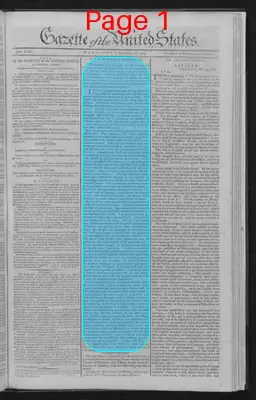
Literary
October 28, 1789
Gazette Of The United States
New York, New York County, New York
What is this article about?
An essay from The Tablet No. LVII explores human nature's tyrannical instincts, the role of government as a restraint on innate evils, the importance of education to prevent political calamities, and how good laws foster just property desires while curbing unjust ones.
Clipping
OCR Quality
95%
Excellent
Full Text
THE TABLET.—No. LVII.
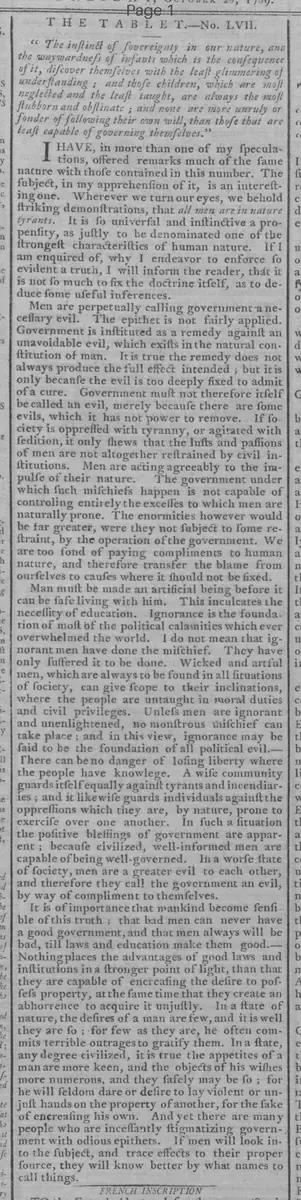
"The instinct of Sovereignty in our nature, and the waywardness of infants which is the consequence of it, discover themselves with the least glimmering of understanding; and those children, which are most neglected and the least taught, are always the most stubborn and obstinate; and none are more unruly or fonder of following their own will, than those that are least capable of governing themselves."
I have, in more than one of my speculations, offered remarks much of the same nature with those contained in this number. The subject, in my apprehension of it, is an interesting one. Wherever we turn our eyes, we behold striking demonstrations, that all men are in nature tyrants. It is so universal and instinctive a propensity, as justly to be denominated one of the strongest characteristics of human nature. If I am enquired of, why I endeavor to enforce so evident a truth, I will inform the reader, that it is not so much to fix the doctrine itself, as to deduce some useful inferences.
Men are perpetually calling government a necessary evil. The epithet is not fairly applied. Government is instituted as a remedy against an unavoidable evil, which exists in the natural constitution of man. It is true the remedy does not always produce the full effect intended; but it is only because the evil is too deeply fixed to admit of a cure. Government must not therefore itself be called an evil, merely because there are some evil, which it has not power to remove. If society is oppressed with tyranny, or agitated with sedition, it only shews that the lusts and passions of men are not altogether restrained by civil institutions. Men are acting agreeably to the impulse of their nature. The government under which such mischiefs happen is not capable of controlling entirely the excesses to which men are naturally prone. The enormities however would be far greater, were they not subject to some restraint, by the operation of the government. We are too fond of paying compliments to human nature, and therefore transfer the blame from ourselves to causes where it should not be fixed.
Man must be made an artificial being before it can be safe living with him. This inculcates the necessity of education. Ignorance is the foundation of most of the political calamities which ever overwhelmed the world. I do not mean that ignorant men have done the mischief. They have only suffered it to be done. Wicked and artful men, which are always to be found in all situations of society, can give scope to their inclinations, where the people are untaught in moral duties and civil privileges. Unless men are ignorant and unenlightened, no monstrous mischief can take place; and in this view, ignorance may be said to be the foundation of all political evil.—There can be no danger of losing liberty where the people have knowledge. A wise community guards itself equally against tyrants and incendiaries; and it likewise guards individuals against the oppressions which they are, by nature, prone to exercise over one another. In such a situation the positive blessings of government are apparent; because civilized, well-informed men are capable of being well-governed. In a worse state of society, men are a greater evil to each other, and therefore they call the government an evil, by way of compliment to themselves.
It is of importance that mankind become sensible of this truth; that bad men can never have a good government, and that men always will be bad, till laws and education make them good.—Nothing places the advantages of good laws and institutions in a stronger point of light, than that they are capable of increasing the desire to possess property, at the same time that they create an abhorrence to acquire it unjustly. In a state of nature, the desires of a man are few, and it is well they are so; for few as they are, he often commits terrible outrages to gratify them. In a state, any degree civilized, it is true the appetites of a man are more keen, and the objects of his wishes more numerous, and they safely may be so; for he will seldom dare or desire to lay violent or unjust hands on the property of another, for the sake of increasing his own. And yet there are many people who are incessantly stigmatizing government with odious epithets. If men will look into the subject, and trace effects to their proper source, they will know better by what names to call things.
"The instinct of Sovereignty in our nature, and the waywardness of infants which is the consequence of it, discover themselves with the least glimmering of understanding; and those children, which are most neglected and the least taught, are always the most stubborn and obstinate; and none are more unruly or fonder of following their own will, than those that are least capable of governing themselves."
I have, in more than one of my speculations, offered remarks much of the same nature with those contained in this number. The subject, in my apprehension of it, is an interesting one. Wherever we turn our eyes, we behold striking demonstrations, that all men are in nature tyrants. It is so universal and instinctive a propensity, as justly to be denominated one of the strongest characteristics of human nature. If I am enquired of, why I endeavor to enforce so evident a truth, I will inform the reader, that it is not so much to fix the doctrine itself, as to deduce some useful inferences.
Men are perpetually calling government a necessary evil. The epithet is not fairly applied. Government is instituted as a remedy against an unavoidable evil, which exists in the natural constitution of man. It is true the remedy does not always produce the full effect intended; but it is only because the evil is too deeply fixed to admit of a cure. Government must not therefore itself be called an evil, merely because there are some evil, which it has not power to remove. If society is oppressed with tyranny, or agitated with sedition, it only shews that the lusts and passions of men are not altogether restrained by civil institutions. Men are acting agreeably to the impulse of their nature. The government under which such mischiefs happen is not capable of controlling entirely the excesses to which men are naturally prone. The enormities however would be far greater, were they not subject to some restraint, by the operation of the government. We are too fond of paying compliments to human nature, and therefore transfer the blame from ourselves to causes where it should not be fixed.
Man must be made an artificial being before it can be safe living with him. This inculcates the necessity of education. Ignorance is the foundation of most of the political calamities which ever overwhelmed the world. I do not mean that ignorant men have done the mischief. They have only suffered it to be done. Wicked and artful men, which are always to be found in all situations of society, can give scope to their inclinations, where the people are untaught in moral duties and civil privileges. Unless men are ignorant and unenlightened, no monstrous mischief can take place; and in this view, ignorance may be said to be the foundation of all political evil.—There can be no danger of losing liberty where the people have knowledge. A wise community guards itself equally against tyrants and incendiaries; and it likewise guards individuals against the oppressions which they are, by nature, prone to exercise over one another. In such a situation the positive blessings of government are apparent; because civilized, well-informed men are capable of being well-governed. In a worse state of society, men are a greater evil to each other, and therefore they call the government an evil, by way of compliment to themselves.
It is of importance that mankind become sensible of this truth; that bad men can never have a good government, and that men always will be bad, till laws and education make them good.—Nothing places the advantages of good laws and institutions in a stronger point of light, than that they are capable of increasing the desire to possess property, at the same time that they create an abhorrence to acquire it unjustly. In a state of nature, the desires of a man are few, and it is well they are so; for few as they are, he often commits terrible outrages to gratify them. In a state, any degree civilized, it is true the appetites of a man are more keen, and the objects of his wishes more numerous, and they safely may be so; for he will seldom dare or desire to lay violent or unjust hands on the property of another, for the sake of increasing his own. And yet there are many people who are incessantly stigmatizing government with odious epithets. If men will look into the subject, and trace effects to their proper source, they will know better by what names to call things.
What sub-type of article is it?
Essay
What themes does it cover?
Political
Liberty Freedom
Moral Virtue
What keywords are associated?
Human Nature
Government
Tyranny
Education
Liberty
Political Evil
Property
Literary Details
Title
The Tablet.—No. Lvii.
Key Lines
"The Instinct Of Sovereignty In Our Nature, And The Waywardness Of Infants Which Is The Consequence Of It, Discover Themselves With The Least Glimmering Of Understanding;"
"Government Is Instituted As A Remedy Against An Unavoidable Evil, Which Exists In The Natural Constitution Of Man."
"There Can Be No Danger Of Losing Liberty Where The People Have Knowledge."
"Bad Men Can Never Have A Good Government, And That Men Always Will Be Bad, Till Laws And Education Make Them Good."