Thank you for visiting SNEWPapers!
Sign up free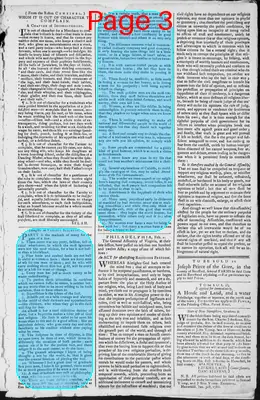
Literary
February 18, 1786
Fowle's New Hampshire Gazette And General Advertiser
Portsmouth, Rockingham County, New Hampshire
What is this article about?
A collection of 27 aphoristic reflections on diverse subjects including politics, human folly, religion, society, and morality, presented as numbered thoughts.
Clipping
OCR Quality
98%
Excellent
Full Text
Thoughts on Various Subjects.
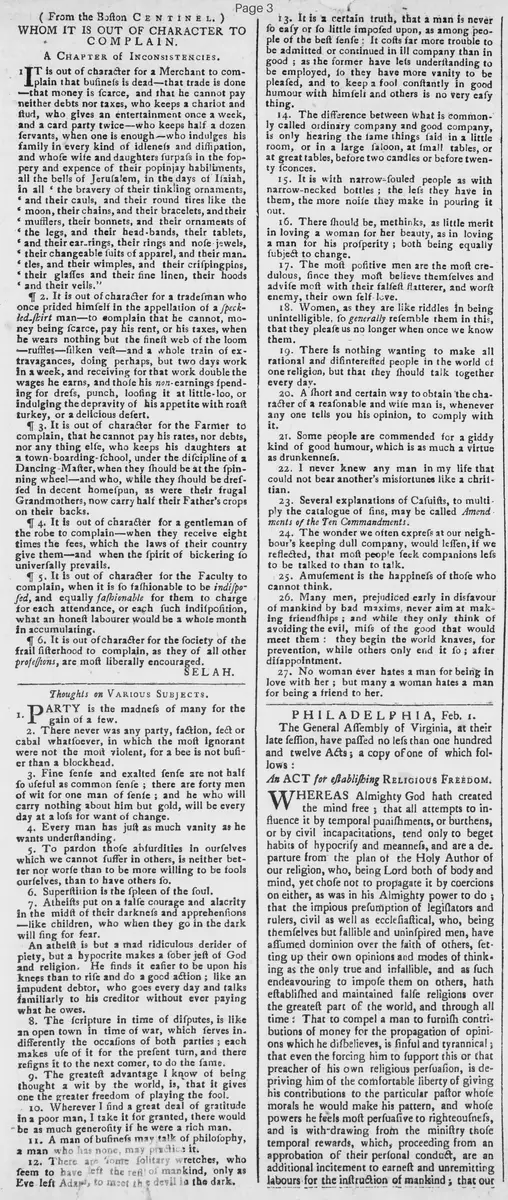
1. Party is the madness of many for the gain of a few.
2. There never was any party, faction, sect or cabal whatsoever, in which the most ignorant were not the most violent, for a bee is not busier than a blockhead.
3. Fine sense and exalted sense are not half so useful as common sense: there are forty men of wit for one man of sense: and he who will carry nothing about him but gold, will be every day at a loss for want of change.
4. Every man has just as much vanity as he wants understanding.
5. To pardon those absurdities in ourselves which we cannot suffer in others, is neither better nor worse than to be more willing to be fools ourselves, than to have others so.
6. Superstition is the spleen of the soul.
7. Atheists put on a false courage and alacrity in the midst of their darkness and apprehensions—like children, who when they go in the dark will sing for fear.
An atheist is but a mad ridiculous derider of piety, but a hypocrite makes a sober jest of God and religion. He finds it easier to be upon his knees than to rise and do a good action; like an impudent debtor, who goes every day and talks familiarly to his creditor without ever paying what he owes.
8. The scripture in time of disputes, is like an open town in time of war, which serves in differently the occasions of both parties; each makes use of it for the present turn, and there resigns it to the next comer, to do the same.
9. The greatest advantage I know of being thought a wit by the world, is, that it gives one the greater freedom of playing the fool.
10. Wherever I find a great deal of gratitude in a poor man, I take it for granted, there would be as much generosity if he were a rich man.
11. A man of business may talk of philosophy, a man who has none, may practice it.
12. There are some solitary wretches, who seem to have left the rest of mankind, only as Eve left Adam, to meet the devil in the dark.
13. It is a certain truth, that a man is never so easy or so little imposed upon, as among people of the best sense: It costs far more trouble to be admitted or continued in ill company than in good; as the former have less understanding to be employed, so they have more vanity to be pleased, and to keep a fool constantly in good humour with himself and others is no very easy thing.
14. The difference between what is commonly called ordinary company and good company, is only hearing the same things said in a little room, or in a large saloon, at small tables, or at great tables, before two candles or before twenty sconces.
15. It is with narrow-souled people as with narrow-necked bottles; the less they have in them, the more noise they make in pouring it out.
16. There should be, methinks, as little merit in loving a woman for her beauty, as in loving a man for his prosperity; both being equally subject to change.
17. The most positive men are the most credulous, since they most believe themselves and advise most with their falsest flatterer, and worst enemy, their own self-love.
18. Women, as they are like riddles in being unintelligible, so generally resemble them in this, that they please us no longer when once we know them.
19. There is nothing wanting to make all rational and disinterested people in the world of one religion, but that they should talk together every day.
20. A short and certain way to obtain the character of a reasonable and wise man is, whenever any one tells you his opinion, to comply with it.
21. Some people are commended for a giddy kind of good humour, which is as much a virtue as drunkenness.
22. I never knew any man in my life that could not bear another's misfortunes like a christian.
23. Several explanations of Casuists, to multiply the catalogue of sins, may be called Amendments of the Ten Commandments.
24. The wonder we often express at our neighbour's keeping dull company, would lessen, if we reflected, that most people seek companions less to be talked to than to talk.
25. Amusement is the happiness of those who cannot think.
26. Many men, prejudiced early in disfavour of mankind by bad maxims, never aim at making friendships; and while they only think of avoiding the evil, miss of the good that would meet them: they begin the world knaves, for prevention, while others only end it so, after disappointment.
27. No woman ever hates a man for being in love with her; but many a woman hates a man for being a friend to her.
1. Party is the madness of many for the gain of a few.
2. There never was any party, faction, sect or cabal whatsoever, in which the most ignorant were not the most violent, for a bee is not busier than a blockhead.
3. Fine sense and exalted sense are not half so useful as common sense: there are forty men of wit for one man of sense: and he who will carry nothing about him but gold, will be every day at a loss for want of change.
4. Every man has just as much vanity as he wants understanding.
5. To pardon those absurdities in ourselves which we cannot suffer in others, is neither better nor worse than to be more willing to be fools ourselves, than to have others so.
6. Superstition is the spleen of the soul.
7. Atheists put on a false courage and alacrity in the midst of their darkness and apprehensions—like children, who when they go in the dark will sing for fear.
An atheist is but a mad ridiculous derider of piety, but a hypocrite makes a sober jest of God and religion. He finds it easier to be upon his knees than to rise and do a good action; like an impudent debtor, who goes every day and talks familiarly to his creditor without ever paying what he owes.
8. The scripture in time of disputes, is like an open town in time of war, which serves in differently the occasions of both parties; each makes use of it for the present turn, and there resigns it to the next comer, to do the same.
9. The greatest advantage I know of being thought a wit by the world, is, that it gives one the greater freedom of playing the fool.
10. Wherever I find a great deal of gratitude in a poor man, I take it for granted, there would be as much generosity if he were a rich man.
11. A man of business may talk of philosophy, a man who has none, may practice it.
12. There are some solitary wretches, who seem to have left the rest of mankind, only as Eve left Adam, to meet the devil in the dark.
13. It is a certain truth, that a man is never so easy or so little imposed upon, as among people of the best sense: It costs far more trouble to be admitted or continued in ill company than in good; as the former have less understanding to be employed, so they have more vanity to be pleased, and to keep a fool constantly in good humour with himself and others is no very easy thing.
14. The difference between what is commonly called ordinary company and good company, is only hearing the same things said in a little room, or in a large saloon, at small tables, or at great tables, before two candles or before twenty sconces.
15. It is with narrow-souled people as with narrow-necked bottles; the less they have in them, the more noise they make in pouring it out.
16. There should be, methinks, as little merit in loving a woman for her beauty, as in loving a man for his prosperity; both being equally subject to change.
17. The most positive men are the most credulous, since they most believe themselves and advise most with their falsest flatterer, and worst enemy, their own self-love.
18. Women, as they are like riddles in being unintelligible, so generally resemble them in this, that they please us no longer when once we know them.
19. There is nothing wanting to make all rational and disinterested people in the world of one religion, but that they should talk together every day.
20. A short and certain way to obtain the character of a reasonable and wise man is, whenever any one tells you his opinion, to comply with it.
21. Some people are commended for a giddy kind of good humour, which is as much a virtue as drunkenness.
22. I never knew any man in my life that could not bear another's misfortunes like a christian.
23. Several explanations of Casuists, to multiply the catalogue of sins, may be called Amendments of the Ten Commandments.
24. The wonder we often express at our neighbour's keeping dull company, would lessen, if we reflected, that most people seek companions less to be talked to than to talk.
25. Amusement is the happiness of those who cannot think.
26. Many men, prejudiced early in disfavour of mankind by bad maxims, never aim at making friendships; and while they only think of avoiding the evil, miss of the good that would meet them: they begin the world knaves, for prevention, while others only end it so, after disappointment.
27. No woman ever hates a man for being in love with her; but many a woman hates a man for being a friend to her.
What sub-type of article is it?
Essay
Satire
What themes does it cover?
Moral Virtue
Social Manners
Political
What keywords are associated?
Party
Madness
Common Sense
Vanity
Superstition
Atheism
Wit
Gratitude
Philosophy
Friendship
Literary Details
Title
Thoughts On Various Subjects.
Form / Style
Collection Of Aphorisms
Key Lines
Party Is The Madness Of Many For The Gain Of A Few.
Fine Sense And Exalted Sense Are Not Half So Useful As Common Sense: There Are Forty Men Of Wit For One Man Of Sense: And He Who Will Carry Nothing About Him But Gold, Will Be Every Day At A Loss For Want Of Change.
Every Man Has Just As Much Vanity As He Wants Understanding.
Superstition Is The Spleen Of The Soul.
Atheists Put On A False Courage And Alacrity In The Midst Of Their Darkness And Apprehensions—Like Children, Who When They Go In The Dark Will Sing For Fear.