Thank you for visiting SNEWPapers!
Sign up free
Editorial
September 8, 1878
The Morning Star And Catholic Messenger
New Orleans, Orleans County, Louisiana
What is this article about?
An editorial defends Protestant ministers who fled Canton, Mississippi, during the 1878 yellow fever epidemic, arguing they have no binding duties to the dying unlike Catholic priests, who remain to provide sacraments and consolation.
Clipping
OCR Quality
98%
Excellent
Full Text
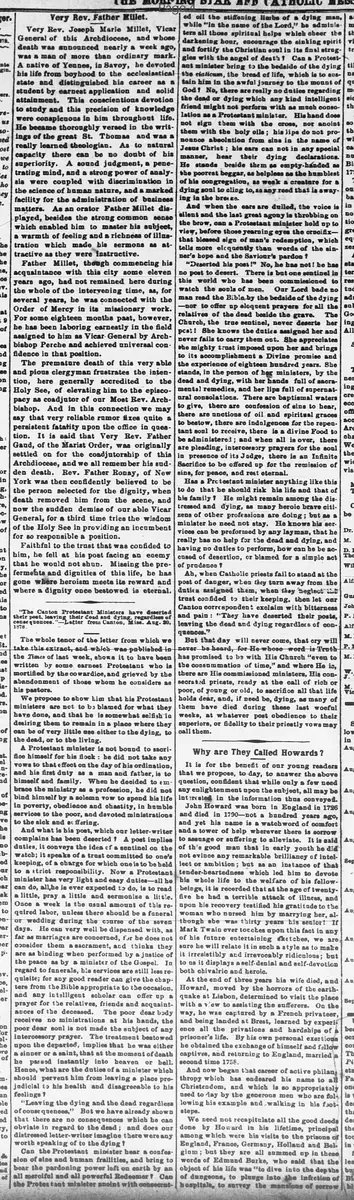
"The Canton Protestant Ministers have deserted their post, leaving their flock and dying, regardless of consequences."—Letter from Canton, Miss. Aug. 30, 1878.
The whole tenor of the letter from which we take this extract, and which was published in the Times of last week, shows it to have been written by some earnest Protestant who is mortified by the cowardice, and grieved by the abandonment of those whom he considers as his pastors.
We propose to show him that his Protestant ministers are not to be blamed for what they have done, and that he is somewhat selfish in desiring them to remain in a place where they can be of very little use—either to the dying, to the dead, or to the living.
A Protestant minister is not bound to sacrifice himself for his flock: he did not take any vows to that effect on the day of his ordination, and his first duty as a man and father, is to himself and family. When he decided to embrace the ministry as a profession, he did not bind himself by a solemn vow to spend his life in poverty, obedience and chastity, in humble services to the poor, and devoted ministrations to the sick and suffering.
And what is his post, which our letter-writer complains has been deserted? A post implies duties, it conveys the idea of a sentinel on the watch; it speaks of a trust committed to one's keeping, of a charge for which one is to be held to a strict responsibility. Now a Protestant minister has very light and easy duties—all he can do, all he is ever expected to do, is to read a little, pray a little and sermonize a little. Once a week is the usual amount of this required labor, unless there should be a funeral or wedding during the course of the seven days. He can very well be dispensed with, as far as marriages are concerned, for he does not consider them a sacrament, and thinks they are as binding when performed by a justice of the peace as by a minister of the Gospel. In regard to funerals, his services are still less requisite; for any good reader can give the chapters from the Bible appropriate to the occasion, and any intelligent scholar can offer up a prayer for the relatives, friends and acquaintances of the deceased. The poor dear body receives no ministrations at his hands, the poor dear soul is not made the subject of any intercessory prayer. The treatment bestowed upon the departed, implies that he was either a sinner or a saint, that at the moment of death he passed instantly into heaven or hell.
Hence, what are the duties of a minister which should prevent him from leaving a place prejudicial to his health and disagreeable to his feelings?
"Leaving the dying and the dead regardless of consequences."
But we have already shown that there are no consequences which he can obviate in regard to the dead; and does our distressed letter-writer imagine there were any worth speaking of to the dying?
Can the Protestant minister hear a confession of sins and human frailties, and bring to bear the pardoning power left on earth by an all merciful and all powerful Redeemer? Can the Protestant minister anoint with consecrated oil the stiffening limbs of a dying man, while "in the name of the Lord," he administers all those spiritual helps which cheer the darkening hour, encourage the sinking spirit and fortify the Christian soul in its final struggles with the angel of death? Can a Protestant minister bring to the bedside of the dying the viaticum, the bread of the life, which is to sustain him in the awful journey to the mount of God? No, there are really no duties regarding the dead or dying which any kind intelligent friend might not perform with as much consolation as a Protestant minister. His hand does not sign them with the cross, nor anoint them with the holy oils; his lips do not pronounce absolution from sins in the name of Jesus Christ; his ears can not in any special manner, hear their dying declarations. He stands beside them as empty-handed as the poorest beggar, as helpless as the humblest of his congregation, as weak a creature for a dying soul to cling to, as any reed that is swaying in the breeze.
And when the ears are dulled, the voice is silent and the last great agony is throbbing on the brow, can a Protestant minister hold up to view, before those yearning eyes the crucifix—that blessed sign of man's redemption, which tells more eloquently than words of the sinner's hope and the Saviour's pardon?
"Deserted his post!" No, he has not! he has no post to desert. There is but one sentinel in this world who has been commissioned to watch the souls of men.
Our Lord bade no man read the Bible by the bedside of the dying—nor to offer up eloquent prayers for all the relatives of the dead beside the grave.
The Church, the true sentinel, never deserts her post! She knows the duties assigned her and never fails to carry them out. She appreciates the mighty trust imposed upon her and brings to its accomplishment a Divine promise and the experience of eighteen hundred years. She stands, in the person of her ministers, by the dead and dying, with her hands full of sacramental remedies, and her lips full of supernatural consolations. There are baptismal waters to give, there are confessions of sins to hear, there are unctions of oil and spiritual graces to bestow, there are indulgences for the repentant soul to receive, there is a divine Food to be administered; and when all is over, there are pleading, intercessory prayers for the soul in presence of its Judge, there is an Infinite Sacrifice to be offered up for the remission of sin, for peace, and rest eternal.
Has a Protestant minister anything like this to do that he should risk his life and that of his family! He might remain among the distressed and dying, as many heroic brave citizens of other professions are doing; but as a minister he need not stay. He knows his services can be performed by any layman, that he really has no help for the dead and dying, and having no duties to perform, how can he be accused of desertion, or blamed for a simple act of prudence?
Ah, when Catholic priests fail to stand at the post of danger, when they turn away from the duties assigned them, when they neglect the trust confided to their keeping, then let our Canton correspondent exclaim with bitterness and pain: "They have deserted their posts, leaving the dead and dying regardless of consequences."
But that day will never come, that cry will never be heard, for He whose word is Truth has promised to be with His Church "even to the consummation of time," and where He is, there are His commissioned ministers, His consecrated priests, ready at the call of rich or poor, of young or old, to sacrifice all that life holds dear, and, if need be, dying, as many of them have died during these last woeful weeks, at whatever post obedience to their superiors, or fidelity to their priestly vows may call them.
The whole tenor of the letter from which we take this extract, and which was published in the Times of last week, shows it to have been written by some earnest Protestant who is mortified by the cowardice, and grieved by the abandonment of those whom he considers as his pastors.
We propose to show him that his Protestant ministers are not to be blamed for what they have done, and that he is somewhat selfish in desiring them to remain in a place where they can be of very little use—either to the dying, to the dead, or to the living.
A Protestant minister is not bound to sacrifice himself for his flock: he did not take any vows to that effect on the day of his ordination, and his first duty as a man and father, is to himself and family. When he decided to embrace the ministry as a profession, he did not bind himself by a solemn vow to spend his life in poverty, obedience and chastity, in humble services to the poor, and devoted ministrations to the sick and suffering.
And what is his post, which our letter-writer complains has been deserted? A post implies duties, it conveys the idea of a sentinel on the watch; it speaks of a trust committed to one's keeping, of a charge for which one is to be held to a strict responsibility. Now a Protestant minister has very light and easy duties—all he can do, all he is ever expected to do, is to read a little, pray a little and sermonize a little. Once a week is the usual amount of this required labor, unless there should be a funeral or wedding during the course of the seven days. He can very well be dispensed with, as far as marriages are concerned, for he does not consider them a sacrament, and thinks they are as binding when performed by a justice of the peace as by a minister of the Gospel. In regard to funerals, his services are still less requisite; for any good reader can give the chapters from the Bible appropriate to the occasion, and any intelligent scholar can offer up a prayer for the relatives, friends and acquaintances of the deceased. The poor dear body receives no ministrations at his hands, the poor dear soul is not made the subject of any intercessory prayer. The treatment bestowed upon the departed, implies that he was either a sinner or a saint, that at the moment of death he passed instantly into heaven or hell.
Hence, what are the duties of a minister which should prevent him from leaving a place prejudicial to his health and disagreeable to his feelings?
"Leaving the dying and the dead regardless of consequences."
But we have already shown that there are no consequences which he can obviate in regard to the dead; and does our distressed letter-writer imagine there were any worth speaking of to the dying?
Can the Protestant minister hear a confession of sins and human frailties, and bring to bear the pardoning power left on earth by an all merciful and all powerful Redeemer? Can the Protestant minister anoint with consecrated oil the stiffening limbs of a dying man, while "in the name of the Lord," he administers all those spiritual helps which cheer the darkening hour, encourage the sinking spirit and fortify the Christian soul in its final struggles with the angel of death? Can a Protestant minister bring to the bedside of the dying the viaticum, the bread of the life, which is to sustain him in the awful journey to the mount of God? No, there are really no duties regarding the dead or dying which any kind intelligent friend might not perform with as much consolation as a Protestant minister. His hand does not sign them with the cross, nor anoint them with the holy oils; his lips do not pronounce absolution from sins in the name of Jesus Christ; his ears can not in any special manner, hear their dying declarations. He stands beside them as empty-handed as the poorest beggar, as helpless as the humblest of his congregation, as weak a creature for a dying soul to cling to, as any reed that is swaying in the breeze.
And when the ears are dulled, the voice is silent and the last great agony is throbbing on the brow, can a Protestant minister hold up to view, before those yearning eyes the crucifix—that blessed sign of man's redemption, which tells more eloquently than words of the sinner's hope and the Saviour's pardon?
"Deserted his post!" No, he has not! he has no post to desert. There is but one sentinel in this world who has been commissioned to watch the souls of men.
Our Lord bade no man read the Bible by the bedside of the dying—nor to offer up eloquent prayers for all the relatives of the dead beside the grave.
The Church, the true sentinel, never deserts her post! She knows the duties assigned her and never fails to carry them out. She appreciates the mighty trust imposed upon her and brings to its accomplishment a Divine promise and the experience of eighteen hundred years. She stands, in the person of her ministers, by the dead and dying, with her hands full of sacramental remedies, and her lips full of supernatural consolations. There are baptismal waters to give, there are confessions of sins to hear, there are unctions of oil and spiritual graces to bestow, there are indulgences for the repentant soul to receive, there is a divine Food to be administered; and when all is over, there are pleading, intercessory prayers for the soul in presence of its Judge, there is an Infinite Sacrifice to be offered up for the remission of sin, for peace, and rest eternal.
Has a Protestant minister anything like this to do that he should risk his life and that of his family! He might remain among the distressed and dying, as many heroic brave citizens of other professions are doing; but as a minister he need not stay. He knows his services can be performed by any layman, that he really has no help for the dead and dying, and having no duties to perform, how can he be accused of desertion, or blamed for a simple act of prudence?
Ah, when Catholic priests fail to stand at the post of danger, when they turn away from the duties assigned them, when they neglect the trust confided to their keeping, then let our Canton correspondent exclaim with bitterness and pain: "They have deserted their posts, leaving the dead and dying regardless of consequences."
But that day will never come, that cry will never be heard, for He whose word is Truth has promised to be with His Church "even to the consummation of time," and where He is, there are His commissioned ministers, His consecrated priests, ready at the call of rich or poor, of young or old, to sacrifice all that life holds dear, and, if need be, dying, as many of them have died during these last woeful weeks, at whatever post obedience to their superiors, or fidelity to their priestly vows may call them.
What sub-type of article is it?
Moral Or Religious
What keywords are associated?
Protestant Ministers
Catholic Duties
Yellow Fever Epidemic
Canton Mississippi
Religious Obligations
Dying And Dead
Sacramental Remedies
What entities or persons were involved?
Protestant Ministers
Catholic Priests
Canton Correspondent
The Church
Editorial Details
Primary Topic
Defense Of Protestant Ministers Fleeing Canton Epidemic
Stance / Tone
Pro Catholic Defense Of Protestant Prudence
Key Figures
Protestant Ministers
Catholic Priests
Canton Correspondent
The Church
Key Arguments
Protestant Ministers Have No Vows Binding Them To Sacrifice For Flock
Protestant Duties To Dying And Dead Are Minimal And Replaceable By Laypeople
Catholic Priests Provide Essential Sacraments Like Confession, Anointing, Viaticum
The Church Never Deserts Her Post Due To Divine Promise
Protestants Cannot Be Blamed For Leaving As They Offer No Unique Spiritual Aid