Thank you for visiting SNEWPapers!
Sign up free
Literary
April 8, 1836
Carroll Free Press
Carrollton, Carroll County, Ohio
What is this article about?
Sir Humphrey Davy praises the taste for reading as a source of lifelong happiness and protection against life's ills, connecting readers to the wisest minds across history and civilizing their character and conduct, quoting a Latin poet on its softening influence.
Clipping
OCR Quality
95%
Excellent
Full Text
TASTE FOR READING.
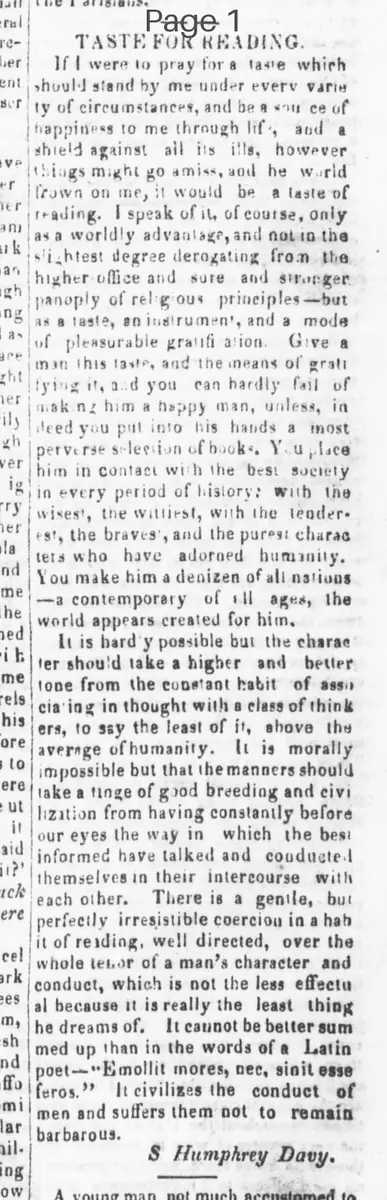
If I were to pray for a taste which should stand by me under every variety of circumstances, and be a source of happiness to me through life, and a shield against all its ills, however things might go amiss, and the world frown upon me, it would be a taste for reading. I speak of it, of course, only as a worldly advantage, and not in the slightest degree derogating from the higher office and surer and stronger panoply of religious principles—but as a taste, an instrument, and a mode of pleasurable gratification. Give a young man this taste, and the means of gratifying it, and you can hardly fail of making him a happy man, unless, indeed you put into his hands a most perverse selection of books. You place him in contact with the best society in every period of history: with the wisest, the wittiest, with the tenderest, the bravest, and the purest characters who have adorned humanity. You make him a denizen of all nations—a contemporary of all ages, the world appears created for him. It is hardly possible but the character should take a higher and better tone from the constant habit of associating in thought with a class of thinkers, to say the least of it, above the average of humanity. It is morally impossible but that the manners should take a tinge of good breeding and civilization from having constantly before our eyes the way in which the best informed have talked and conducted themselves in their intercourse with each other. There is a gentle, but perfectly irresistible coercion in a habit of reading, well directed, over the whole tenor of a man's character and conduct, which is not the less effectual because it is really the least thing he dreams of. It cannot be better summed up than in the words of a Latin poet—"Emollit mores, nec, sinit esse feros."
It civilizes the conduct of men and suffers them not to remain barbarous.
Sir Humphrey Davy.
If I were to pray for a taste which should stand by me under every variety of circumstances, and be a source of happiness to me through life, and a shield against all its ills, however things might go amiss, and the world frown upon me, it would be a taste for reading. I speak of it, of course, only as a worldly advantage, and not in the slightest degree derogating from the higher office and surer and stronger panoply of religious principles—but as a taste, an instrument, and a mode of pleasurable gratification. Give a young man this taste, and the means of gratifying it, and you can hardly fail of making him a happy man, unless, indeed you put into his hands a most perverse selection of books. You place him in contact with the best society in every period of history: with the wisest, the wittiest, with the tenderest, the bravest, and the purest characters who have adorned humanity. You make him a denizen of all nations—a contemporary of all ages, the world appears created for him. It is hardly possible but the character should take a higher and better tone from the constant habit of associating in thought with a class of thinkers, to say the least of it, above the average of humanity. It is morally impossible but that the manners should take a tinge of good breeding and civilization from having constantly before our eyes the way in which the best informed have talked and conducted themselves in their intercourse with each other. There is a gentle, but perfectly irresistible coercion in a habit of reading, well directed, over the whole tenor of a man's character and conduct, which is not the less effectual because it is really the least thing he dreams of. It cannot be better summed up than in the words of a Latin poet—"Emollit mores, nec, sinit esse feros."
It civilizes the conduct of men and suffers them not to remain barbarous.
Sir Humphrey Davy.
What sub-type of article is it?
Essay
What themes does it cover?
Moral Virtue
Social Manners
What keywords are associated?
Taste For Reading
Happiness Through Books
Character Civilization
Moral Improvement
Historical Society
What entities or persons were involved?
Sir Humphrey Davy.
Literary Details
Title
Taste For Reading.
Author
Sir Humphrey Davy.
Subject
On The Benefits Of A Taste For Reading
Key Lines
If I Were To Pray For A Taste Which Should Stand By Me Under Every Variety Of Circumstances, And Be A Source Of Happiness To Me Through Life, And A Shield Against All Its Ills, However Things Might Go Amiss, And The World Frown Upon Me, It Would Be A Taste For Reading.
You Place Him In Contact With The Best Society In Every Period Of History: With The Wisest, The Wittiest, With The Tenderest, The Bravest, And The Purest Characters Who Have Adorned Humanity.
There Is A Gentle, But Perfectly Irresistible Coercion In A Habit Of Reading, Well Directed, Over The Whole Tenor Of A Man's Character And Conduct, Which Is Not The Less Effectual Because It Is Really The Least Thing He Dreams Of.
"Emollit Mores, Nec, Sinit Esse Feros."