Thank you for visiting SNEWPapers!
Sign up free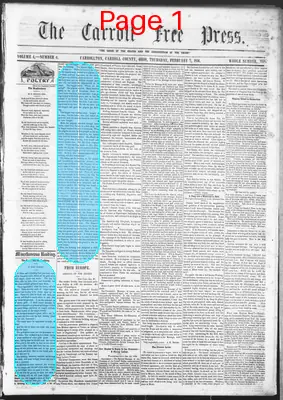
Literary
February 7, 1856
Carroll Free Press
Carrollton, Carroll County, Ohio
What is this article about?
In this moral fable, a proud gold ducat is buried and forgotten by a miser, while a humble copper farthing, given in charity, travels the world, aiding a beggar, funding a pilgrim's journey to free his brother from Turkish captivity, saving a sultan's life from an arrow, and protecting an emperor from poisoned wine, earning a place in the imperial crown.
Clipping
OCR Quality
95%
Excellent
Full Text
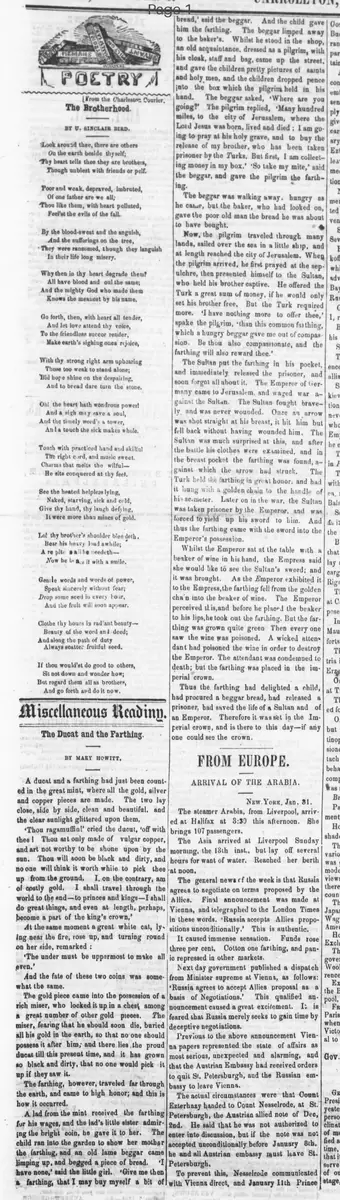
The Ducat and the Farthing.
BY MARY HOWITT.
A ducat and a farthing had just been counted
in the great mint, where all the gold, silver
and copper pieces are made. The two lay
close, side by side, clean and beautiful. and
the clear sunlight glittered upon them.
'Thou ragamuffin!' cried the ducat, 'off with
thee! Thou art only made of vulgar copper,
and art not worthy to be shone upon by the
sun. Thou will soon be black and dirty, and
no one will think it worth while to pick thee
up from the ground. I, on the contrary, am
of costly gold. I shall travel through the
world to the end-to princes and kings-I shall
do great things, and even at length, perhaps,
become a part of the king's crown,'
At the same moment a great white cat, lying
near the fire, rose up, and turning round
on her side, remarked :
'The under must be uppermost to make all
even.'
And the fate of these two coins was some-
what the same.
The gold piece came into the possession of a
rich miser, who locked it up in a chest among
a great number of other gold pieces.
The
miser, fearing that he should soon die, buried
all his gold in the earth, so that no one should
possess it after him; and there lies,the proud
ducat till this present time, and it has grown
so black and dirty, that no one would pick it
up if they saw it.
The farthing, however, traveled far through
the earth, and came to high honor; and this is
how it occurred.
A lad from the mint received the farthing
for his wages, and the lad's little sister admir-
ing the bright coin, he gave it to her. The
child ran into the garden to show her mother
the farthing, and an old lame beggar came
limping up, and begged a piece of bread. 'I
have none,' said the little girl. 'Give me then
a farthing, that I may buy myself a bit of
bread,'said the beggar. And the child gave
him the farthing
The beggar limped away
to the baker's.
Whilst he stood in the shop,
an old acquaintance, dressed as a pilgrim, with
his cloak, staff and bag, came up the street,
and gave the children pretty pictures of saints
and holy men, and the children dropped pence
into she box which the pilgrim held in his
hand. The beggar asked, 'Where are you
going?' The pilgrim replied, 'Many hundred
miles, to the citv of Jerusalem, where the
Lord Jesus was born, lived and died : I am go-
ing to pray at his holy grave, and to buy the
release of my brother, who has been taken
prisoner by the Turks. But first, I am collect-
ing money in my box.' 'So take my mite,'said
the beggar, and gave the pilgrim the farth-
ing.
The beggar was walking away, hungryas
he came, but the baker, who had looked on,
gave the poor old man the bread he was about
to have bought.
Now, the pilgrim traveled through many
lands, sailed over the sea in a little ship, and
at length reached the city of Jerusalem, When
the pilgrim arrived, he first prayed at the sep-
ulchre, then presented himself to the Sultan,
who held his brother captive. He offered the
Turk a great sum of money, if he would only
set his brother free, But the Turk required
more.
'I havenothing more to offer thee,
spake the pilgrim, 'than this common farthing,
which a hungry beggar gave me out of compas-
sion. Be thou also compassionate, and the
farthing will also reward thee.'
The Sultan put the farthing in his pocket,
and immediately released the prisoner, and
soon forgot all about it. The Emperor of Ger-
many came to Jerusalem, and waged war a-
gainst the Sultan. The Sultan fought brave-
ly. and was never wounded. Once an arrow
was shot straight at his breast, it hit him but
fell back without having wounded him, The
Sultan was much surprised at this, and after
the battle his clotbes were examined. and in
the breast pocket the farthing was found, a-
gainst which the arrow had struck. The
Turk held the farthing in great honor, and had
it hung with a golden chain to the handle of
his scimeter. Later on in the war, the Sultan
was taken prisoner by the Emperor, and was
forced to vield up his sword to him. And
thus the farthing came with the sword into the
Emperor's possession.
Whilst the Emperor sat at the table with a
beaker of wine in his hand, the Empress said
she would !ike to see the Sultan's sword; and
it was brought. As the Emperor exhibited it
to the Empress,the farthing fell from the golden
cha'n into the beaker of wine. The Emperor
perceived tlis,and before he placed the beaker
to his lips,he took out the farthing. But the far-
thing was grown quite green Then every one
saw the wine was poisoned. A wicked atten
dant had poisoned the wine in order to destroy
the Emperor. The attendant was condemned to
death; but the farthing was placed in the im-
perial crown.
Thus the farthing had delighted a child,
had procured a beggar bread, had released a
prisoner, had saved the life of a Sultan and of
an Emperor. Therefore it was set in the Im-
perial crown, and is there to this day-if any
one could see the crown.
BY MARY HOWITT.
A ducat and a farthing had just been counted
in the great mint, where all the gold, silver
and copper pieces are made. The two lay
close, side by side, clean and beautiful. and
the clear sunlight glittered upon them.
'Thou ragamuffin!' cried the ducat, 'off with
thee! Thou art only made of vulgar copper,
and art not worthy to be shone upon by the
sun. Thou will soon be black and dirty, and
no one will think it worth while to pick thee
up from the ground. I, on the contrary, am
of costly gold. I shall travel through the
world to the end-to princes and kings-I shall
do great things, and even at length, perhaps,
become a part of the king's crown,'
At the same moment a great white cat, lying
near the fire, rose up, and turning round
on her side, remarked :
'The under must be uppermost to make all
even.'
And the fate of these two coins was some-
what the same.
The gold piece came into the possession of a
rich miser, who locked it up in a chest among
a great number of other gold pieces.
The
miser, fearing that he should soon die, buried
all his gold in the earth, so that no one should
possess it after him; and there lies,the proud
ducat till this present time, and it has grown
so black and dirty, that no one would pick it
up if they saw it.
The farthing, however, traveled far through
the earth, and came to high honor; and this is
how it occurred.
A lad from the mint received the farthing
for his wages, and the lad's little sister admir-
ing the bright coin, he gave it to her. The
child ran into the garden to show her mother
the farthing, and an old lame beggar came
limping up, and begged a piece of bread. 'I
have none,' said the little girl. 'Give me then
a farthing, that I may buy myself a bit of
bread,'said the beggar. And the child gave
him the farthing
The beggar limped away
to the baker's.
Whilst he stood in the shop,
an old acquaintance, dressed as a pilgrim, with
his cloak, staff and bag, came up the street,
and gave the children pretty pictures of saints
and holy men, and the children dropped pence
into she box which the pilgrim held in his
hand. The beggar asked, 'Where are you
going?' The pilgrim replied, 'Many hundred
miles, to the citv of Jerusalem, where the
Lord Jesus was born, lived and died : I am go-
ing to pray at his holy grave, and to buy the
release of my brother, who has been taken
prisoner by the Turks. But first, I am collect-
ing money in my box.' 'So take my mite,'said
the beggar, and gave the pilgrim the farth-
ing.
The beggar was walking away, hungryas
he came, but the baker, who had looked on,
gave the poor old man the bread he was about
to have bought.
Now, the pilgrim traveled through many
lands, sailed over the sea in a little ship, and
at length reached the city of Jerusalem, When
the pilgrim arrived, he first prayed at the sep-
ulchre, then presented himself to the Sultan,
who held his brother captive. He offered the
Turk a great sum of money, if he would only
set his brother free, But the Turk required
more.
'I havenothing more to offer thee,
spake the pilgrim, 'than this common farthing,
which a hungry beggar gave me out of compas-
sion. Be thou also compassionate, and the
farthing will also reward thee.'
The Sultan put the farthing in his pocket,
and immediately released the prisoner, and
soon forgot all about it. The Emperor of Ger-
many came to Jerusalem, and waged war a-
gainst the Sultan. The Sultan fought brave-
ly. and was never wounded. Once an arrow
was shot straight at his breast, it hit him but
fell back without having wounded him, The
Sultan was much surprised at this, and after
the battle his clotbes were examined. and in
the breast pocket the farthing was found, a-
gainst which the arrow had struck. The
Turk held the farthing in great honor, and had
it hung with a golden chain to the handle of
his scimeter. Later on in the war, the Sultan
was taken prisoner by the Emperor, and was
forced to vield up his sword to him. And
thus the farthing came with the sword into the
Emperor's possession.
Whilst the Emperor sat at the table with a
beaker of wine in his hand, the Empress said
she would !ike to see the Sultan's sword; and
it was brought. As the Emperor exhibited it
to the Empress,the farthing fell from the golden
cha'n into the beaker of wine. The Emperor
perceived tlis,and before he placed the beaker
to his lips,he took out the farthing. But the far-
thing was grown quite green Then every one
saw the wine was poisoned. A wicked atten
dant had poisoned the wine in order to destroy
the Emperor. The attendant was condemned to
death; but the farthing was placed in the im-
perial crown.
Thus the farthing had delighted a child,
had procured a beggar bread, had released a
prisoner, had saved the life of a Sultan and of
an Emperor. Therefore it was set in the Im-
perial crown, and is there to this day-if any
one could see the crown.
What sub-type of article is it?
Fable
Prose Fiction
What themes does it cover?
Moral Virtue
What keywords are associated?
Moral Fable
Coins
Humility
Charity
Pilgrim
Sultan
Emperor
Jerusalem
What entities or persons were involved?
By Mary Howitt.
Literary Details
Title
The Ducat And The Farthing.
Author
By Mary Howitt.
Key Lines
'The Under Must Be Uppermost To Make All Even.'
'Thou Ragamuffin!' Cried The Ducat, 'Off With Thee! Thou Art Only Made Of Vulgar Copper...'
'I Have Nothing More To Offer Thee... Than This Common Farthing, Which A Hungry Beggar Gave Me Out Of Compassion.'
Thus The Farthing Had Delighted A Child, Had Procured A Beggar Bread, Had Released A Prisoner, Had Saved The Life Of A Sultan And Of An Emperor.