Thank you for visiting SNEWPapers!
Sign up free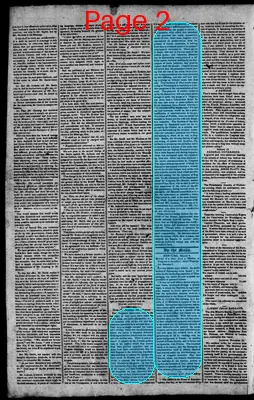
Editorial
January 16, 1810
The Rhode Island American, And General Advertiser
Providence, Providence County, Rhode Island
What is this article about?
Editorial from Federal Republican criticizes Virginian Democrats under Jefferson and Madison for disastrous policies like embargoes, favoring France over England, and pushing for war to cover misdeeds. Includes extracts of letters on congressional debate supporting Giles' war resolution, opposed by Gardenier.
Clipping
OCR Quality
95%
Excellent
Full Text
From the Federal Republican.
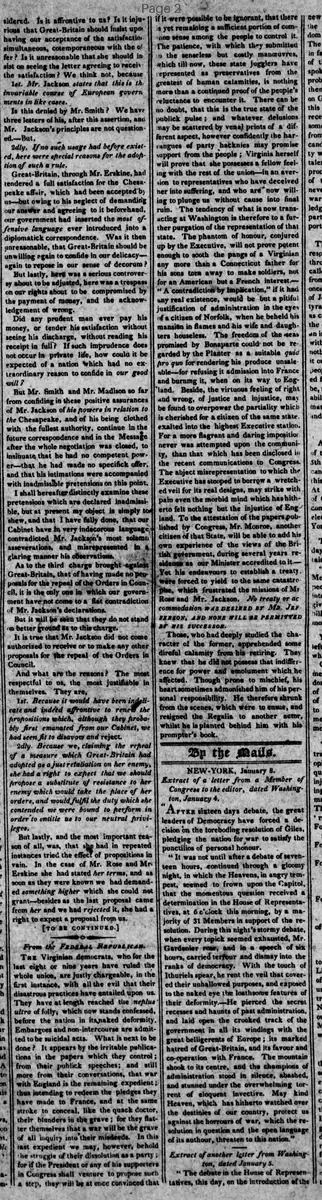
The Virginian democrats, who for the last eight or nine years have ruled the whole union, are justly chargeable, in the first instance, with all the evil that their disastrous practices have entailed upon us. They have at length reached the ne plus ultra of folly, which now stands confessed, before the nation in its naked deformity. Embargoes and non-intercourse are admitted to be suicidal acts. What is next to be done? It appears by the irritable publications in the papers which they control; from their publick speeches; and still more from their conversations, that war with England is the remaining expedient; thus intending to redeem the pledges they have made to France, and at the same stroke to conceal, like the quack doctor, their blunders in the grave; for they flatter themselves that a war will be the grave of all inquiry into their misdeeds. In this last expedient we may, however, behold the struggle of their dissolution as a party; for if the President or any of his supporters in Congress shall venture to propose such a step, they will be at once convinced if it were possible to be ignorant, that there is yet remaining a sufficient portion of common sense among the people to control it. The patience, with which they submitted to the senseless but costly manoeuvres, which till now, these state jugglers have represented as preservatives from the greatest of human Calamities, is nothing more than a continued proof of the people's reluctance to encounter it. There can be no doubt, that this is the true state of the publick pulse; and whatever delusions may be scattered by venal prints of a different aspect, however confidently the harangues of party hacknies may promise support from the people; Virginia herself will prove that she possesses a fellow feeling with the rest of the union—in an aversion to representatives who have deceived her into suffering, and who are now willing to plunge us without cause into final ruin. The tendency of what is now transacting at Washington is therefore to a further purgation of the representation of that state. The phantom of honour, conjured up by the Executive, will not prove potent enough to sooth the pangs of a Virginian any more than a Connecticut father for his sons torn away to make soldiers, not for an American but a French interest.
"A contradiction by Implication," if it had any real existence, would be but a pitiful justification of administration in the eyes of a citizen of Norfolk, when he beheld his mansion in flames and his wife and daughters houseless. The freedom of the seas promised by Bonaparte could not be regarded by the Planter as a suitable quid pro quo for rendering his produce unsaleable—for refusing it admission into France and burning it, when on its way to England. Beside, the virtuous feeling of right and wrong, of justice and injustice, may be found to overpower the partiality which is cherished for a citizen of the same state, exalted into the highest Executive station. For a more flagrant and daring imposition never was attempted upon the community, than that which has been disclosed in the recent communications to Congress. The abject misrepresentation to which the Executive has stooped to borrow a wretched veil for its real designs, may strike with pain even the morbid mind which has hitherto felt nothing but the injustice of England. To the attestation of the papers published by Congress, Mr. Monroe, another citizen of that State, will be able to add his own experience of the views of the British government, during several years residence as our Minister accredited to it. Yet his endeavours to establish a treaty, were forced to yield to the same catastrophe, which frustrated the missions of Mr. Rose and Mr. Jackson. No treaty or accommodation WAS DESIRED BY MR. JEFFERSON, AND NONE WILL BE PERMITTED BY HIS SUCCESSOR.
Those, who had deeply studied the character of the former, apprehended some direful calamity from his retiring. They knew that he did not possess that indifference for power and emolument which he affected. Though prone to mischief, his heart sometimes admonished him of his personal responsibility. He therefore shrunk from the scenes, which were to ensue, and resigned the Regalia to another actor, whilst he is planted behind him with his prompter's book.
By the mails.
NEW-YORK, January 8.
Extract of a letter from a Member of Congress to the editor, dated Washington, January 4.
After sixteen days debate, the great leaders of Democracy have forced a decision on the foreboding resolution of Giles, pledging the nation for war to satisfy the punctilios of personal honour.
"It was not until after a debate of seventeen hours, continued through a gloomy night, in which the Heavens, in angry tempest, seemed to frown upon the Capitol, that the momentous question received a determination in the House of Representatives, at 6 o'clock this morning, by a majority of 31 Members in support of the resolution. During this night's stormy debate, when every topick seemed exhausted, Mr. Gardenier rose, and in a speech of six hours, carried terrour and dismay into the ranks of democracy. With the touch of Ithuriel's spear, he rent the veil that covered their unhallowed purposes, and exposed to the naked eye the loathsome features of their deformity. He pierced the secret recesses and haunts of past administration, and laid open the crooked track of the government in all its windings with the great belligerents of Europe; its marked hatred of Great-Britain, and its favour and co-operation with France. The mountain shook to its centre, and the champions of administration stood in silence, abashed, and stunned under the overwhelming torrent of eloquent invective. May kind Heaven, which has hitherto watched over the destinies of our country, protect us against the horrours of war, which the resolution in question and the open language of its author, threaten to this nation."
Extract of another letter from Washington, dated January 5.
The Virginian democrats, who for the last eight or nine years have ruled the whole union, are justly chargeable, in the first instance, with all the evil that their disastrous practices have entailed upon us. They have at length reached the ne plus ultra of folly, which now stands confessed, before the nation in its naked deformity. Embargoes and non-intercourse are admitted to be suicidal acts. What is next to be done? It appears by the irritable publications in the papers which they control; from their publick speeches; and still more from their conversations, that war with England is the remaining expedient; thus intending to redeem the pledges they have made to France, and at the same stroke to conceal, like the quack doctor, their blunders in the grave; for they flatter themselves that a war will be the grave of all inquiry into their misdeeds. In this last expedient we may, however, behold the struggle of their dissolution as a party; for if the President or any of his supporters in Congress shall venture to propose such a step, they will be at once convinced if it were possible to be ignorant, that there is yet remaining a sufficient portion of common sense among the people to control it. The patience, with which they submitted to the senseless but costly manoeuvres, which till now, these state jugglers have represented as preservatives from the greatest of human Calamities, is nothing more than a continued proof of the people's reluctance to encounter it. There can be no doubt, that this is the true state of the publick pulse; and whatever delusions may be scattered by venal prints of a different aspect, however confidently the harangues of party hacknies may promise support from the people; Virginia herself will prove that she possesses a fellow feeling with the rest of the union—in an aversion to representatives who have deceived her into suffering, and who are now willing to plunge us without cause into final ruin. The tendency of what is now transacting at Washington is therefore to a further purgation of the representation of that state. The phantom of honour, conjured up by the Executive, will not prove potent enough to sooth the pangs of a Virginian any more than a Connecticut father for his sons torn away to make soldiers, not for an American but a French interest.
"A contradiction by Implication," if it had any real existence, would be but a pitiful justification of administration in the eyes of a citizen of Norfolk, when he beheld his mansion in flames and his wife and daughters houseless. The freedom of the seas promised by Bonaparte could not be regarded by the Planter as a suitable quid pro quo for rendering his produce unsaleable—for refusing it admission into France and burning it, when on its way to England. Beside, the virtuous feeling of right and wrong, of justice and injustice, may be found to overpower the partiality which is cherished for a citizen of the same state, exalted into the highest Executive station. For a more flagrant and daring imposition never was attempted upon the community, than that which has been disclosed in the recent communications to Congress. The abject misrepresentation to which the Executive has stooped to borrow a wretched veil for its real designs, may strike with pain even the morbid mind which has hitherto felt nothing but the injustice of England. To the attestation of the papers published by Congress, Mr. Monroe, another citizen of that State, will be able to add his own experience of the views of the British government, during several years residence as our Minister accredited to it. Yet his endeavours to establish a treaty, were forced to yield to the same catastrophe, which frustrated the missions of Mr. Rose and Mr. Jackson. No treaty or accommodation WAS DESIRED BY MR. JEFFERSON, AND NONE WILL BE PERMITTED BY HIS SUCCESSOR.
Those, who had deeply studied the character of the former, apprehended some direful calamity from his retiring. They knew that he did not possess that indifference for power and emolument which he affected. Though prone to mischief, his heart sometimes admonished him of his personal responsibility. He therefore shrunk from the scenes, which were to ensue, and resigned the Regalia to another actor, whilst he is planted behind him with his prompter's book.
By the mails.
NEW-YORK, January 8.
Extract of a letter from a Member of Congress to the editor, dated Washington, January 4.
After sixteen days debate, the great leaders of Democracy have forced a decision on the foreboding resolution of Giles, pledging the nation for war to satisfy the punctilios of personal honour.
"It was not until after a debate of seventeen hours, continued through a gloomy night, in which the Heavens, in angry tempest, seemed to frown upon the Capitol, that the momentous question received a determination in the House of Representatives, at 6 o'clock this morning, by a majority of 31 Members in support of the resolution. During this night's stormy debate, when every topick seemed exhausted, Mr. Gardenier rose, and in a speech of six hours, carried terrour and dismay into the ranks of democracy. With the touch of Ithuriel's spear, he rent the veil that covered their unhallowed purposes, and exposed to the naked eye the loathsome features of their deformity. He pierced the secret recesses and haunts of past administration, and laid open the crooked track of the government in all its windings with the great belligerents of Europe; its marked hatred of Great-Britain, and its favour and co-operation with France. The mountain shook to its centre, and the champions of administration stood in silence, abashed, and stunned under the overwhelming torrent of eloquent invective. May kind Heaven, which has hitherto watched over the destinies of our country, protect us against the horrours of war, which the resolution in question and the open language of its author, threaten to this nation."
Extract of another letter from Washington, dated January 5.
What sub-type of article is it?
Partisan Politics
Foreign Affairs
War Or Peace
What keywords are associated?
Virginian Democrats
Embargo
Non Intercourse
War With England
France Alliance
Congress Debate
Giles Resolution
Mr Gardenier Speech
What entities or persons were involved?
Virginian Democrats
President
Mr. Jefferson
Mr. Monroe
Giles
Mr. Gardenier
Mr. Rose
Mr. Jackson
Editorial Details
Primary Topic
Criticism Of Virginian Democrats' Policies Leading To War With England
Stance / Tone
Strongly Anti Democrat And Anti War With England
Key Figures
Virginian Democrats
President
Mr. Jefferson
Mr. Monroe
Giles
Mr. Gardenier
Mr. Rose
Mr. Jackson
Key Arguments
Virginian Democrats Responsible For Evils Like Embargoes And Non Intercourse
War With England Proposed To Redeem Pledges To France And Conceal Blunders
People Have Common Sense To Oppose War
Virginia Shares Aversion To Deceptive Representatives
Executive's Misrepresentation In Communications To Congress
No Treaty Desired By Jefferson Or His Successor
Debate In Congress On Giles' Resolution Pledging War For Personal Honor