Thank you for visiting SNEWPapers!
Sign up free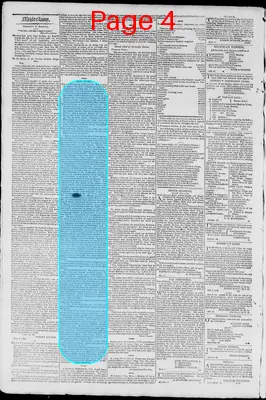
Literary
November 11, 1806
The Enquirer
Richmond, Henrico County, Virginia
What is this article about?
Review of the second volume of John Horne Tooke's 'Diversions of Purley,' highlighting its etymological insights and impact on grammar. Includes excerpts from a dialogue between F. and H. discussing linguistic abbreviations, their benefits, and the evolution of English from Anglo-Saxon roots.
Clipping

OCR Quality
98%
Excellent
Full Text
NEW WORK.
The world has done justice to the first volume of Horne Tooke's "Diversions of Purley" which formed a new era in the science of Grammar. A second volume was promised in continuation of the subject; but contrary to the wishes of the whole literary world, it was delayed for a considerable time. At length however it has appeared, to add new lustre to the reputation of its distinguished Author.
This volume has not yet reached our city; but we have seen a very elaborate critique upon it in the Critical Review for 1806, accompanied by copious extracts. The review does not present us with a general sketch of its contents; but in the extracts which it employs, we see the same active researches into the Etymology of words, the same ingenuity in hunting their original meaning through all their various applications, which distinguished the preceding volume.
The following passage which closes the 2nd volume, is a complete summary of the professed views of its author:
Now in regard to all these which I have mentioned, and many other abbreviations which I have not yet mentioned; our modern English authors (not being aware of what the language had gained) have been much divided in their opinions: whether we should praise or censure those who, by adopting a great number of foreign words and incorporating them into the old Anglo-Saxon language, have by degrees produced the modern English. While some have called this Enriching, others have called it Deforming the original language of our ancestors: which these latter affirm to have been sufficiently adapted to composition to have expressed with equal advantage, propriety, & precision, by words from its own source, all that we can now do by our foreign helps. But in their declamations (for they cannot be called arguments) on this subject, it is evident that, on both sides, they confined themselves to the consideration merely of complex terms, and never dreamed of the abbreviations in the manner of signification of words. Which latter has however been a much more abundant cause of borrowing foreign words than the former. And indeed it is true that almost all the complex terms (merely as such) which we have adopted from other languages, might be, and many of them were, better expressed in the Anglo-Saxon:—I mean, better for an Anglo-Saxon: because more intelligible to him, and more homogeneous with the rest of his language.
Yet I am of opinion (but on different ground from any taken by the declaimers on either side) that those who by thus borrowing have produced our present English speech, deserve from us, but in a very different degree, both thanks and censure. Great thanks, in that they have introduced into the English some most useful abbreviations in manner of signification; which the Anglo-Saxon, as well as all the other Northern languages wanted: and some censure, in that they have done this incompletely. & in an improper manner. The fact certainly is, that our predecessors did not themselves know what they were doing any more than their successors seem to have known hitherto the real importance and benefit of what has been done. And of this the Grammars and Philosophy both of ancients and moderns are a sufficient proof. An oversight much to be deplored: for I am strongly persuaded (and I think I have good reason to be so) that had the Greek and Latin Grammarians known & explained the nature and intrinsic value of the riches of their own language, neither would their descendants have lost any of those advantages, nor: would the languages of Europe have been at this day in the corrupt and deficient state in which we, more and less, find them. For those languages which have borrowed these abbreviations. would have avoided the partiality and patchwork, as well as the corruptions & improprieties with which they now abound, & those living languages of Europe which still want these advantages wholly, would long ere this have entirely supplied their defects.
F. It seems to me that you rather exaggerate the importance of these abbreviations. Can it be of such mighty consequence to gain a little time in communication?
H. Even that is important. But it rests not there. A short, close, and compact method of speech, answers the purpose of a map upon a reduced scale: it assists greatly the comprehension of our understanding, and, in general reasoning, frequently enables us at one glance, to take in very numerous and distant important relations and conclusions, which would otherwise totally escape us. But this objection comes to me with an ill grace from you, who have expressed such frequent nausea and disgust at the many-lengthian Lord with his numerous strings, that excellent political swimmer, whose tedious reasons, you have often complained, are as—"two grains of wheat hid in two bushels of chaff."
And here, if you please, we will conclude our discussion for the present.
F. No. If you finish thus, you will leave me much unsatisfied; nor shall I think myself fairly treated by you.
You have told me that a Verb is (as every word almost must be) a Noun; but you added, that it is also something more: and that the title of Verb was given to it, on account of that distinguishing something more than the mere noun conveys. You have then proceeded to the Simple Verb adjectived, and to the different adjectived Moods, and to the different adjectived Tenses of the verb. But you have not all the while explained to me what you mean by the naked Simple Verb unadjectived. Nor have you uttered a single syllable concerning that Something which the naked verb unattended by Mood, Tense, Person, Number and Gender, (which last also some languages add to it) signifies More or Besides the mere Noun.
What is the Verb? What is that peculiar differential circumstance which, added to the definition of a Noun, constitutes the Verb?
H. We will leave off here for the present. It is true that my evening is now fully come, and the night fast approaching; yet if we shall have a tolerably lengthened twilight, we may still perhaps find time enough for a farther conversation on this subject:
And finally (if the times will bear it) to apply this system of language to all the different systems of Metaphysical (i. e. verbal) Imposture.
The world has done justice to the first volume of Horne Tooke's "Diversions of Purley" which formed a new era in the science of Grammar. A second volume was promised in continuation of the subject; but contrary to the wishes of the whole literary world, it was delayed for a considerable time. At length however it has appeared, to add new lustre to the reputation of its distinguished Author.
This volume has not yet reached our city; but we have seen a very elaborate critique upon it in the Critical Review for 1806, accompanied by copious extracts. The review does not present us with a general sketch of its contents; but in the extracts which it employs, we see the same active researches into the Etymology of words, the same ingenuity in hunting their original meaning through all their various applications, which distinguished the preceding volume.
The following passage which closes the 2nd volume, is a complete summary of the professed views of its author:
Now in regard to all these which I have mentioned, and many other abbreviations which I have not yet mentioned; our modern English authors (not being aware of what the language had gained) have been much divided in their opinions: whether we should praise or censure those who, by adopting a great number of foreign words and incorporating them into the old Anglo-Saxon language, have by degrees produced the modern English. While some have called this Enriching, others have called it Deforming the original language of our ancestors: which these latter affirm to have been sufficiently adapted to composition to have expressed with equal advantage, propriety, & precision, by words from its own source, all that we can now do by our foreign helps. But in their declamations (for they cannot be called arguments) on this subject, it is evident that, on both sides, they confined themselves to the consideration merely of complex terms, and never dreamed of the abbreviations in the manner of signification of words. Which latter has however been a much more abundant cause of borrowing foreign words than the former. And indeed it is true that almost all the complex terms (merely as such) which we have adopted from other languages, might be, and many of them were, better expressed in the Anglo-Saxon:—I mean, better for an Anglo-Saxon: because more intelligible to him, and more homogeneous with the rest of his language.
Yet I am of opinion (but on different ground from any taken by the declaimers on either side) that those who by thus borrowing have produced our present English speech, deserve from us, but in a very different degree, both thanks and censure. Great thanks, in that they have introduced into the English some most useful abbreviations in manner of signification; which the Anglo-Saxon, as well as all the other Northern languages wanted: and some censure, in that they have done this incompletely. & in an improper manner. The fact certainly is, that our predecessors did not themselves know what they were doing any more than their successors seem to have known hitherto the real importance and benefit of what has been done. And of this the Grammars and Philosophy both of ancients and moderns are a sufficient proof. An oversight much to be deplored: for I am strongly persuaded (and I think I have good reason to be so) that had the Greek and Latin Grammarians known & explained the nature and intrinsic value of the riches of their own language, neither would their descendants have lost any of those advantages, nor: would the languages of Europe have been at this day in the corrupt and deficient state in which we, more and less, find them. For those languages which have borrowed these abbreviations. would have avoided the partiality and patchwork, as well as the corruptions & improprieties with which they now abound, & those living languages of Europe which still want these advantages wholly, would long ere this have entirely supplied their defects.
F. It seems to me that you rather exaggerate the importance of these abbreviations. Can it be of such mighty consequence to gain a little time in communication?
H. Even that is important. But it rests not there. A short, close, and compact method of speech, answers the purpose of a map upon a reduced scale: it assists greatly the comprehension of our understanding, and, in general reasoning, frequently enables us at one glance, to take in very numerous and distant important relations and conclusions, which would otherwise totally escape us. But this objection comes to me with an ill grace from you, who have expressed such frequent nausea and disgust at the many-lengthian Lord with his numerous strings, that excellent political swimmer, whose tedious reasons, you have often complained, are as—"two grains of wheat hid in two bushels of chaff."
And here, if you please, we will conclude our discussion for the present.
F. No. If you finish thus, you will leave me much unsatisfied; nor shall I think myself fairly treated by you.
You have told me that a Verb is (as every word almost must be) a Noun; but you added, that it is also something more: and that the title of Verb was given to it, on account of that distinguishing something more than the mere noun conveys. You have then proceeded to the Simple Verb adjectived, and to the different adjectived Moods, and to the different adjectived Tenses of the verb. But you have not all the while explained to me what you mean by the naked Simple Verb unadjectived. Nor have you uttered a single syllable concerning that Something which the naked verb unattended by Mood, Tense, Person, Number and Gender, (which last also some languages add to it) signifies More or Besides the mere Noun.
What is the Verb? What is that peculiar differential circumstance which, added to the definition of a Noun, constitutes the Verb?
H. We will leave off here for the present. It is true that my evening is now fully come, and the night fast approaching; yet if we shall have a tolerably lengthened twilight, we may still perhaps find time enough for a farther conversation on this subject:
And finally (if the times will bear it) to apply this system of language to all the different systems of Metaphysical (i. e. verbal) Imposture.
What sub-type of article is it?
Essay
Dialogue
What keywords are associated?
Horne Tooke
Diversions Of Purley
Etymology
Anglo Saxon
English Language
Abbreviations
Grammar
Verb Definition
Literary Details
Title
New Work.
Subject
Review Of The Second Volume Of Horne Tooke's "Diversions Of Purley"
Form / Style
Prose Review With Dialogue Excerpts
Key Lines
Now In Regard To All These Which I Have Mentioned, And Many Other Abbreviations Which I Have Not Yet Mentioned; Our Modern English Authors (Not Being Aware Of What The Language Had Gained) Have Been Much Divided In Their Opinions: Whether We Should Praise Or Censure Those Who, By Adopting A Great Number Of Foreign Words And Incorporating Them Into The Old Anglo Saxon Language, Have By Degrees Produced The Modern English.
A Short, Close, And Compact Method Of Speech, Answers The Purpose Of A Map Upon A Reduced Scale: It Assists Greatly The Comprehension Of Our Understanding, And, In General Reasoning, Frequently Enables Us At One Glance, To Take In Very Numerous And Distant Important Relations And Conclusions, Which Would Otherwise Totally Escape Us.
What Is The Verb? What Is That Peculiar Differential Circumstance Which, Added To The Definition Of A Noun, Constitutes The Verb?