Thank you for visiting SNEWPapers!
Sign up free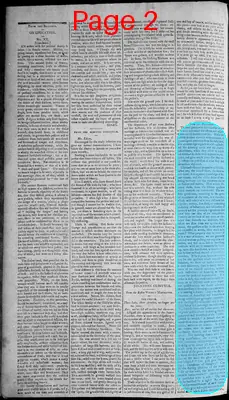
Literary
December 4, 1802
Alexandria Advertiser And Commercial Intelligencer
Alexandria, Virginia
What is this article about?
This essay contrasts the true gentleman, characterized by an honest heart, benevolence, and knowledge of human nature, with the modern version defined by wealth, fine dress, and superficial manners. It critiques how society values riches over genuine qualities in forming friendships and esteem.
Clipping
OCR Quality
75%
Good
Full Text
From the Balance.
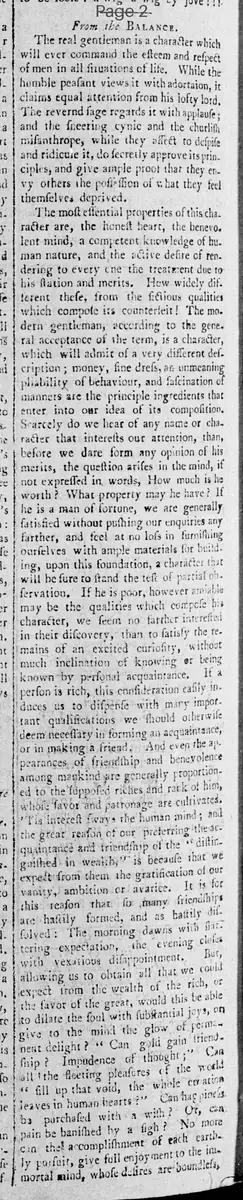
The real gentleman is a character which will ever command the esteem and respect of men in all situations of life. While the humble peasant views it with adoration, it claims equal attention from his lofty lord. The reverend sage regards it with applause; and the sneering cynic and the churlish misanthrope, while they affect to despise and ridicule it, do secretly approve its principles, and give ample proof that they envy others the possession of what they feel themselves deprived.
The most essential properties of this character are, the honest heart, the benevolent mind, a competent knowledge of human nature, and the active desire of rendering to every one the treatment due to his station and merits. How widely different these, from the fictitious qualities which compose its counterfeit! The modern gentleman, according to the general acceptance of the term, is a character, which will admit of a very different description; money, fine dress, an unmeaning pliability of behaviour, and fascination of manners are the principal ingredients that enter into our idea of its composition.
Scarcely do we hear of any name or character that interests our attention, than, before we dare form any opinion of his merits, the question arises in the mind, if not expressed in words, How much is he worth? What property may he have? If he is a man of fortune, we are generally satisfied without pushing our enquiries any farther, and feel at no loss in furnishing ourselves with ample materials for building, upon this foundation, a character that will be sure to stand the test of partial observation. If he is poor, however amiable may be the qualities which compose his character, we seem no farther interested in their discovery, than to satisfy the remains of an excited curiosity, without much inclination of knowing or being known by personal acquaintance. If a person is rich, this consideration easily induces us to dispense with many important qualifications we should otherwise deem necessary in forming an acquaintance, or in making a friend. And even the appearances of friendship and benevolence among mankind are generally proportioned to the supposed riches and rank of him, whose favor and patronage are cultivated.
'Tis interest sways the human mind; and [we are] distinguished in wealth. 'Tis because that we [prefer the] acquaintance and friendship of the distinguished, the great reason of our preferring the acquaintance and friendship of the distinguished is [that we] expect from them the gratification of our vanity, ambition or avarice. It is for this reason that so many friendships are hastily formed, and as hastily dissolved: The morning dawns with flattering expectation, the evening closes with vexatious disappointment. But, expect from the wealth of the rich, or on the favor of the great, would this be able to dilate the soul with substantial joys, or give to the mind the glow of permanent delight? "Can gold gain friendship? Impudence of thought;" Can [gold] leave in human hearts? Can happiness fill up that void, the whole creation cannot purchase with a wish? Or, can pain be banished by a sigh? No more can the accomplishment of each earthly pursuit, give full enjoyment to the immortal mind, whose desires are boundless.
The real gentleman is a character which will ever command the esteem and respect of men in all situations of life. While the humble peasant views it with adoration, it claims equal attention from his lofty lord. The reverend sage regards it with applause; and the sneering cynic and the churlish misanthrope, while they affect to despise and ridicule it, do secretly approve its principles, and give ample proof that they envy others the possession of what they feel themselves deprived.
The most essential properties of this character are, the honest heart, the benevolent mind, a competent knowledge of human nature, and the active desire of rendering to every one the treatment due to his station and merits. How widely different these, from the fictitious qualities which compose its counterfeit! The modern gentleman, according to the general acceptance of the term, is a character, which will admit of a very different description; money, fine dress, an unmeaning pliability of behaviour, and fascination of manners are the principal ingredients that enter into our idea of its composition.
Scarcely do we hear of any name or character that interests our attention, than, before we dare form any opinion of his merits, the question arises in the mind, if not expressed in words, How much is he worth? What property may he have? If he is a man of fortune, we are generally satisfied without pushing our enquiries any farther, and feel at no loss in furnishing ourselves with ample materials for building, upon this foundation, a character that will be sure to stand the test of partial observation. If he is poor, however amiable may be the qualities which compose his character, we seem no farther interested in their discovery, than to satisfy the remains of an excited curiosity, without much inclination of knowing or being known by personal acquaintance. If a person is rich, this consideration easily induces us to dispense with many important qualifications we should otherwise deem necessary in forming an acquaintance, or in making a friend. And even the appearances of friendship and benevolence among mankind are generally proportioned to the supposed riches and rank of him, whose favor and patronage are cultivated.
'Tis interest sways the human mind; and [we are] distinguished in wealth. 'Tis because that we [prefer the] acquaintance and friendship of the distinguished, the great reason of our preferring the acquaintance and friendship of the distinguished is [that we] expect from them the gratification of our vanity, ambition or avarice. It is for this reason that so many friendships are hastily formed, and as hastily dissolved: The morning dawns with flattering expectation, the evening closes with vexatious disappointment. But, expect from the wealth of the rich, or on the favor of the great, would this be able to dilate the soul with substantial joys, or give to the mind the glow of permanent delight? "Can gold gain friendship? Impudence of thought;" Can [gold] leave in human hearts? Can happiness fill up that void, the whole creation cannot purchase with a wish? Or, can pain be banished by a sigh? No more can the accomplishment of each earthly pursuit, give full enjoyment to the immortal mind, whose desires are boundless.
What sub-type of article is it?
Essay
Satire
What themes does it cover?
Moral Virtue
Social Manners
Commerce Trade
What keywords are associated?
Gentleman
Character
Benevolence
Wealth
Friendship
Society
Avarice
Moral Qualities
Literary Details
Subject
On The Character Of The True Gentleman Versus The Modern Counterfeit
Form / Style
Prose Essay Critiquing Societal Values
Key Lines
The Real Gentleman Is A Character Which Will Ever Command The Esteem And Respect Of Men In All Situations Of Life.
The Most Essential Properties Of This Character Are, The Honest Heart, The Benevolent Mind, A Competent Knowledge Of Human Nature, And The Active Desire Of Rendering To Every One The Treatment Due To His Station And Merits.
'Tis Interest Sways The Human Mind;
Can Gold Gain Friendship? Impudence Of Thought;