Thank you for visiting SNEWPapers!
Sign up free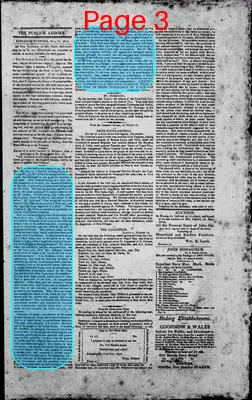
Editorial
December 17, 1814
Norfolk Gazette And Publick Ledger
Norfolk, Virginia
What is this article about?
The editorial praises Senator Mason's speech opposing the unconstitutionality of Giles's Conscription Bill, criticizes Jefferson and Madison for leading the nation to ruin through war, warns against unconstitutional measures in times of distress, and defends New-England's right to complain or separate from the Union.
Clipping
OCR Quality
95%
Excellent
Full Text
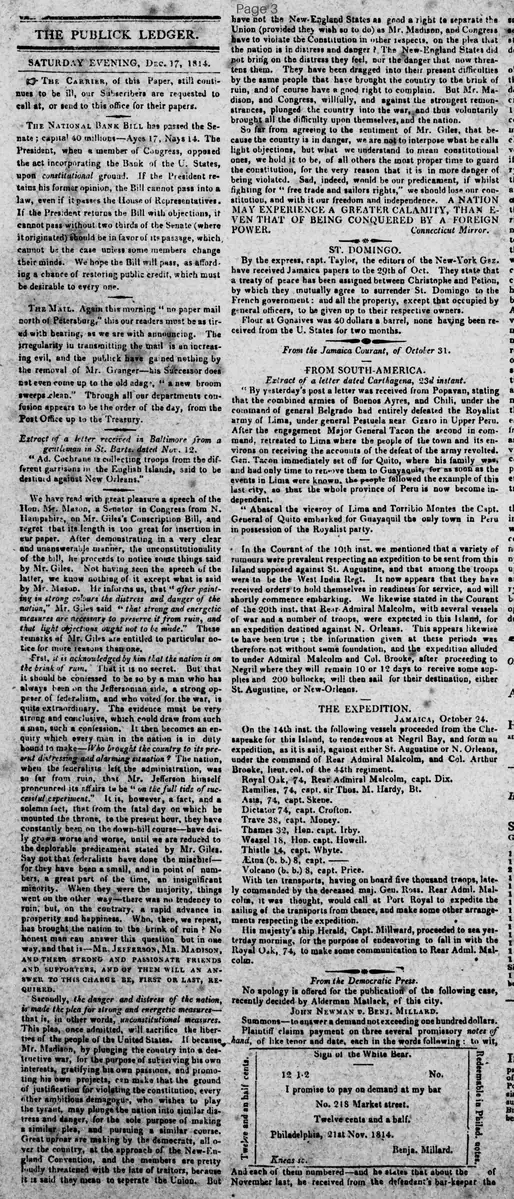
We have read with great pleasure a speech of the Hon. Mr. Mason, a Senator in Congress from N. Hampshire, on Mr. Giles's Conscription Bill, and regret that its length is too great for insertion in our paper. After demonstrating in a very clear and unanswerable manner, the unconstitutionality of the bill, he proceeds to notice some things said by Mr. Giles. Not having seen the speech of the latter, we know nothing of it except what is said by Mr. Mason. He informs us, that "after painting in strong colours the distress and danger of the nation," Mr. Giles said "that strong and energetic measures are necessary to preserve it from ruin, and that light objections ought not to be made." These remarks of Mr. Giles are entitled to particular notice for more reasons than one.
First, it is acknowledged by him that the nation is on the brink of ruin. "That it is no secret." But that it should be confessed to be so by a man who has always been on the Jeffersonian side, a strong opposer of federalism, and who voted for the war, is quite extraordinary. The evidence must be very strong and conclusive, which could draw from such a man, such a concession. It then becomes an inquiry which every man in the nation is in duty bound to make--Who brought the country to its present distressing and alarming situation? The nation, when the federalists left the administration, was so far from ruin, that Mr. Jefferson himself pronounced its affairs to be "on the full tide of successful experiment." It is, however, a fact, and a solemn fact, that from the fatal day on which he mounted the throne, to the present hour, they have constantly been on the down-hill course--have daily grown worse and worse, until we are reduced to the deplorable predicament stated by Mr. Giles.
Say not that federalists have done the mischief--for they have been a small, and in point of numbers, a great part of the time, an insignificant minority. When they were the majority, things went on the other way--there was no tendency to ruin, but, on the contrary, a rapid advance in prosperity and happiness. Who, then, we repeat, has brought the nation to the brink of ruin? No honest man can answer this question but in one way, and that is--MR. JEFFERSON, MR. MADISON, AND THEIR STRONG AND PASSIONATE FRIENDS AND SUPPORTERS, AND OF THEM WILL AN ANSWER TO THIS CHARGE BE, FIRST OR LAST, REQUIRED.
Secondly, the danger and distress of the nation, is made the plea for strong and energetic measures--that is, in other words, unconstitutional measures. This plea, once admitted, will sacrifice the liberties of the people of the United States. If because Mr. Madison, by plunging the country into a destructive war, for the purpose of subseving his own interests, gratifying his own passions, and promoting his own projects, can make that the ground of justification for violating the constitution, every other ambitious demagogue, who wishes to play the tyrant, may plunge the nation into similar distress and danger, for the sole purpose of making a similar plea, and pursuing a similar course.
Great uproar are making by the democrats, all over the country, at the approach of the New-England Convention, and the members are pretty fully threatened with the fate of traitors, because it is said they mean to separate the Union. But have not the New-England States as good a right to separate the Union (provided they wish so to do) as Mr. Madison, and Congress have to violate the Constitution in other respects, on the plea that the nation is in distress and danger? The New-England States did not bring on the distress they feel, nor the danger that now threatens them. They have been dragged into their present difficulties by the same people that have brought the country to the brink of ruin, and of course have a good right to complain. But Mr. Madison, and Congress, willfully, and against the strongest remonstrances, plunged the country into the war, and thus voluntarily brought all the difficulty upon themselves, and the nation.
So far from agreeing to the sentiment of Mr. Giles, that because the country is in danger, we are not to interpose what he calls light objections, but what we understand to mean constitutional ones, we hold it to be, of all others the most proper time to guard the constitution, for the very reason that it is in more danger of being violated. Sad, indeed, would be our predicament, if whilst fighting for "free trade and sailors rights," we should lose our constitution, and with it our freedom and independence. A NATION MAY EXPERIENCE A GREATER CALAMITY THAN EVEN THAT OF BEING CONQUERED BY A FOREIGN POWER.
Connecticut Mirror.
First, it is acknowledged by him that the nation is on the brink of ruin. "That it is no secret." But that it should be confessed to be so by a man who has always been on the Jeffersonian side, a strong opposer of federalism, and who voted for the war, is quite extraordinary. The evidence must be very strong and conclusive, which could draw from such a man, such a concession. It then becomes an inquiry which every man in the nation is in duty bound to make--Who brought the country to its present distressing and alarming situation? The nation, when the federalists left the administration, was so far from ruin, that Mr. Jefferson himself pronounced its affairs to be "on the full tide of successful experiment." It is, however, a fact, and a solemn fact, that from the fatal day on which he mounted the throne, to the present hour, they have constantly been on the down-hill course--have daily grown worse and worse, until we are reduced to the deplorable predicament stated by Mr. Giles.
Say not that federalists have done the mischief--for they have been a small, and in point of numbers, a great part of the time, an insignificant minority. When they were the majority, things went on the other way--there was no tendency to ruin, but, on the contrary, a rapid advance in prosperity and happiness. Who, then, we repeat, has brought the nation to the brink of ruin? No honest man can answer this question but in one way, and that is--MR. JEFFERSON, MR. MADISON, AND THEIR STRONG AND PASSIONATE FRIENDS AND SUPPORTERS, AND OF THEM WILL AN ANSWER TO THIS CHARGE BE, FIRST OR LAST, REQUIRED.
Secondly, the danger and distress of the nation, is made the plea for strong and energetic measures--that is, in other words, unconstitutional measures. This plea, once admitted, will sacrifice the liberties of the people of the United States. If because Mr. Madison, by plunging the country into a destructive war, for the purpose of subseving his own interests, gratifying his own passions, and promoting his own projects, can make that the ground of justification for violating the constitution, every other ambitious demagogue, who wishes to play the tyrant, may plunge the nation into similar distress and danger, for the sole purpose of making a similar plea, and pursuing a similar course.
Great uproar are making by the democrats, all over the country, at the approach of the New-England Convention, and the members are pretty fully threatened with the fate of traitors, because it is said they mean to separate the Union. But have not the New-England States as good a right to separate the Union (provided they wish so to do) as Mr. Madison, and Congress have to violate the Constitution in other respects, on the plea that the nation is in distress and danger? The New-England States did not bring on the distress they feel, nor the danger that now threatens them. They have been dragged into their present difficulties by the same people that have brought the country to the brink of ruin, and of course have a good right to complain. But Mr. Madison, and Congress, willfully, and against the strongest remonstrances, plunged the country into the war, and thus voluntarily brought all the difficulty upon themselves, and the nation.
So far from agreeing to the sentiment of Mr. Giles, that because the country is in danger, we are not to interpose what he calls light objections, but what we understand to mean constitutional ones, we hold it to be, of all others the most proper time to guard the constitution, for the very reason that it is in more danger of being violated. Sad, indeed, would be our predicament, if whilst fighting for "free trade and sailors rights," we should lose our constitution, and with it our freedom and independence. A NATION MAY EXPERIENCE A GREATER CALAMITY THAN EVEN THAT OF BEING CONQUERED BY A FOREIGN POWER.
Connecticut Mirror.
What sub-type of article is it?
Constitutional
Partisan Politics
War Or Peace
What keywords are associated?
Conscription Bill
Unconstitutionality
Jefferson Administration
Madison War
New England Convention
Federalist Criticism
Constitutional Rights
What entities or persons were involved?
Hon. Mr. Mason
Mr. Giles
Mr. Jefferson
Mr. Madison
Federalists
Democrats
New England States
Editorial Details
Primary Topic
Opposition To Giles's Conscription Bill And Jeffersonian War Policies
Stance / Tone
Strongly Anti Jeffersonian And Pro Constitutional Defense
Key Figures
Hon. Mr. Mason
Mr. Giles
Mr. Jefferson
Mr. Madison
Federalists
Democrats
New England States
Key Arguments
Giles's Conscription Bill Is Unconstitutional
Jefferson And Madison Brought The Nation To Ruin Through Poor Administration And War
Federalists Left The Country Prosperous, Unlike Jeffersonian Rule
Distress From War Justifies Unconstitutional Measures, Endangering Liberties
New England States Have Right To Separate If Distressed, Unlike Madison's Violations
Times Of Danger Require Guarding The Constitution Most Vigilantly
Losing The Constitution Is Worse Than Foreign Conquest