Thank you for visiting SNEWPapers!
Sign up free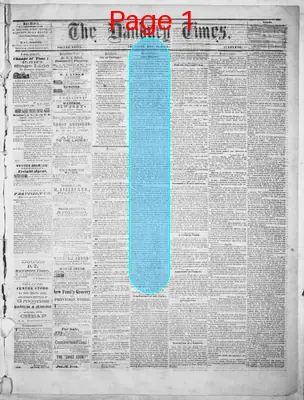
Story
December 25, 1862
Danbury Times
Danbury, Fairfield County, Connecticut
What is this article about?
Dr. E.P. Bennett's 1862 letter critiques army surgeon appointments during the Civil War, notes political hacks and young talents, praises Frederick hospitals' care for Union and Confederate soldiers, and suggests appointing experienced doctors via references to improve the medical corps.
Clipping

OCR Quality
95%
Excellent
Full Text
Among the subjects of general, and we may say just now, of thrilling interest, is the medical department of the army. In reference to this, we find an article in the American Medical Times, communicated by Dr. Ezra P. Bennett, of this town, and submit it to the judgment of our readers as a topic.
To the Editor of The American Medical Times
Sir: - I noticed in your issue of this week a notice of a letter from several surgeons of Boston, addressed to the Surgeon General, in regard to the incompetency of "many army surgeons." Now when we take into consideration the number of surgeons in the field, and the manner in which they have been appointed, it is not wonderful that such should be the case. As a general thing the older surgeons have been broken down political hacks, who had no business at home, and therefore could carry with them no practical experience into the army. Then, again, a great proportion of the surgeons are young men. Many of this class are talented and well educated, theoretically, and, under the guidance of men of more mature years, will come to be ornaments to their profession. These young men, I know, would gladly avail themselves of the practical experience of older men. There is also a class of ignorant men, who gained their appointments by political influence, which neither time nor circumstances can alter for the better: they are not capable of improving by experience.
The remedy suggested by the Bostonians is just the thing wanted, as I am satisfied by actual inspection of a number of hospitals I have just returned from a visit to the hospitals at Frederick, where I spent three days in visiting the principal hospitals, and in social converse with the gentlemanly surgeons there congregated, and I am happy to say that I never spent three days more pleasantly. The hospital arrangements, so far as circumstances will permit, are excellent. They are generally well ventilated, admirably arranged, and perfectly neat and orderly in every respect I was most happy to see that our brave soldiers were so well cared for and so kindly treated, also that the same kindness was extended to the Confederate soldiers who were so fortunate as to fall into our hands. In this respect no distinction was made: friend and foe, side by side, equally well cared for. The surgeons there in charge impressed me most favorably, as able and judicious. Among the most able and experienced were Drs. Hewitt and Lewis, of Connecticut, and Dr. Mosely, then Medical Inspector for New York. Dr. Hewitt is an able man, gentlemanly in his deportment, and a ripe scholar. The same can be said of the other gentlemen named, with many others there located.
But still I felt that there was need of more men of age and experience to do those things pointed out by the Boston surgeons with the exception that they should not be allowed to decide upon or designate the one to perform the operations. Such an arrangement, I am satisfied, would operate injuriously, as it would lead to favoritism, and would go far to discourage and dissatisfy the younger surgeons who go there for experience. Almost any one can amputate a limb, and with a little advice, can do it well. Older men are required rather as Consultants, and to give advice in regard to the medical treatment of the sick and wounded. The Surgeon General in reply says: Very few first class surgeons have come forward, and he appears to be rather surprised that they have not. The reason, in my opinion, is plain. Men of age and experience are generally physically incapable of following a regiment and enduring the hardships of camp life: besides, they are generally in the enjoyment of a good practice, which they do not feel disposed to leave without a corresponding compensation. Then, again, this class of men have been long from the schools, and in regard to minute anatomy have forgotten much; but on the cadaver they show you at once that they are at home in anatomy, so far as necessary for usefulness. These men do not like to go before a board of examiners, who have only good memories, and submit to an examination in minutiae which are of no practical importance, and which have escaped them. These men are well known to the profession by their contributions to the medical and surgical literature of the day, and are personally known to many of our ablest surgeons and professors. There are many such men of acknowledged ability as surgeons, who would be willing to serve their country if they could be appointed by giving the best of references, or certificates of qualification, who will never enter the service if they have to go through the red tape process. In regular service where young men alone are permitted to enter, this course would not do, but in the volunteer service great efficiency could be given to the medical corps in this way. A committee of men of wide world talent from each State, could designate such men as they thought suitable.
Yours, etc.,
E. P. BENNETT, M. D.
DANBURY, CONN., NOV. 22, 1862.
To the Editor of The American Medical Times
Sir: - I noticed in your issue of this week a notice of a letter from several surgeons of Boston, addressed to the Surgeon General, in regard to the incompetency of "many army surgeons." Now when we take into consideration the number of surgeons in the field, and the manner in which they have been appointed, it is not wonderful that such should be the case. As a general thing the older surgeons have been broken down political hacks, who had no business at home, and therefore could carry with them no practical experience into the army. Then, again, a great proportion of the surgeons are young men. Many of this class are talented and well educated, theoretically, and, under the guidance of men of more mature years, will come to be ornaments to their profession. These young men, I know, would gladly avail themselves of the practical experience of older men. There is also a class of ignorant men, who gained their appointments by political influence, which neither time nor circumstances can alter for the better: they are not capable of improving by experience.
The remedy suggested by the Bostonians is just the thing wanted, as I am satisfied by actual inspection of a number of hospitals I have just returned from a visit to the hospitals at Frederick, where I spent three days in visiting the principal hospitals, and in social converse with the gentlemanly surgeons there congregated, and I am happy to say that I never spent three days more pleasantly. The hospital arrangements, so far as circumstances will permit, are excellent. They are generally well ventilated, admirably arranged, and perfectly neat and orderly in every respect I was most happy to see that our brave soldiers were so well cared for and so kindly treated, also that the same kindness was extended to the Confederate soldiers who were so fortunate as to fall into our hands. In this respect no distinction was made: friend and foe, side by side, equally well cared for. The surgeons there in charge impressed me most favorably, as able and judicious. Among the most able and experienced were Drs. Hewitt and Lewis, of Connecticut, and Dr. Mosely, then Medical Inspector for New York. Dr. Hewitt is an able man, gentlemanly in his deportment, and a ripe scholar. The same can be said of the other gentlemen named, with many others there located.
But still I felt that there was need of more men of age and experience to do those things pointed out by the Boston surgeons with the exception that they should not be allowed to decide upon or designate the one to perform the operations. Such an arrangement, I am satisfied, would operate injuriously, as it would lead to favoritism, and would go far to discourage and dissatisfy the younger surgeons who go there for experience. Almost any one can amputate a limb, and with a little advice, can do it well. Older men are required rather as Consultants, and to give advice in regard to the medical treatment of the sick and wounded. The Surgeon General in reply says: Very few first class surgeons have come forward, and he appears to be rather surprised that they have not. The reason, in my opinion, is plain. Men of age and experience are generally physically incapable of following a regiment and enduring the hardships of camp life: besides, they are generally in the enjoyment of a good practice, which they do not feel disposed to leave without a corresponding compensation. Then, again, this class of men have been long from the schools, and in regard to minute anatomy have forgotten much; but on the cadaver they show you at once that they are at home in anatomy, so far as necessary for usefulness. These men do not like to go before a board of examiners, who have only good memories, and submit to an examination in minutiae which are of no practical importance, and which have escaped them. These men are well known to the profession by their contributions to the medical and surgical literature of the day, and are personally known to many of our ablest surgeons and professors. There are many such men of acknowledged ability as surgeons, who would be willing to serve their country if they could be appointed by giving the best of references, or certificates of qualification, who will never enter the service if they have to go through the red tape process. In regular service where young men alone are permitted to enter, this course would not do, but in the volunteer service great efficiency could be given to the medical corps in this way. A committee of men of wide world talent from each State, could designate such men as they thought suitable.
Yours, etc.,
E. P. BENNETT, M. D.
DANBURY, CONN., NOV. 22, 1862.
What sub-type of article is it?
Historical Event
Medical Curiosity
What themes does it cover?
Justice
Misfortune
Moral Virtue
What keywords are associated?
Army Surgeons
Civil War Hospitals
Medical Competency
Political Appointments
Experienced Consultants
What entities or persons were involved?
Dr. Ezra P. Bennett
Dr. Hewitt
Dr. Lewis
Dr. Mosely
Surgeon General
Where did it happen?
Hospitals At Frederick, Danbury, Conn.
Story Details
Key Persons
Dr. Ezra P. Bennett
Dr. Hewitt
Dr. Lewis
Dr. Mosely
Surgeon General
Location
Hospitals At Frederick, Danbury, Conn.
Event Date
Nov. 22, 1862
Story Details
Dr. Bennett critiques army surgeon competency due to political appointments, praises young talents and Frederick hospitals' impartial care for soldiers, and proposes appointing experienced surgeons via references as consultants to aid the medical corps.