Thank you for visiting SNEWPapers!
Sign up free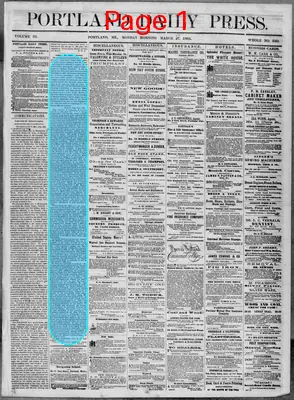
Story
March 28, 1864
The Portland Daily Press
Portland, Cumberland County, Maine
What is this article about?
John Quincy Adams' 1837 letter to Rev. Dr. Channing reveals the secret 1822 origins of the Monroe Doctrine, stemming from a British proposal to jointly protect Cuba from French or other European seizure, amid fears of insurrection and rival claims.
Clipping

OCR Quality
95%
Excellent
Full Text
Origin of the Monroe Doctrine.
The Providence Journal some months since printed a letter never before made public, from John Quincy Adams, to Rev. Dr. Channing, in which is contained a curious bit of secret history showing the origin of what is called the 'Monroe Doctrine.' It will be seen by this letter that under the most trying circumstances and the severest temptations, the American government acted with the most sincere faith toward a friendly power—Spain—and with the most open and frank courtesy towards the two other powers, who were at the time our rivals for Cuba. It will be seen too that the arguments against European intervention in American affairs, which afterwards took shape and was formally announced as a policy by Mr. Monroe, in one of his annual messages—whence the name of 'Monroe doctrine,' had its origin in a suggestion or proposition made by the British government to our own; so that Englishmen can claim the credit of originating the celebrated 'Monroe doctrine.'
Quincy, Aug. 11th, 1837
'Rev. William E. Channing, D. D. Newport R. I.:—My Dear Sir: * * *
It was in September, 1822, that the events to which I alluded in my speech in the house of representatives of the 25th of May, 1863, took place. It was the time when the Spanish government of the Cortes was overthrown by the French invasion under the Duke D'Angouleme. Great Britain became alarmed lest under the shelter of that revolution the Island of Cuba should pass into the possession of France. The French government fabricated or was imposed upon by a report that the British cabinet had determined to send a squadron and take possession of the Island. The people of Havana, divided into parties between the Cortes and the King, were terrified by the premonitory symptoms of negro insurrection and looking round for protection. There was a party for resorting to Great Britain, a party for adhering to Spain, and a party for seeking admission to the North American Union—the last of which was the strongest. A proposition was then made to a secret agent from them to Mr. Monroe to this effect—that they by a popular movement, of the success of which they had no doubt, would declare the Island independent of Spain, if the government of the United States would promise them protection and admit them into their Union under a State Constitution, on the model of those of our southern states, and with the understanding that as the population of the Island should increase they should be at liberty to divide themselves into two states, and have that proportion of representation in the Congress of the United States. As the inducement to the American government to pledge their protection, they were assured that the alternative would probably be the prevalence of the party in the Island for the colonial connection with Great Britain, and a resort to her for protection. While this proposition was under the consideration of Mr. Monroe and his cabinet, the French minister at Washington, by a verbal, irresponsible communication, not to the secretary of state, the only medium of official intercourse between foreign ministers and the government of the United States, but to Mr. Crawford, the secretary of the treasury, asserted that the French Government had secret but positive information that the British government had deliberately determined to take possession of Cuba.
The answer of Mr. Monroe to the proposition from the Havana was that the friendly relations existing between the United States and Spain did not permit them to promise countenance or protection to any insurrectionary movement against her authority. Their advice to the people of Cuba was to adhere as long as possible to their allegiance to Spain—that an attempt of either Great Britain or France to occupy the island would present the proposal from Havana under a different point of view, concerning which the president was not authorized to pledge prospectively the action of the United States, but that the people of the Havana might be assured of the deep interest which, under all the circumstances which might occur, the American government would take in their welfare and their wishes.
'It was the opinion of at least one member of Mr. Monroe's administration that the occupation of the island of Cuba by Great Britain should be resisted even at the cost of war. Their unanimous opinion was that a very explicit though confidential communication should be made to Mr. Canning that the United States could not see with indifference the occupation of Cuba by any European power other than Spain, and that rumors had reached the American government that such an intention was entertained by the British cabinet, which made it necessary to ask an explanation of their views. Mr. Rush was instructed accordingly: Mr. Canning disavowed emphatically all intention on the part of Great Britain to take possession of the island; but avowed her intention not to see with indifference its occupation, either by France or by the United States, and he told Mr. Rush of the squadron dispatched by King Louis XVIII. to the West Indies without notifying him of the expedition, and of the schooling he had ordered the British ambassador at Paris to give the French cabinet for that sin of omission. Mr. Canning then proposed that, by a mutual understanding between the British French, and American governments, without any formal treaty or convention, Cuba should be left in the quiet possession of Spain, without interference in the government of the island. This was precisely the policy which Mr. Monroe believed to be best adapted to the interest and the duties of the United States. and he cheerfully assented to it. There was no further communication between him and the French government on the subject. So far as France was concerned, the arrangement was left to be concerted between her and Great Britain. The people of the island of Cuba submitted to the government of Ferdinand, restored by the Duke d'Angouleme, and received a viceroy and captain general in the person of General Vives, 'who had been minister from Spain to the United States; one of the most upright and honorable men with whom it has ever been my fortune to hold political relations. He was precisely the man to tranquilize and conciliate the submission of the people of the island to their old government, and he so effectually accomplished that purpose that the government of the United States heard nothing further of intended resurrection in Cuba during the remainder of Mr. Monroe's administration and the whole of mine.
'All these transactions were at the time profoundly secret.
I am, of course, your unalterable friend,
J. Q. ADAMS.'
The Providence Journal some months since printed a letter never before made public, from John Quincy Adams, to Rev. Dr. Channing, in which is contained a curious bit of secret history showing the origin of what is called the 'Monroe Doctrine.' It will be seen by this letter that under the most trying circumstances and the severest temptations, the American government acted with the most sincere faith toward a friendly power—Spain—and with the most open and frank courtesy towards the two other powers, who were at the time our rivals for Cuba. It will be seen too that the arguments against European intervention in American affairs, which afterwards took shape and was formally announced as a policy by Mr. Monroe, in one of his annual messages—whence the name of 'Monroe doctrine,' had its origin in a suggestion or proposition made by the British government to our own; so that Englishmen can claim the credit of originating the celebrated 'Monroe doctrine.'
Quincy, Aug. 11th, 1837
'Rev. William E. Channing, D. D. Newport R. I.:—My Dear Sir: * * *
It was in September, 1822, that the events to which I alluded in my speech in the house of representatives of the 25th of May, 1863, took place. It was the time when the Spanish government of the Cortes was overthrown by the French invasion under the Duke D'Angouleme. Great Britain became alarmed lest under the shelter of that revolution the Island of Cuba should pass into the possession of France. The French government fabricated or was imposed upon by a report that the British cabinet had determined to send a squadron and take possession of the Island. The people of Havana, divided into parties between the Cortes and the King, were terrified by the premonitory symptoms of negro insurrection and looking round for protection. There was a party for resorting to Great Britain, a party for adhering to Spain, and a party for seeking admission to the North American Union—the last of which was the strongest. A proposition was then made to a secret agent from them to Mr. Monroe to this effect—that they by a popular movement, of the success of which they had no doubt, would declare the Island independent of Spain, if the government of the United States would promise them protection and admit them into their Union under a State Constitution, on the model of those of our southern states, and with the understanding that as the population of the Island should increase they should be at liberty to divide themselves into two states, and have that proportion of representation in the Congress of the United States. As the inducement to the American government to pledge their protection, they were assured that the alternative would probably be the prevalence of the party in the Island for the colonial connection with Great Britain, and a resort to her for protection. While this proposition was under the consideration of Mr. Monroe and his cabinet, the French minister at Washington, by a verbal, irresponsible communication, not to the secretary of state, the only medium of official intercourse between foreign ministers and the government of the United States, but to Mr. Crawford, the secretary of the treasury, asserted that the French Government had secret but positive information that the British government had deliberately determined to take possession of Cuba.
The answer of Mr. Monroe to the proposition from the Havana was that the friendly relations existing between the United States and Spain did not permit them to promise countenance or protection to any insurrectionary movement against her authority. Their advice to the people of Cuba was to adhere as long as possible to their allegiance to Spain—that an attempt of either Great Britain or France to occupy the island would present the proposal from Havana under a different point of view, concerning which the president was not authorized to pledge prospectively the action of the United States, but that the people of the Havana might be assured of the deep interest which, under all the circumstances which might occur, the American government would take in their welfare and their wishes.
'It was the opinion of at least one member of Mr. Monroe's administration that the occupation of the island of Cuba by Great Britain should be resisted even at the cost of war. Their unanimous opinion was that a very explicit though confidential communication should be made to Mr. Canning that the United States could not see with indifference the occupation of Cuba by any European power other than Spain, and that rumors had reached the American government that such an intention was entertained by the British cabinet, which made it necessary to ask an explanation of their views. Mr. Rush was instructed accordingly: Mr. Canning disavowed emphatically all intention on the part of Great Britain to take possession of the island; but avowed her intention not to see with indifference its occupation, either by France or by the United States, and he told Mr. Rush of the squadron dispatched by King Louis XVIII. to the West Indies without notifying him of the expedition, and of the schooling he had ordered the British ambassador at Paris to give the French cabinet for that sin of omission. Mr. Canning then proposed that, by a mutual understanding between the British French, and American governments, without any formal treaty or convention, Cuba should be left in the quiet possession of Spain, without interference in the government of the island. This was precisely the policy which Mr. Monroe believed to be best adapted to the interest and the duties of the United States. and he cheerfully assented to it. There was no further communication between him and the French government on the subject. So far as France was concerned, the arrangement was left to be concerted between her and Great Britain. The people of the island of Cuba submitted to the government of Ferdinand, restored by the Duke d'Angouleme, and received a viceroy and captain general in the person of General Vives, 'who had been minister from Spain to the United States; one of the most upright and honorable men with whom it has ever been my fortune to hold political relations. He was precisely the man to tranquilize and conciliate the submission of the people of the island to their old government, and he so effectually accomplished that purpose that the government of the United States heard nothing further of intended resurrection in Cuba during the remainder of Mr. Monroe's administration and the whole of mine.
'All these transactions were at the time profoundly secret.
I am, of course, your unalterable friend,
J. Q. ADAMS.'
What sub-type of article is it?
Historical Event
Biography
What themes does it cover?
Justice
Moral Virtue
What keywords are associated?
Monroe Doctrine
Cuba Crisis
British Proposal
Spanish Colony
Diplomatic Secret
Us Foreign Policy
What entities or persons were involved?
John Quincy Adams
James Monroe
George Canning
William E. Channing
Duke D'angouleme
Mr. Crawford
Mr. Rush
General Vives
Where did it happen?
Cuba, United States, Havana
Story Details
Key Persons
John Quincy Adams
James Monroe
George Canning
William E. Channing
Duke D'angouleme
Mr. Crawford
Mr. Rush
General Vives
Location
Cuba, United States, Havana
Event Date
September 1822
Story Details
In 1822, amid Spanish political upheaval and fears of French seizure of Cuba, locals proposed independence and U.S. union; Monroe rejected it to honor Spain. Diplomatic exchanges with Britain led to a mutual understanding to leave Cuba with Spain, forming the basis of the Monroe Doctrine.