Thank you for visiting SNEWPapers!
Sign up free
Poem
August 6, 1827
Phenix Gazette
Alexandria, Virginia
What is this article about?
Elegy mourning the death of Rev. Dr. William H. Wilmer, late rector of St. Paul's Church in Alexandria, D.C. It praises his virtuous life, religious preaching against sin, and offers Christian consolation, emphasizing hope beyond death and his lasting legacy.
Clipping
OCR Quality
95%
Excellent
Full Text
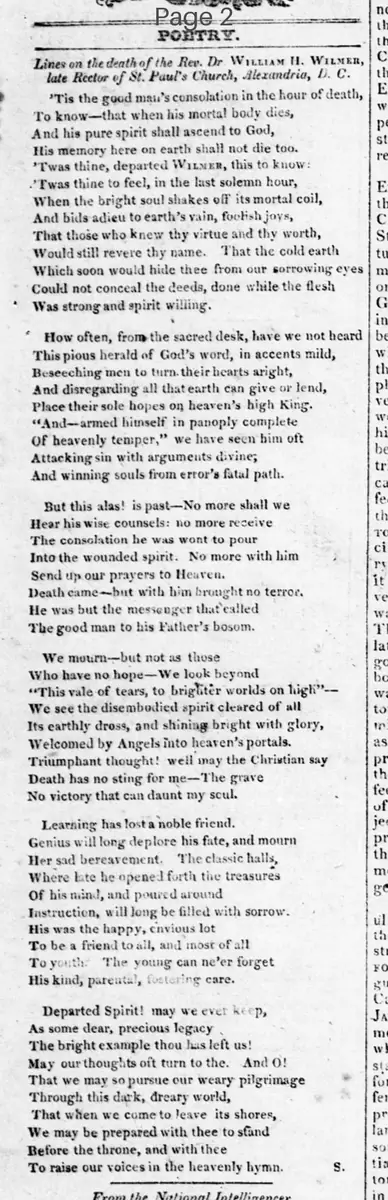
POETRY.
Lines on the death of the Rev. Dr William H. Wilmer,
late Rector of St. Paul's Church, Alexandria, D. C.
Tis the good man's consolation in the hour of death,
To know—that when his mortal body dies,
And his pure spirit shall ascend to God,
His memory here on earth shall not die too.
'Twas thine, departed Wilmer, this to know:
'Twas thine to feel, in the last solemn hour,
When the bright soul shakes off its mortal coil,
And bids adieu to earth's vain, foolish joys,
That those who knew thy virtue and thy worth.
Would still revere thy name. That the cold earth
Which soon would hide thee from our sorrowing eyes
Could not conceal the deeds, done while the flesh
Was strong and spirit willing
How often, from the sacred desk, have we not heard
This pious herald of God's word, in accents mild,
Beseeching men to turn their hearts aright,
And disregarding all that earth can give or lend,
Place their sole hopes on heaven's high King.
"And—armed himself in panoply complete
Of heavenly temper," we have seen him oft
Attacking sin with arguments divine;
And winning souls from error's fatal path.
But this alas! is past—No more shall we
Hear his wise counsels: no more receive
The consolation he was wont to pour
Into the wounded spirit. No more with him
Send up our prayers to Heaven.
Death came—but with him brought no terror.
He was but the messenger that called
The good man to his Father's bosom.
We mourn—but not as those
Who have no hope—We look beyond
"This vale of tears, to brighter worlds on high"
We see the disembodied spirit cleared of all
Its earthly dross, and shining bright with glory,
Welcomed by Angels into heaven's portals.
Triumphant thought! well may the Christian say
Death has no sting for me—The grave
No victory that can daunt my soul.
Learning has lost a noble friend.
Genius will long deplore his fate, and mourn
Her sad bereavement. The classic halls,
Where late he opened forth the treasures
Of his mind, and poured around
Instruction, will long be filled with sorrow.
His was the happy, envious lot
To be a friend to all, and most of all
To youth. The young can ne'er forget
His kind, parental, fostering care.
Departed Spirit! may we ever keep,
As some dear, precious legacy
The bright example thou hast left us!
May our thoughts oft turn to thee. And O!
That we may so pursue our weary pilgrimage
Through this dark, dreary world,
That when we come to leave its shores,
We may be prepared with thee to stand
Before the throne, and with thee
To raise our voices in the heavenly hymn.
s.
Lines on the death of the Rev. Dr William H. Wilmer,
late Rector of St. Paul's Church, Alexandria, D. C.
Tis the good man's consolation in the hour of death,
To know—that when his mortal body dies,
And his pure spirit shall ascend to God,
His memory here on earth shall not die too.
'Twas thine, departed Wilmer, this to know:
'Twas thine to feel, in the last solemn hour,
When the bright soul shakes off its mortal coil,
And bids adieu to earth's vain, foolish joys,
That those who knew thy virtue and thy worth.
Would still revere thy name. That the cold earth
Which soon would hide thee from our sorrowing eyes
Could not conceal the deeds, done while the flesh
Was strong and spirit willing
How often, from the sacred desk, have we not heard
This pious herald of God's word, in accents mild,
Beseeching men to turn their hearts aright,
And disregarding all that earth can give or lend,
Place their sole hopes on heaven's high King.
"And—armed himself in panoply complete
Of heavenly temper," we have seen him oft
Attacking sin with arguments divine;
And winning souls from error's fatal path.
But this alas! is past—No more shall we
Hear his wise counsels: no more receive
The consolation he was wont to pour
Into the wounded spirit. No more with him
Send up our prayers to Heaven.
Death came—but with him brought no terror.
He was but the messenger that called
The good man to his Father's bosom.
We mourn—but not as those
Who have no hope—We look beyond
"This vale of tears, to brighter worlds on high"
We see the disembodied spirit cleared of all
Its earthly dross, and shining bright with glory,
Welcomed by Angels into heaven's portals.
Triumphant thought! well may the Christian say
Death has no sting for me—The grave
No victory that can daunt my soul.
Learning has lost a noble friend.
Genius will long deplore his fate, and mourn
Her sad bereavement. The classic halls,
Where late he opened forth the treasures
Of his mind, and poured around
Instruction, will long be filled with sorrow.
His was the happy, envious lot
To be a friend to all, and most of all
To youth. The young can ne'er forget
His kind, parental, fostering care.
Departed Spirit! may we ever keep,
As some dear, precious legacy
The bright example thou hast left us!
May our thoughts oft turn to thee. And O!
That we may so pursue our weary pilgrimage
Through this dark, dreary world,
That when we come to leave its shores,
We may be prepared with thee to stand
Before the throne, and with thee
To raise our voices in the heavenly hymn.
s.
What sub-type of article is it?
Elegy
What themes does it cover?
Death Mourning
Religious Faith
Moral Virtue
What keywords are associated?
Elegy Wilmer
Rev Dr Wilmer
Death Mourning
St Pauls Church
Alexandria Dc
Religious Piety
Christian Hope
Moral Example
What entities or persons were involved?
S.
Poem Details
Title
Lines On The Death Of The Rev. Dr William H. Wilmer, Late Rector Of St. Paul's Church, Alexandria, D. C.
Author
S.
Subject
On The Death Of The Rev. Dr William H. Wilmer
Form / Style
Rhymed Couplets
Key Lines
Tis The Good Man's Consolation In The Hour Of Death, To Know—That When His Mortal Body Dies, And His Pure Spirit Shall Ascend To God, His Memory Here On Earth Shall Not Die Too.
We Mourn—But Not As Those Who Have No Hope—We Look Beyond "This Vale Of Tears, To Brighter Worlds On High"
Triumphant Thought! Well May The Christian Say Death Has No Sting For Me—The Grave No Victory That Can Daunt My Soul.
Learning Has Lost A Noble Friend. Genius Will Long Deplore His Fate, And Mourn Her Sad Bereavement.
Departed Spirit! May We Ever Keep, As Some Dear, Precious Legacy The Bright Example Thou Hast Left Us!