Thank you for visiting SNEWPapers!
Sign up free
Literary
October 12, 1819
The Rhode Island American, And General Advertiser
Providence, Providence County, Rhode Island
What is this article about?
This continued essay from 'A Star in the West' defends Native American character against the 'savage' label, quoting Dupratz on their reason and hospitality, and Bartram on Seminole contentment and virtues, critiquing white influences and encroachments.
Clipping
OCR Quality
98%
Excellent
Full Text
FROM "A STAR IN THE WEST."
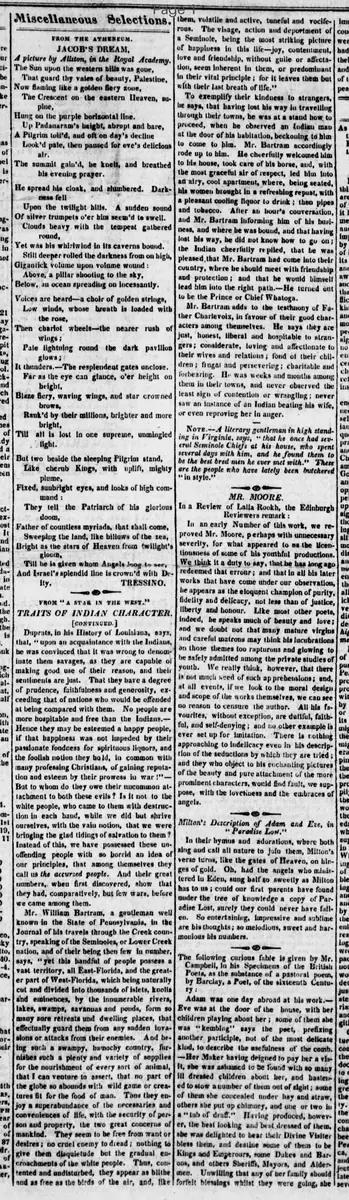
TRAITS OF INDIAN CHARACTER
[CONTINUED.]
Dupratz, in his History of Louisiana, says, that, "upon an acquaintance with the Indians, he was convinced that it was wrong to denominate them savages, as they are capable of making good use of their reason, and their sentiments are just. That they have a degree of prudence, faithfulness and generosity, exceeding that of nations who would be offended at being compared with them. No people are more hospitable and free than the Indians.--Hence they may be esteemed a happy people, if that happiness was not impeded by their passionate fondness for spirituous liquors, and the foolish notion they hold, in common with many professing Christians, of gaining reputation and esteem by their prowess in war!"--But to whom do they owe their uncommon attachment to both these evils? Is it not to the white people, who came to them with destruction in each hand, while we did but shrive ourselves, with the vain notion, that we were bringing the glad tidings of salvation to them? Instead of this, we have possessed these unoffending people with so horrid an idea of our principles, that among themselves they call us the accursed people. And their great numbers, when first discovered, show that they had, comparatively, but few wars, before we came among them.
Mr. William Bartram, a gentleman well known in the State of Pennsylvania, in the Journal of his travels through the Creek country, speaking of the Seminoles, or Lower Creek nation, and of their being then few in number, says, "yet this handful of people possess a vast territory, all East-Florida, and the greater part of West-Florida, which being naturally cut and divided into thousands of islets, knolls and eminences, by the innumerable rivers, lakes, swamps, savannas and ponds, form so many sure retreats and dwelling places, that effectually guard them from any sudden invasions or attacks from their enemies. And being such a swampy, hammocky country, furnishes such a plenty and variety of supplies for the nourishment of every sort of animal, that I can venture to assert, that no part of the globe so abounds with wild game or creatures fit for the food of man. Thus they enjoy a superabundance of the necessaries and conveniences of life, with the security of person and property, the two great concerns of mankind. They seem to be free from want or desires; no cruel enemy to dread; nothing to give them disquietude but the gradual encroachments of the white people. Thus, contented and undisturbed, they appear as blithe and as free as the birds of the air, and, like them, volatile and active, tuneful and vociferous. The visage, action and deportment of a Seminole, being the most striking picture of happiness in this life--joy, contentment, love and friendship, without guile or affectation, seem inherent in them, or predominant in their vital principle; for it leaves them but with their last breath of life."
To exemplify their kindness to strangers, he says, that having lost his way in travelling through their towns, he was at a stand how to proceed, when he observed an Indian man at the door of his habitation, beckoning to him to come to him. Mr. Bartram accordingly rode up to him. He cheerfully welcomed him to his house, took care of his horse, and, with the most graceful air of respect, led him into an airy, cool apartment, where, being seated, his women brought in a refreshing repast, with a pleasant cooling liquor to drink; then pipes and tobacco. After an hour's conversation, and Mr. Bartram informing him of his business, and where he was bound, and that having lost his way, he did not know how to go on; the Indian cheerfully replied, that he was pleased, that Mr. Bartram had come into their country, where he should meet with friendship and protection; and that he would himself lead him into the right path.--He turned out to be the Prince or Chief Whatoga.
Mr. Bartram adds to the testimony of Father Charlevoix, in favour of their good characters among themselves. He says they are just, honest, liberal and hospitable to strangers; considerate, loving and affectionate to their wives and relations; fond of their children; frugal and persevering; charitable and forbearing. He was weeks and months among them in their towns, and never observed the least sign of contention or wrangling; never saw an instance of an Indian beating his wife, or even reproving her in anger.
Note.--A literary gentleman in high standing in Virginia, says, "that he once had several Seminole Chiefs at his house, who spent several days with him, and he found them to be the best bred men he ever met with." These are the people who have lately been butchered "in style."
TRAITS OF INDIAN CHARACTER
[CONTINUED.]
Dupratz, in his History of Louisiana, says, that, "upon an acquaintance with the Indians, he was convinced that it was wrong to denominate them savages, as they are capable of making good use of their reason, and their sentiments are just. That they have a degree of prudence, faithfulness and generosity, exceeding that of nations who would be offended at being compared with them. No people are more hospitable and free than the Indians.--Hence they may be esteemed a happy people, if that happiness was not impeded by their passionate fondness for spirituous liquors, and the foolish notion they hold, in common with many professing Christians, of gaining reputation and esteem by their prowess in war!"--But to whom do they owe their uncommon attachment to both these evils? Is it not to the white people, who came to them with destruction in each hand, while we did but shrive ourselves, with the vain notion, that we were bringing the glad tidings of salvation to them? Instead of this, we have possessed these unoffending people with so horrid an idea of our principles, that among themselves they call us the accursed people. And their great numbers, when first discovered, show that they had, comparatively, but few wars, before we came among them.
Mr. William Bartram, a gentleman well known in the State of Pennsylvania, in the Journal of his travels through the Creek country, speaking of the Seminoles, or Lower Creek nation, and of their being then few in number, says, "yet this handful of people possess a vast territory, all East-Florida, and the greater part of West-Florida, which being naturally cut and divided into thousands of islets, knolls and eminences, by the innumerable rivers, lakes, swamps, savannas and ponds, form so many sure retreats and dwelling places, that effectually guard them from any sudden invasions or attacks from their enemies. And being such a swampy, hammocky country, furnishes such a plenty and variety of supplies for the nourishment of every sort of animal, that I can venture to assert, that no part of the globe so abounds with wild game or creatures fit for the food of man. Thus they enjoy a superabundance of the necessaries and conveniences of life, with the security of person and property, the two great concerns of mankind. They seem to be free from want or desires; no cruel enemy to dread; nothing to give them disquietude but the gradual encroachments of the white people. Thus, contented and undisturbed, they appear as blithe and as free as the birds of the air, and, like them, volatile and active, tuneful and vociferous. The visage, action and deportment of a Seminole, being the most striking picture of happiness in this life--joy, contentment, love and friendship, without guile or affectation, seem inherent in them, or predominant in their vital principle; for it leaves them but with their last breath of life."
To exemplify their kindness to strangers, he says, that having lost his way in travelling through their towns, he was at a stand how to proceed, when he observed an Indian man at the door of his habitation, beckoning to him to come to him. Mr. Bartram accordingly rode up to him. He cheerfully welcomed him to his house, took care of his horse, and, with the most graceful air of respect, led him into an airy, cool apartment, where, being seated, his women brought in a refreshing repast, with a pleasant cooling liquor to drink; then pipes and tobacco. After an hour's conversation, and Mr. Bartram informing him of his business, and where he was bound, and that having lost his way, he did not know how to go on; the Indian cheerfully replied, that he was pleased, that Mr. Bartram had come into their country, where he should meet with friendship and protection; and that he would himself lead him into the right path.--He turned out to be the Prince or Chief Whatoga.
Mr. Bartram adds to the testimony of Father Charlevoix, in favour of their good characters among themselves. He says they are just, honest, liberal and hospitable to strangers; considerate, loving and affectionate to their wives and relations; fond of their children; frugal and persevering; charitable and forbearing. He was weeks and months among them in their towns, and never observed the least sign of contention or wrangling; never saw an instance of an Indian beating his wife, or even reproving her in anger.
Note.--A literary gentleman in high standing in Virginia, says, "that he once had several Seminole Chiefs at his house, who spent several days with him, and he found them to be the best bred men he ever met with." These are the people who have lately been butchered "in style."
What sub-type of article is it?
Essay
What themes does it cover?
Political
Moral Virtue
Social Manners
What keywords are associated?
Indian Character
Seminoles
Hospitality
White Encroachment
Native Virtues
Creek Nation
Literary Details
Title
Traits Of Indian Character [Continued.]
Subject
Traits Of Indian Character, With Quotations From Dupratz And Bartram
Form / Style
Prose Essay With Embedded Quotations And Narrative Anecdote
Key Lines
Upon An Acquaintance With The Indians, He Was Convinced That It Was Wrong To Denominate Them Savages, As They Are Capable Of Making Good Use Of Their Reason, And Their Sentiments Are Just.
The Visage, Action And Deportment Of A Seminole, Being The Most Striking Picture Of Happiness In This Life Joy, Contentment, Love And Friendship, Without Guile Or Affectation, Seem Inherent In Them, Or Predominant In Their Vital Principle; For It Leaves Them But With Their Last Breath Of Life.
They Are Just, Honest, Liberal And Hospitable To Strangers; Considerate, Loving And Affectionate To Their Wives And Relations; Fond Of Their Children; Frugal And Persevering; Charitable And Forbearing.