Thank you for visiting SNEWPapers!
Sign up free
The Newark Journal
Newark, Independence County, Arkansas
What is this article about?
Article by J. H. McLeod, Livestock Specialist at University of Arkansas, emphasizes proper feed, care, and management for brood mares to boost foaling success from 60%. Lists 8 key practices including moderate work, loose bowels via bran or greens, no cotton seed meal, fresh water, pasture access, and foaling in pasture to prevent navel disease.
Clipping
OCR Quality
Full Text
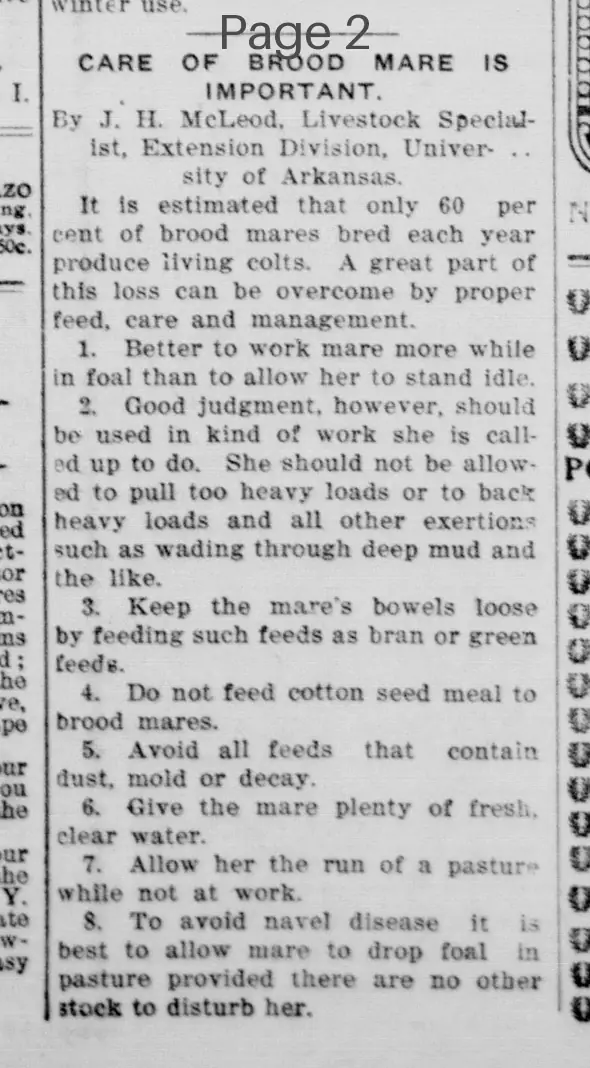
By J. H. McLeod. Livestock Specialist, Extension Division, University of Arkansas.
It is estimated that only 60 per cent of brood mares bred each year produce living colts. A great part of this loss can be overcome by proper feed, care and management.
1. Better to work mare more while in foal than to allow her to stand idle.
2. Good judgment, however, should be used in kind of work she is called up to do. She should not be allowed to pull too heavy loads or to back heavy loads and all other exertions such as wading through deep mud and the like.
3. Keep the mare's bowels loose by feeding such feeds as bran or green feeds.
4. Do not feed cotton seed meal to brood mares.
5. Avoid all feeds that contain dust, mold or decay.
6. Give the mare plenty of fresh, clear water.
7. Allow her the run of a pasture while not at work.
8. To avoid navel disease it is best to allow mare to drop foal in pasture provided there are no other stock to disturb her.
What sub-type of article is it?
What keywords are associated?
What entities or persons were involved?
Story Details
Key Persons
Story Details
Estimates only 60% of brood mares produce living colts annually; much loss preventable via proper feed, care, management. Advises moderate work without heavy exertion, loose bowels with bran/green feeds, no cotton seed meal, avoid dusty/moldy feeds, ample fresh water, pasture access when not working, foaling in undisturbed pasture to prevent navel disease.