Thank you for visiting SNEWPapers!
Sign up free
Literary
May 15, 1834
Virginia Free Press
Charles Town, Jefferson County, West Virginia
What is this article about?
Extract from Allan Cunningham's biography of Robert Burns detailing the maidens of Kyle who inspired his love songs, including Tibbie, Peggy, Nannie, Highland Mary (a dairy-maid), Mary Morrison, Elise, and Jean Armour, mostly peasant daughters met at social events.
Clipping
OCR Quality
92%
Excellent
Full Text
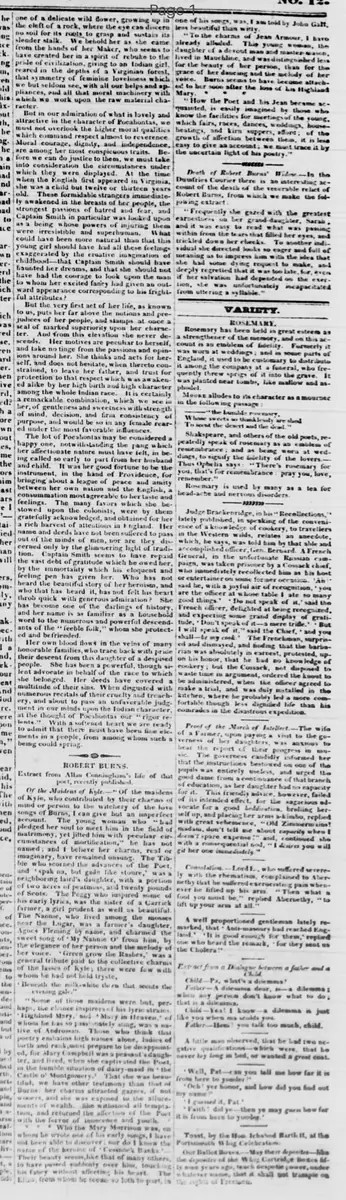
ROBERT BURNS,
Extract from Allan Cunningham's Life of that
poet, recently published.
Of the Maidens of Kyle.—"Of the maidens
of Kyle, who contributed by their charms of
mind or person to the witchery of the love
songs of Burns, I can give but an imperfect
account. The young woman who "had
pledged her soul to meet him in the field of
matrimony, yet jilted him with peculiar cir-
cumstances of mortification," he has not
named; and I believe her charms, real or
imaginary, have remained unsung. The Tib-
bie who scorned the advances of the Poet,
and 'spak na, but gade like stoure,' was a
neighboring laird's daughter, with a portion
of two acres of peat moss, and twenty pounds
of Scots. The Peggy who inspired some of
his early lyrics, was the sister of a Carrick
farmer, a girl prudent as well as beautiful.
The Nannie, who lived among the mosses
near the Logan, was a farmer's daughter,
Agnes Fleming by name, and charmed the
sweet song of My Nannie O' from him, by
the elegance of her person and the melody of
her voice. Green grow the Rashes,' was a
general tribute paid to the collective charms
of the lasses of Kyle; there were few with
whom he had not held tryste,
beneath the milk-white thorn that scents the
evening gale."
"Some of those maidens were but, per-
haps, the chance inspirers of his lyric strains
'Highland Mary,' and Mary in Heaven,' of
whom he has so passionately sung, was a na-
tive of Ayr. Those who think that
poetry embalms high names alone, ladies of
birth and rank, must prepare to be disappointed,
for Mary Campbell was a peasant's daugh-
ter, and lived, when she captivated the Poet
in the humble situation of dairy-maid in the
Castle O' Montgomery,' That she was beau-
tiful, we have other testimony than that of
Burns her charms attracted gazers, if not
wooers, and she was exposed to the allure-
ments of wealth. She withstood all tempta-
tion, and returned the affection of the Poet
with the fervor of innocence and truth.
•Who the Mary Morrison was, on
whom he wrote one of his early songs, I have
not been able to discover, nor do I know the
name of the heroine of 'Duncan Gray.'
Their beauty seems, like that of many others,
to have passed suddenly over him, touching
his fancy without affecting his heart. The
Elise, from whom he was so loth to part, is
one of his songs, was, I am told by John Gate,
less beautiful than witty.
"To the charms of Jean Armour, I have
already alluded. That young woman, the
daughter of a devout man and master-mason,
lived in Mauchline, and was distinguished less
for the beauty of her person, than for the
grace of her dancing and the melody of her
voice. Burns seems to have become attached
to her soon after the loss of his Highland
Mary.
"How the Poet and his Jean became ac-
quainted, is easily imagined by those who
know the facilities for meetings of the young,
which fairs, races, dances, weddings, house-
heatings, and kirn suppers, afford; of the
growth of affection between them, it is less
easy to give an account; we must trace it by
the uncertain light of his poetry."
Extract from Allan Cunningham's Life of that
poet, recently published.
Of the Maidens of Kyle.—"Of the maidens
of Kyle, who contributed by their charms of
mind or person to the witchery of the love
songs of Burns, I can give but an imperfect
account. The young woman who "had
pledged her soul to meet him in the field of
matrimony, yet jilted him with peculiar cir-
cumstances of mortification," he has not
named; and I believe her charms, real or
imaginary, have remained unsung. The Tib-
bie who scorned the advances of the Poet,
and 'spak na, but gade like stoure,' was a
neighboring laird's daughter, with a portion
of two acres of peat moss, and twenty pounds
of Scots. The Peggy who inspired some of
his early lyrics, was the sister of a Carrick
farmer, a girl prudent as well as beautiful.
The Nannie, who lived among the mosses
near the Logan, was a farmer's daughter,
Agnes Fleming by name, and charmed the
sweet song of My Nannie O' from him, by
the elegance of her person and the melody of
her voice. Green grow the Rashes,' was a
general tribute paid to the collective charms
of the lasses of Kyle; there were few with
whom he had not held tryste,
beneath the milk-white thorn that scents the
evening gale."
"Some of those maidens were but, per-
haps, the chance inspirers of his lyric strains
'Highland Mary,' and Mary in Heaven,' of
whom he has so passionately sung, was a na-
tive of Ayr. Those who think that
poetry embalms high names alone, ladies of
birth and rank, must prepare to be disappointed,
for Mary Campbell was a peasant's daugh-
ter, and lived, when she captivated the Poet
in the humble situation of dairy-maid in the
Castle O' Montgomery,' That she was beau-
tiful, we have other testimony than that of
Burns her charms attracted gazers, if not
wooers, and she was exposed to the allure-
ments of wealth. She withstood all tempta-
tion, and returned the affection of the Poet
with the fervor of innocence and truth.
•Who the Mary Morrison was, on
whom he wrote one of his early songs, I have
not been able to discover, nor do I know the
name of the heroine of 'Duncan Gray.'
Their beauty seems, like that of many others,
to have passed suddenly over him, touching
his fancy without affecting his heart. The
Elise, from whom he was so loth to part, is
one of his songs, was, I am told by John Gate,
less beautiful than witty.
"To the charms of Jean Armour, I have
already alluded. That young woman, the
daughter of a devout man and master-mason,
lived in Mauchline, and was distinguished less
for the beauty of her person, than for the
grace of her dancing and the melody of her
voice. Burns seems to have become attached
to her soon after the loss of his Highland
Mary.
"How the Poet and his Jean became ac-
quainted, is easily imagined by those who
know the facilities for meetings of the young,
which fairs, races, dances, weddings, house-
heatings, and kirn suppers, afford; of the
growth of affection between them, it is less
easy to give an account; we must trace it by
the uncertain light of his poetry."
What sub-type of article is it?
Essay
What themes does it cover?
Love Romance
What keywords are associated?
Robert Burns
Maidens Of Kyle
Highland Mary
Jean Armour
Love Songs
Scottish Poets
Biographical Extract
What entities or persons were involved?
Allan Cunningham
Literary Details
Title
Of The Maidens Of Kyle
Author
Allan Cunningham
Subject
Inspirations For Burns' Love Songs From Maidens Of Kyle
Form / Style
Biographical Prose Excerpt
Key Lines
The Tibbie Who Scorned The Advances Of The Poet, And 'Spak Na, But Gade Like Stoure,' Was A Neighboring Laird's Daughter, With A Portion Of Two Acres Of Peat Moss, And Twenty Pounds Of Scots.
Green Grow The Rashes,' Was A General Tribute Paid To The Collective Charms Of The Lasses Of Kyle; There Were Few With Whom He Had Not Held Tryste, Beneath The Milk White Thorn That Scents The Evening Gale.
Mary Campbell Was A Peasant's Daughter, And Lived, When She Captivated The Poet In The Humble Situation Of Dairy Maid In The Castle O' Montgomery.'
Burns Seems To Have Become Attached To Her Soon After The Loss Of His Highland Mary.
How The Poet And His Jean Became Acquainted, Is Easily Imagined By Those Who Know The Facilities For Meetings Of The Young, Which Fairs, Races, Dances, Weddings, House Heatins, And Kirn Suppers, Afford