Thank you for visiting SNEWPapers!
Sign up free
Story
September 15, 1873
Elizabeth Daily Monitor
Elizabeth, Union County, New Jersey
What is this article about?
William M. Tweed, the infamous New York politician known as 'Boss' Tweed, briefly visited Cincinnati's Burnet House, arriving from New York and departing for Chicago. Accompanied by S.F. Dewey, he was interviewed by a reporter, discussing his legal troubles, resentment toward New York editors, and positive impressions of the city.
Clipping
OCR Quality
98%
Excellent
Full Text
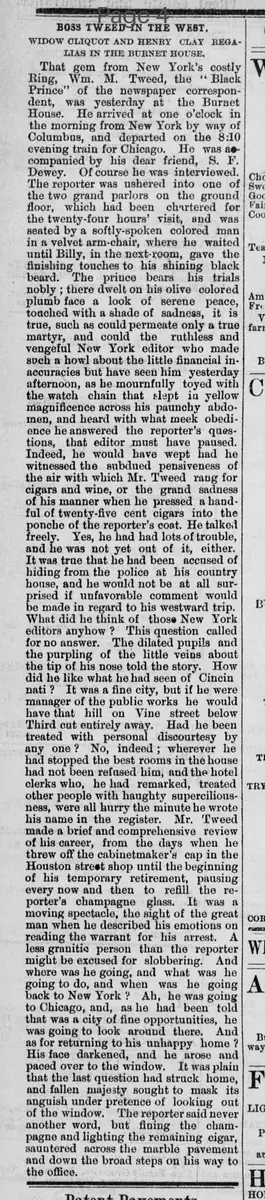
BOSS TWEED IN THE WEST.
WIDOW CLIQUOT AND HENRY CLAY REGALIAS IN THE BURNET HOUSE.
That gem from New York's costly Ring, Wm. M. Tweed, the "Black Prince" of the newspaper correspondent, was yesterday at the Burnet House. He arrived at one o'clock in the morning from New York by way of Columbus, and departed on the 8:10 evening train for Chicago. He was accompanied by his dear friend, S. F. Dewey. Of course he was interviewed. The reporter was ushered into one of the two grand parlors on the ground floor, which had been chartered for the twenty-four hours' visit, and was seated by a softly-spoken colored man in a velvet arm-chair, where he waited until Billy, in the next-room, gave the finishing touches to his shining black beard. The prince bears his trials nobly: there dwelt on his olive colored plumb face a look of serene peace, touched with a shade of sadness. it is true, such as could permeate only a true martyr, and could the ruthless and vengeful New York editor who made such a howl about the little financial inaccuracies but have seen him yesterday afternoon, as he mournfully toyed with the watch chain that slept in yellow magnificence across his paunchy abdomen, and heard with what meek obedience he answered the reporter's questions, that editor must have paused. Indeed, he would have wept had he witnessed the subdued pensiveness of the air with which Mr. Tweed rang for cigars and wine, or the grand sadness of his manner when he pressed a handful of twenty-five cent cigars into the pocket of the reporter's coat. He talked freely. Yes, he had had lots of trouble, and he was not yet out of it, either. It was true that he had been accused of hiding from the police at his country house, and he would not be at all surprised if unfavorable comment would be made in regard to his westward trip. What did he think of those New York editors anyhow? This question called for no answer. The dilated pupils and the purpling of the little veins about the tip of his nose told the story. How did he like what he had seen of Cincinnati? It was a fine city, but if he were manager of the public works he would have that hill on Vine street below Third cut entirely away. Had he been treated with personal discourtesy by any one? No, indeed; wherever he had stopped the best rooms in the house had not been refused him, and the hotel clerks who, he had remarked, treated other people with haughty superciliousness, were all hurry the minute he wrote his name in the register. Mr. Tweed made a brief and comprehensive review of his career, from the days when he threw off the cabinetmaker's cap in the Houston street shop until the beginning of his temporary retirement, pausing every now and then to refill the reporter's champagne glass. It was a moving spectacle, the sight of the great man when he described his emotions on reading the warrant for his arrest. A less granitic person than the reporter might be excused for slobbering. And where was he going, and what was he going to do, and when was he going back to New York? Ah, he was going to Chicago, and, as he had been told that was a city of fine opportunities, he was going to look around there. And as for returning to his unhappy home? His face darkened, and he arose and paced over to the window. It was plain that the last question had struck home, and fallen majesty sought to mask its anguish under pretence of looking out of the window. The reporter said never another word, but filling the champagne and lighting the remaining cigar sauntered across the marble pavement and down the broad steps on his way to the office.
WIDOW CLIQUOT AND HENRY CLAY REGALIAS IN THE BURNET HOUSE.
That gem from New York's costly Ring, Wm. M. Tweed, the "Black Prince" of the newspaper correspondent, was yesterday at the Burnet House. He arrived at one o'clock in the morning from New York by way of Columbus, and departed on the 8:10 evening train for Chicago. He was accompanied by his dear friend, S. F. Dewey. Of course he was interviewed. The reporter was ushered into one of the two grand parlors on the ground floor, which had been chartered for the twenty-four hours' visit, and was seated by a softly-spoken colored man in a velvet arm-chair, where he waited until Billy, in the next-room, gave the finishing touches to his shining black beard. The prince bears his trials nobly: there dwelt on his olive colored plumb face a look of serene peace, touched with a shade of sadness. it is true, such as could permeate only a true martyr, and could the ruthless and vengeful New York editor who made such a howl about the little financial inaccuracies but have seen him yesterday afternoon, as he mournfully toyed with the watch chain that slept in yellow magnificence across his paunchy abdomen, and heard with what meek obedience he answered the reporter's questions, that editor must have paused. Indeed, he would have wept had he witnessed the subdued pensiveness of the air with which Mr. Tweed rang for cigars and wine, or the grand sadness of his manner when he pressed a handful of twenty-five cent cigars into the pocket of the reporter's coat. He talked freely. Yes, he had had lots of trouble, and he was not yet out of it, either. It was true that he had been accused of hiding from the police at his country house, and he would not be at all surprised if unfavorable comment would be made in regard to his westward trip. What did he think of those New York editors anyhow? This question called for no answer. The dilated pupils and the purpling of the little veins about the tip of his nose told the story. How did he like what he had seen of Cincinnati? It was a fine city, but if he were manager of the public works he would have that hill on Vine street below Third cut entirely away. Had he been treated with personal discourtesy by any one? No, indeed; wherever he had stopped the best rooms in the house had not been refused him, and the hotel clerks who, he had remarked, treated other people with haughty superciliousness, were all hurry the minute he wrote his name in the register. Mr. Tweed made a brief and comprehensive review of his career, from the days when he threw off the cabinetmaker's cap in the Houston street shop until the beginning of his temporary retirement, pausing every now and then to refill the reporter's champagne glass. It was a moving spectacle, the sight of the great man when he described his emotions on reading the warrant for his arrest. A less granitic person than the reporter might be excused for slobbering. And where was he going, and what was he going to do, and when was he going back to New York? Ah, he was going to Chicago, and, as he had been told that was a city of fine opportunities, he was going to look around there. And as for returning to his unhappy home? His face darkened, and he arose and paced over to the window. It was plain that the last question had struck home, and fallen majesty sought to mask its anguish under pretence of looking out of the window. The reporter said never another word, but filling the champagne and lighting the remaining cigar sauntered across the marble pavement and down the broad steps on his way to the office.
What sub-type of article is it?
Biography
Curiosity
Deception Fraud
What themes does it cover?
Misfortune
Crime Punishment
Fortune Reversal
What keywords are associated?
Boss Tweed
Cincinnati Visit
Burnet House
Tweed Ring
Political Scandal
Interview
What entities or persons were involved?
Wm. M. Tweed
S. F. Dewey
Where did it happen?
Burnet House, Cincinnati
Story Details
Key Persons
Wm. M. Tweed
S. F. Dewey
Location
Burnet House, Cincinnati
Story Details
Wm. M. Tweed arrives at Burnet House in Cincinnati for a brief visit, interviewed by reporter about his troubles with New York authorities, resentment toward editors, positive view of the city, career review, and plans to seek opportunities in Chicago.