Thank you for visiting SNEWPapers!
Sign up free
Literary
August 15, 1766
The Virginia Gazette
Richmond, Williamsburg, Richmond County, Virginia
What is this article about?
Plutarch recounts how Aristides, as Athenian public treasurer, exposed predecessors' embezzlement, faced false accusations from Themistocles, but was later reelected for leniency toward corruption. He rebuked the people for valuing compliance over honest management of public funds, earning true praise.
Clipping
OCR Quality
95%
Excellent
Full Text
Mess. Purdie and Dixon,
The following passage, as recorded by PLUTARCH in the life of ARISTIDES, you will be pleased to insert in your GAZETTE, as an appendix to the piece signed PHILAUTOS.
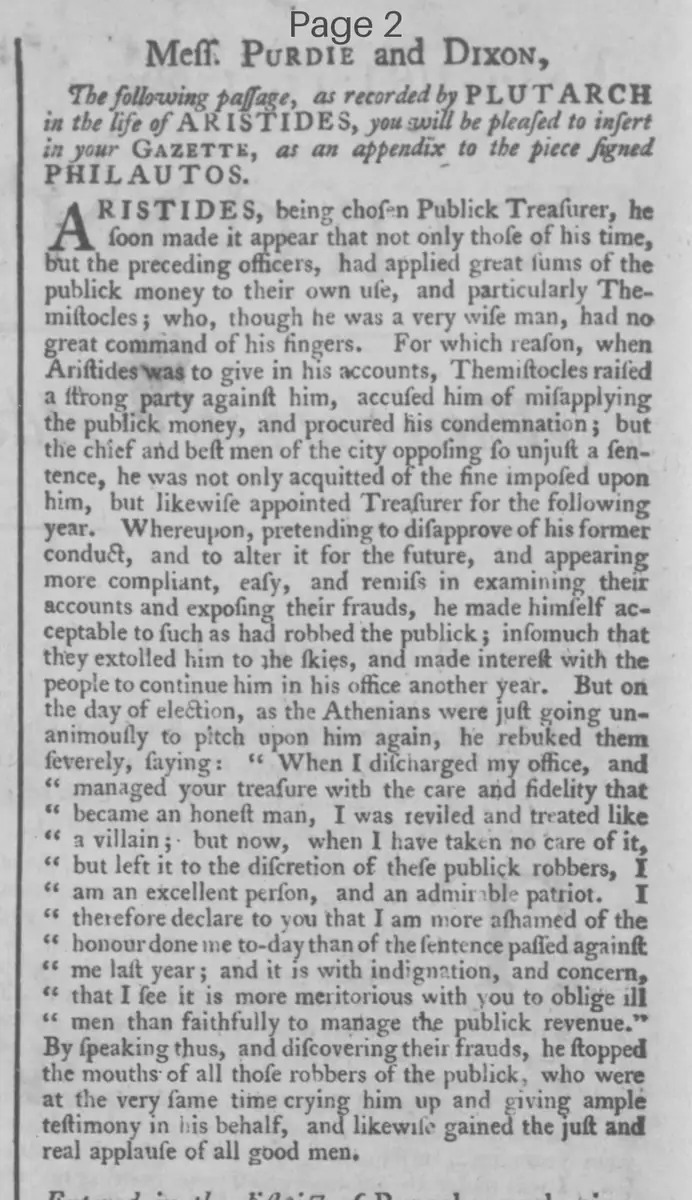
ARISTIDES, being chosen Public Treasurer, he soon made it appear that not only those of his time, but the preceding officers, had applied great sums of the public money to their own use, and particularly Themistocles; who, though he was a very wise man, had no great command of his fingers. For which reason, when Aristides was to give in his accounts, Themistocles raised a strong party against him, accused him of misapplying the public money, and procured his condemnation; but the chief and best men of the city opposing so unjust a sentence, he was not only acquitted of the fine imposed upon him, but likewise appointed Treasurer for the following year. Whereupon, pretending to disapprove of his former conduct, and to alter it for the future, and appearing more compliant, easy, and remiss in examining their accounts and exposing their frauds, he made himself acceptable to such as had robbed the public; insomuch that they extolled him to the skies, and made interest with the people to continue him in his office another year. But on the day of election, as the Athenians were just going unanimously to pitch upon him again, he rebuked them severely, saying: "When I discharged my office, and managed your treasure with the care and fidelity that became an honest man, I was reviled and treated like a villain; but now, when I have taken no care of it, but left it to the discretion of the public robbers, I am an excellent person, and an admirable patriot. I therefore declare to you that I am more ashamed of the honour done me to-day than of the sentence passed against me last year; and it is with indignation, and concern, that I see it is more meritorious with you to oblige ill men than faithfully to manage the public revenue." By speaking thus, and discovering their frauds, he stopped the mouths of all those robbers of the public, who were at the very same time crying him up and giving ample testimony in his behalf, and likewise gained the just and real applause of all good men.
The following passage, as recorded by PLUTARCH in the life of ARISTIDES, you will be pleased to insert in your GAZETTE, as an appendix to the piece signed PHILAUTOS.
ARISTIDES, being chosen Public Treasurer, he soon made it appear that not only those of his time, but the preceding officers, had applied great sums of the public money to their own use, and particularly Themistocles; who, though he was a very wise man, had no great command of his fingers. For which reason, when Aristides was to give in his accounts, Themistocles raised a strong party against him, accused him of misapplying the public money, and procured his condemnation; but the chief and best men of the city opposing so unjust a sentence, he was not only acquitted of the fine imposed upon him, but likewise appointed Treasurer for the following year. Whereupon, pretending to disapprove of his former conduct, and to alter it for the future, and appearing more compliant, easy, and remiss in examining their accounts and exposing their frauds, he made himself acceptable to such as had robbed the public; insomuch that they extolled him to the skies, and made interest with the people to continue him in his office another year. But on the day of election, as the Athenians were just going unanimously to pitch upon him again, he rebuked them severely, saying: "When I discharged my office, and managed your treasure with the care and fidelity that became an honest man, I was reviled and treated like a villain; but now, when I have taken no care of it, but left it to the discretion of the public robbers, I am an excellent person, and an admirable patriot. I therefore declare to you that I am more ashamed of the honour done me to-day than of the sentence passed against me last year; and it is with indignation, and concern, that I see it is more meritorious with you to oblige ill men than faithfully to manage the public revenue." By speaking thus, and discovering their frauds, he stopped the mouths of all those robbers of the public, who were at the very same time crying him up and giving ample testimony in his behalf, and likewise gained the just and real applause of all good men.
What sub-type of article is it?
Prose Fiction
What themes does it cover?
Moral Virtue
Political
Taxation Oppression
What keywords are associated?
Aristides
Plutarch
Public Treasurer
Corruption
Integrity
Themistocles
Athens
What entities or persons were involved?
Plutarch
Literary Details
Author
Plutarch
Subject
Appendix To The Piece Signed Philautos
Key Lines
When I Discharged My Office, And Managed Your Treasure With The Care And Fidelity That Became An Honest Man, I Was Reviled And Treated Like A Villain; But Now, When I Have Taken No Care Of It, But Left It To The Discretion Of The Public Robbers, I Am An Excellent Person, And An Admirable Patriot.
I Therefore Declare To You That I Am More Ashamed Of The Honour Done Me To Day Than Of The Sentence Passed Against Me Last Year; And It Is With Indignation, And Concern, That I See It Is More Meritorious With You To Oblige Ill Men Than Faithfully To Manage The Public Revenue.