Thank you for visiting SNEWPapers!
Sign up free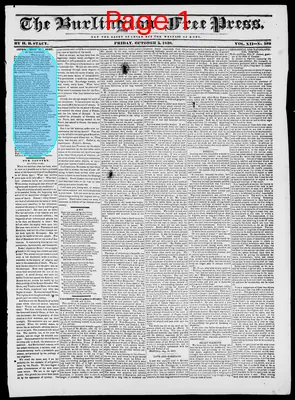
Poem
October 5, 1838
Burlington Free Press
Burlington, Chittenden County, Vermont
What is this article about?
Mrs. Sigourney's poem denounces imprisonment for debt as a cruel practice that punishes poverty, contradicts Christian teachings on mercy, and causes family suffering, urging reform in a free society.
Clipping
OCR Quality
95%
Excellent
Full Text
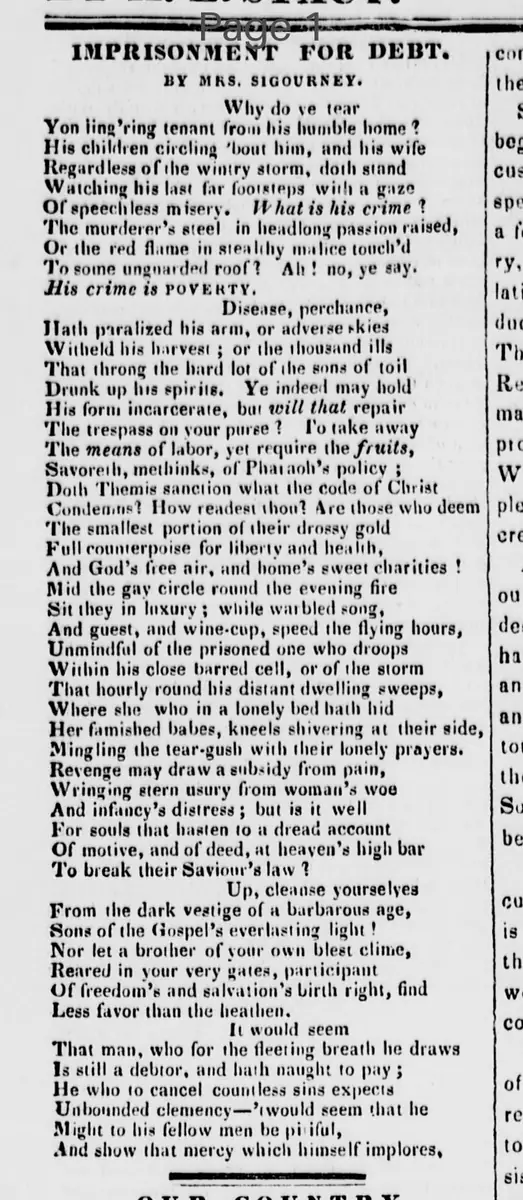
IMPRISONMENT FOR DEBT.
BY MRS. SIGOURNEY.
Why do ye tear
Yon ling'ring tenant from his humble home?
His children circling 'bout him, and his wife
Regardless of the wintry storm, doth stand
Watching his last far footsteps with a gaze
Of speechless misery. What is his crime?
The murderer's steel in headlong passion raised,
Or the red flame in stealthy malice touch'd
To some unguarded roof? Ah! no, ye say.
His crime is POVERTY.
Disease, perchance,
Hath paralyzed his arm, or adverse skies
Withheld his harvest: or the thousand ills
That throng the hard lot of the sons of toil
Drank up his spirits. Ye indeed may hold
His form incarcerate, but will that repair
The trespass on your purse? To take away
The means of labor, yet require the fruits,
Savoreth, methinks, of Pharaoh's policy:
Doth Themis sanction what the code of Christ
Condemns? How readest thou? Are those who deem
The smallest portion of their drossy gold
Full counterpoise for liberty and health,
And God's free air, and home's sweet charities!
Mid the gay circle round the evening fire
Sit they in luxury; while warbled song,
And jest, and wine-cup, speed the flying hours,
Unmindful of the prisoned one who droops
Within his close barred cell, or of the storm
That hourly round his distant dwelling sweeps,
Where she who in a lonely bed hath hid
Her famished babes, kneels shivering at their side,
Mingling the tear-gush with their lonely prayers.
Revenge may draw a subsidy from pain,
Wringing stern usury from woman's woe
And infancy's distress; but is it well
For souls that hasten to a dread account
Of motive, and of deed, at heaven's high bar
To break their Saviour's law?
Up, cleanse yourselves
From the dark vestige of a barbarous age,
Sons of the Gospel's everlasting light!
Nor let a brother of your own blest clime,
Reared in your very gates, participant
Of freedom's and salvation's birth right, find
Less favor than the heathen,
It would seem
That man, who for the fleeting breath he draws
Is still a debtor, and hath naught to pay;
He who to cancel countless sins expects
Unbounded clemency—'twould seem that he
Might to his fellow men be pitiful,
And show that mercy which himself implores,
BY MRS. SIGOURNEY.
Why do ye tear
Yon ling'ring tenant from his humble home?
His children circling 'bout him, and his wife
Regardless of the wintry storm, doth stand
Watching his last far footsteps with a gaze
Of speechless misery. What is his crime?
The murderer's steel in headlong passion raised,
Or the red flame in stealthy malice touch'd
To some unguarded roof? Ah! no, ye say.
His crime is POVERTY.
Disease, perchance,
Hath paralyzed his arm, or adverse skies
Withheld his harvest: or the thousand ills
That throng the hard lot of the sons of toil
Drank up his spirits. Ye indeed may hold
His form incarcerate, but will that repair
The trespass on your purse? To take away
The means of labor, yet require the fruits,
Savoreth, methinks, of Pharaoh's policy:
Doth Themis sanction what the code of Christ
Condemns? How readest thou? Are those who deem
The smallest portion of their drossy gold
Full counterpoise for liberty and health,
And God's free air, and home's sweet charities!
Mid the gay circle round the evening fire
Sit they in luxury; while warbled song,
And jest, and wine-cup, speed the flying hours,
Unmindful of the prisoned one who droops
Within his close barred cell, or of the storm
That hourly round his distant dwelling sweeps,
Where she who in a lonely bed hath hid
Her famished babes, kneels shivering at their side,
Mingling the tear-gush with their lonely prayers.
Revenge may draw a subsidy from pain,
Wringing stern usury from woman's woe
And infancy's distress; but is it well
For souls that hasten to a dread account
Of motive, and of deed, at heaven's high bar
To break their Saviour's law?
Up, cleanse yourselves
From the dark vestige of a barbarous age,
Sons of the Gospel's everlasting light!
Nor let a brother of your own blest clime,
Reared in your very gates, participant
Of freedom's and salvation's birth right, find
Less favor than the heathen,
It would seem
That man, who for the fleeting breath he draws
Is still a debtor, and hath naught to pay;
He who to cancel countless sins expects
Unbounded clemency—'twould seem that he
Might to his fellow men be pitiful,
And show that mercy which himself implores,
What sub-type of article is it?
Ode
Satire
What themes does it cover?
Moral Virtue
Satire Society
Religious Faith
What keywords are associated?
Imprisonment For Debt
Poverty Crime
Christian Mercy
Family Suffering
Social Reform
Debtor Prison
What entities or persons were involved?
By Mrs. Sigourney.
Poem Details
Author
By Mrs. Sigourney.
Subject
Imprisonment For Debt.
Key Lines
His Crime Is Poverty.
Doth Themis Sanction What The Code Of Christ
Condemns?
Up, Cleanse Yourselves
From The Dark Vestige Of A Barbarous Age,
Sons Of The Gospel's Everlasting Light!
Might To His Fellow Men Be Pitiful,
And Show That Mercy Which Himself Implores,