Thank you for visiting SNEWPapers!
Sign up free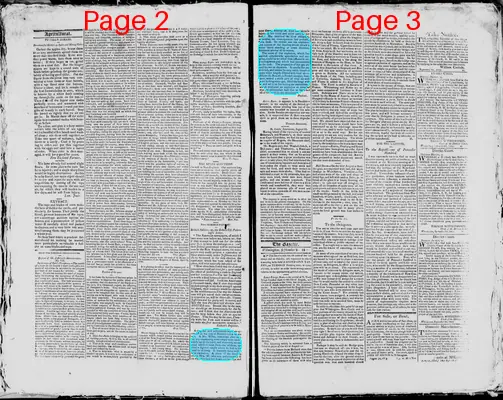
The Delaware Gazette
Wilmington, New Castle County, Delaware
What is this article about?
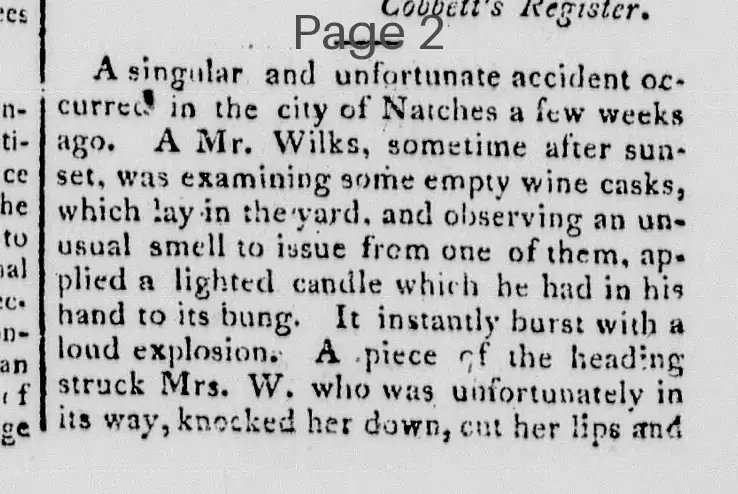
In Natchez, Mr. Wilks ignited hydrogen gas in an empty wine cask, causing an explosion that severely injured his wife Mrs. W. by striking her face and body. The article explains the gas's properties, citing chemist Pilatre du Rozier's dangerous experiment with it.
Merged-components note: Continuation of the story about the singular accident in Natchez, as the text flows directly from one component to the next across pages.
Clippings
1 of 2
OCR Quality
Full Text
The cause of this explosion, which has excited considerable speculation and surprise, could be no other than inflammable air (hydrogenous gas) which had accumulated in the cask. The properties of this gas are well known to chemists. It smells like putrid fish, and cannot be very safely breathed even when largely diluted with vital air.
Pilatre du Rozier, a French chemist, however, mixed a ninth part of vital air with pure hydrogenous gas, filled his lungs with it, and set it on fire during the expiration--which produced an explosion so dreadful that the philosopher had like to have lost all of his teeth by the experiment.
What sub-type of article is it?
What themes does it cover?
What keywords are associated?
What entities or persons were involved?
Where did it happen?
Story Details
Key Persons
Location
City Of Natchez
Event Date
A Few Weeks Ago
Story Details
Mr. Wilks examines empty wine casks in Natchez yard after sunset, lights a candle near one with unusual smell, causing hydrogen gas explosion. Fragment strikes and severely injures nearby Mrs. W. in face and body; another fragment damages distant water barrel. Gas properties explained via anecdote of French chemist Pilatre du Rozier nearly losing teeth in similar fiery inhalation experiment.